Month: January 2025

  • ASSOCHAM names Manish Singhal as Secretary General

    ASSOCHAM names Manish Singhal as Secretary General

    Associated Chambers of Commerce and Industry of India (ASSOCHAM), an apex business chamber, has a new Secretary General in Manish Singhal.

    Singhal, an industry leader with over 35 years of experience in Chamber and Corporate India, had earlier worked as Deputy Secretary General of The Federation of Indian Chambers of Commerce and Industry (FICCI).

    He had also worked with various Indian transnational companies, including Tata Motors, Eicher (Volvo), Tata Auto Comp Systems, Moser Baer India and BEML to name a few.

    Singhal succeeds Deepak Sood, who recently after a five-year stint stepped down to pursue other interests.

    “We welcome Manish on board and look forward to him furthering ASSOCHAM’s impact. He has a proven track record in policy advocacy and international business, which will help the Chamber scale greater heights”, said Sanjay Nayar, President of ASSOCHAM. The Hindu Business Line

  • The DPDP rules clearance from home ministry marks a significant milestone

    The DPDP rules clearance from home ministry marks a significant milestone

    The long-awaited implementation of the Digital Personal Data Protection (DPDP) Act is one step closer to reality, as inter-ministerial consultations on the draft rules concluded on Tuesday with the home ministry’s approval.

    The ministry of electronics and information technology (MeitY) is now set to release the draft rules for public consultation, setting the stage for their eventual notification and phased implementation.

    The clearance marks a significant milestone, as the DPDP Act, passed over 16 months ago, has remained inoperative pending finalisation of its rules. The delay has left key provisions – ensuring data privacy, enforcing data minimisation and purpose limitations, and imposing penalties for violations – unrealised.

    The final rules will address critical aspects of the Act, including user consent mechanisms, data handling procedures, and compliance timelines. According to officials, the transition period for companies to adapt to the new regulatory framework is expected to range from 18 to 24 months. This is more or less in line with global practices, which allow 12 to 30 months for similar overhauls.

    “Given the sensitivity of personal data, it was essential to ensure all government departments and stakeholders were aligned with the draft rules,” said an official. Some ministries had earlier cited challenges in setting up mechanisms for seeking user consent and requested additional time to transition to the new system. Private entities, too, have sought an adequate adjustment period to comply with the rules.

    Once implemented, the Act will empower consumers with greater control over their data. Companies handling user data will be required to disclose the information they possess, enabling users to request its deletion or specify usage preferences. Additionally, consumers will have the right to demand details on the purpose of data collection, permissible uses, and the timeline for its deletion.

    The rules will also detail specific provisions, such as consent management for minors and exemptions for certain entities or contexts. Moreover, the government plans to establish the Data Protection Board, an adjudicatory body to address disputes between data principals (users) and fiduciaries (data handlers).

    Entities found guilty of data breaches could face penalties of up to Rs 250 crore per incident, underscoring the government’s intent to enforce stringent compliance.

    The release of the draft rules for public consultation is expected shortly, whereby stakeholders will be able to provide feedback and suggestions. Following this, the rules will be notified and implemented in phases, marking the beginning of a robust framework to safeguard digital personal data. Financial Express

  • Power outage at NICSI data centre disrupts key govt websites

    Power outage at NICSI data centre disrupts key govt websites

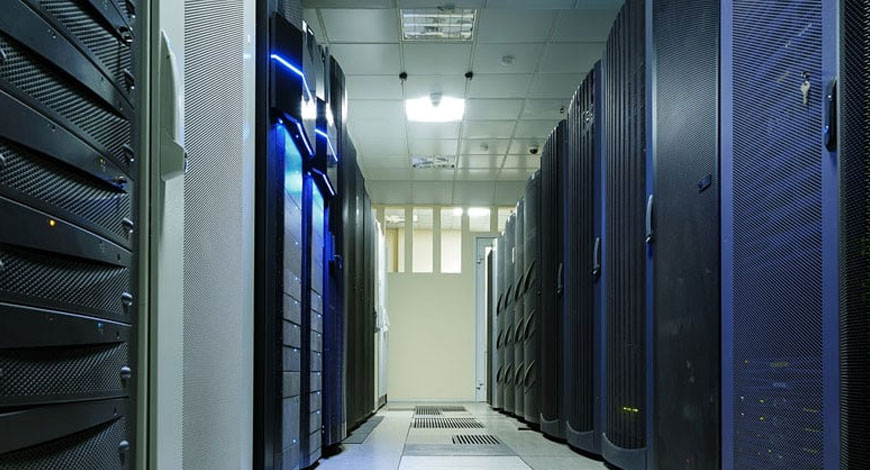
    Government websites, including that of the Department of Economic Affairs, Commerce Ministry, and Department of Telecom, were restored after a brief disruption caused by a power outage at a data centre of National Informatics Centre Services Inc (NICSI).

    Sources aware of the disruption said the websites went down because of a power outage at the NICSI data centre at Shastri Park and the issue is being resolved.

    “The power outage at Shastri Park data centre of NICSI led to disruption in the functioning of some government websites. The sites are being restored and will be up and running shortly,” a source said.

    National Informatics Centre Services Inc currently hosts and manages most of the government websites.

    Later in the day, websites were found functional during a random check.

    An email query sent to the Ministry of Electronics and IT elicited no immediate reply. PTI

  • Google picks up 550,000 sq ft office space in Gurugram

    Google picks up 550,000 sq ft office space in Gurugram

    Google has made a significant move in India by leasing reportedly approx. 550,000 square feet of office space from managed workspace provider Table Space at a commercial complex in Gurugram. This marks one of the largest commercial space deals in the region in recent years, underlining Google’s commitment to strengthening its presence in India, a key global market.

    The new office is expected to accommodate thousands of employees, with a focus on engineering, sales, and customer support functions. Strategically located near New Delhi, Gurugram has become a hub for multinational corporations and startups, offering robust infrastructure and connectivity, making it an ideal location for Google’s expansion.

    This development aligns with Google’s broader strategy in India, where it has been actively investing in digital transformation and infrastructure. Recently, the company announced plans to build its global fintech operations hub in Hyderabad, showcasing its commitment to supporting India’s growing digital economy.

    Furthermore, Google’s $10 billion “Google for India Digitization Fund,” launched in 2020, has been driving significant advancements in areas such as AI, internet access, and local business empowerment.

    The Gurugram office is expected to serve as a key base for Google’s operations, supporting its mission to innovate and scale services tailored to India’s unique needs. The tech giant has been focusing on partnerships, such as its collaboration with Reliance Jio for affordable smartphones and internet services, aiming to bridge India’s digital divide.

    While details about the timeline for the Gurugram office’s launch remain undisclosed, the move highlights Google’s confidence in India’s potential as a technological and economic powerhouse. This investment further solidifies the country’s status as a pivotal player in Google’s global growth strategy. VAR India

  • Data center UPS market size reach US$ 11.0 billion by 2032

    Data center UPS market size reach US$ 11.0 billion by 2032

    The global data center UPS market size reached US$ 6.5 Billion in 2023. Looking forward, the market to reach US$ 11.0 Billion by 2032, exhibiting a growth rate (CAGR) of 6.02% during 2023-2032, according to Research and Markets.

    The escalating demand for continuous power supply on the global level, rapid digitalization and the rising dependence on technology for conducting business operations, and considerable rise in cloud computing represent some of the key factors driving the market.

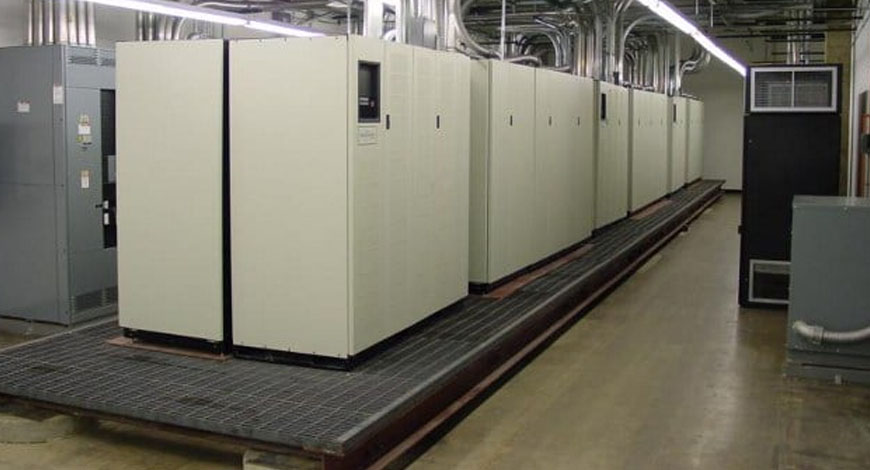
    A data center UPS or uninterruptible power supply refers to a crucial element in data center infrastructure that is specifically designed to provide an alternate power supply to data center equipment in case of a power outage or disruption. These systems ensure seamless operation and protect the data center from suffering any loss or damage. Capacity is one of the key characteristics of data center UPS systems that is determined by kilovolt-amperes (kVA) or megavolt-amperes (MVA) rating, along with its runtime, which defines the duration of backup power provision. The primary function of data center UPS is to provide power backup to critical data center equipment, thereby eliminating data loss, equipment damage, and operational downtime.

    These UPS systems are also responsible for regulating voltage and frequency to ensure the power supplied to equipment is steady and dependable. In addition to this, remote monitoring and management capabilities are also available in many product variants, which provide data center operators with a centralized means of monitoring and managing the UPS performance.

    The report has also provided a comprehensive analysis of the competitive landscape in the market. Competitive analysis such as market structure, market share by key players, player positioning, top winning strategies, competitive dashboard, and company evaluation quadrant has been covered in the report. Also, detailed profiles of all major companies have been provided.

    Some of the companies covered include ABB Ltd., Cyber Power Systems Inc., Delta Electronics Inc., Eaton Corporation plc, General Electric Company, Kohler Uninterruptible Power (Ireland) Limited, Legrand, Mitsubishi Electric Corporation, RPS Spa (Riello Elettronica S.p.A.), Schneider Electric SE, Solaredge Technologies Inc., Toshiba Corporation and Vertiv Group Corporation, etc. Kindly note that this only represents a partial list of companies, and the complete list has been provided in the report.

    Data Center UPS Market Trends:
    The market is primarily driven by the escalating demand for continuous power supply on the global level. This can be attributed to the rapid digitalization and the rising dependence on technology for conducting business operations, resulting in a higher demand for 24/7 availability of the data centers. In line with this, a considerable rise in cloud computing is leading to the growing number of data centers, which, in turn, has augmented the demand for UPS systems. Moreover, the rising need for eco-friendly solutions for reducing power consumption and achieving energy efficiency is propelling the demand for UPS systems that use renewable energy sources, such as solar and wind power.

    The market is further fueled by the growing awareness regarding downtime costs and protection against power outages. Apart from this, the growing adoption of modular UPS systems that are easily expandable is also creating lucrative growth opportunities in the market. Additionally, the emerging trend of edge computing is propelling the demand for more compact UPS systems that can be deployed in remote locations, which, in turn, is providing an impetus to the market. Some of the other factors contributing to the market include rapid urbanization, inflating disposable income levels, rising penetration of the internet, emergence of 5G, and extensive research and development (R&D) activities conducted by key players. Research and Markets

  • Air India launches onboard Wi-Fi on domestic flights

    Air India launches onboard Wi-Fi on domestic flights

    Private carrier Air India on Wednesday (January 1, 2025) rolled out Wi-Fi internet connectivity services on board domestic and international flights on its widebody Airbus A350 and Boeing 787-9 fleet as well as on select Airbus A321neo aircraft.

    This makes Air India the first airline to offer such services on flights within India, the airline said.

    Accessible on Wi-Fi-enabled devices such as laptops, tablets, and smartphones with iOS or Android operating systems, the in-flight Wi-Fi will also allow guests to connect multiple devices simultaneously when above 10,000 feet, it said.

    The deployment of Wi-Fi on domestic routes follows an ongoing pilot programme on international services operated by the Airbus A350, select Airbus A321 neo and Boeing B787-9 aircraft serving international destinations including New York, London, Paris and Singapore. As with the domestic offer, Wi-Fi is complimentary for an introductory period, Air India said.

    Air India said it will progressively roll out the service on other aircraft in its fleet over time. PTI