Month: February 2025

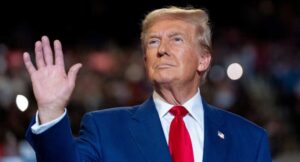
  • Trump administration lays off 1,165 people in NIH

    Trump administration lays off 1,165 people in NIH

    The number of workers terminated by the Trump administration at the National Institutes of Health has been revised to 1,165, according to an NIH internal email seen by Reuters on Sunday, down from an initial 1,500.

    The email, sent to senior NIH leaders on Saturday night, said some names were removed from the list but new ones may have been added. Affected staff will be placed on administrative leave starting on Monday.

    They have received termination letters and will be on administrative leave for four weeks before they are officially terminated, an NIH official told Reuters.

    The number accounts for around 6% of the 20,000 people employed by the NIH, an agency overseeing 27 institutes and centers and the top public funder of medical research on everything from vaccines for emerging pandemic threats to targets for new drugs.

    It has long been in the crosshairs of newly confirmed Secretary of Health and Human Services Robert F. Kennedy Jr., who said in November he would act quickly to fire 600 people there and replace them all with new hires.

    It was unclear if those terminated this week, most of whom were probationary workers let go as part of President Donald Trump’s overhaul of government agencies, included the 600 employees referenced by Kennedy, an avowed vaccine skeptic and critic of the Centers for Disease Control and Prevention, the Food and Drug Administration and the NIH, agencies now under his watch.

    The Trump administration also terminated employees at the FDA on Saturday night, Stat News reported, citing sources.

    It wasn’t immediately clear how many FDA employees were affected nor how many parts of the agency may be involved, the report said, adding that some of those cut worked in the FDA’s Center for Devices and Radiological Health.

    The FDA did not immediately respond to a request for comment outside regular business hours.

    About 5,200 probationary employees across the Department of Health and Human Services were being let go, STAT News reported, amounting to 6% of its 80,000 employees, including those at the FDA, NIH and the CDC, which saw half of its probationary workers terminated on Friday.

    The U.S. government began firing thousands of people at multiple agencies on Thursday as Trump and billionaire Elon Musk accelerate their purge of America’s federal bureaucracy. Reuters


  • SOA University professor’s automated oral biopsy device receives US patent

    SOA University professor’s automated oral biopsy device receives US patent

    An automated oral biopsy device developed by a professor of SOA University has received a US patent.

    The user-friendly automated pen-like device, which is expected to revolutionise oral biopsy procedures, has been developed by SOA’s pro vice-chancellor (research and collaboration) Prof Neeta Mohanty.

    The device has simplified the process of biopsy and eliminated the need for extensive instrumentation along with features of tele-screening and fiber-optic light.

    “Biopsy is the gold standard for diagnosis and unskilled biopsy often leads to erroneous and delayed diagnosis resulting in life-threatening conditions. This device will benefit the patients immensely with early diagnosis and treatment of oral diseases without compromising on the expert opinion and reducing the burden of oral diseases, specially oral cancer,” Prof Mohanty said.

    She had filed for two Indian patents for the same product in 2018 which were granted in 2023 and 2024 respectively, and she got a design patent in 2019. “I filed for the US patent in 2019 which was published in 2020 and the patent was granted a few days ago,” she said.

    This innovation had won her the Global Outreach Dental Innovation Award in 2021. It was selected by the Science and Technology Department of the Odisha government for being showcased at the Global Bio India 2024 held at New Delhi.

    Prof Mohanty’s research was funded by the Department of Science and Technology for prototype development and approval was received from Startup Odisha for need-based assistance. New Indian Express

  • Many healthcare providers fear accountability, not accepting digital health records

    Many healthcare providers fear accountability, not accepting digital health records

    Resistance to digitisation of patient health records by many healthcare providers is because they do not want to be accountable, said Indu Bhushan, former chairman of National Health Authority and former CEO of Ayushman Bharat.

    Speaking at a panel discussion on “Future of Care: Revolutionising Healthcare Through Digital Innovation and Collaboration” at the Global Investors’ Meet on Thursday, Dr. Bhushan cited an example of doctors who prescribe investigation tests and antibiotics unnecessarily. “They also do not want to be accountable, because, in response, there is no benefit. Instead, it increases their workload,” he said.

    “There are doctors who prescribe unnecessary antibiotics or unnecessary tests. They do not want to have it on record through digital means, because currently when you do it on paper, it is very difficult to audit that. But through digital health you can see that this doctor always prescribes antibiotics, irrespective of what kind of ailments the patient comes with. So they will be more accountable,” he explained.

    He said it also holds good with interoperability of health records. “Many hospitals do not want their patients to leave the hospital and go to another hospital. That is why they would like the patient records to be with them. I am not casting aspersions on all hospitals. But, this is the reality,” said Dr. Bhushan, who was instrumental in rolling out the Ayushman Bharat Digital Health Mission (ABDM) in the country.

    Inequitable technology use
    Pointing out that technology use is inequitably distributed, Dr. Bhushan said there are some hospitals where digital technology is working very well. “They send reports on time. They link current reports to the previous ones. But again, there are others who are not doing this, or other patients who are not receiving the same service.”

    “However, acceptability will increase in the next five years, similar to digital (UPI) payments. In the initial phases, there will be divergence. But once we have a critical mass, it will be the insurance payers who will insist that we should have digital records because it is easy to monitor. In all countries where digital health has taken root, it is largely because insurance companies and payers have insisted on this because they have a vested interest in ensuring that all the records are digital,” he said.

    Public health policies
    Asserting that public health infrastructure and the public health policies will drive the digital adoption in the country, Ashutosh Raghuvanshi, Managing Director of Fortis Healthcare sought to know why the government has not made ABDM mandatory for all hospitals.

    ABDM aims to digitise healthcare delivery by building an ecosystem that rides on collaboration between the government and the private sector. However, it is optional.

    “Public sector is much more organised because repetitions do not happen. So the wastage is minimal. But in the private sector, the patients go to one place, do some set of investigations, then go to another place, do another set of investigations. By the time the patients come for the procedure, they have self exhausted all their financial resources. So I think there are a lot of challenges,” he said.

    Sonal Asthana, Programme Director of Liver Transplantation at Aster group of Hospitals, who moderated the session, sought to know from the panelists the challenges faced in digital adoption. “What are the specific security needs we should think about in an Artificial Intelligence (AI) driven world for healthcare?” he asked.

    Shashank N.D., CEO of Practo, emphasised the importance of anonymisation in technology, particularly in FinTech and HealthTech to protect personal information without compromising on functionality.

    The panelists also discussed the crucial aspect of slow adoption of healthcare insurance in India and if digital innovations can help in creating novel financial models for payment. The Hindu

  • Karnataka to hike payment of specialists working at govt hospitals

    Karnataka to hike payment of specialists working at govt hospitals

    Minister for Health and Family Welfare Dinesh Gundu Rao said on Monday, February 17, that the government will increase the payment being made to paediatricians, gynaecologists and anesthetists working at government hospitals.

    Speaking at the quarterly meeting of Karnataka Development Programme (KDP) Review Committee the Minister said that the decision to hike the payment is to attract those doctors to work at government hospitals to meet the dearth of doctors.

    Earlier, Dhananjaya Sarji, MLC and also a doctor, suggested the Minister that authorities of all government hostels in Dakshina Kannada should get the students tested by dermatologists at least twice a year. It is because many students at government hostels faced skin infections.

    “Girls at hostels do require the guidance of gynaecologists to create awareness on female health issues. The government should do the needful for the same. In addition, as Dakshina Kannada is facing drug addiction issues hostel students should get counselling service from clinical psychologists or psychiatrists,” he said.

    Water contamination
    Drawing the attention of the meeting Dr. Sarji said that farmers should be guided on the proper use of fertilisers, particularly related to quantity. If more aluminium content joined water bodies consumption of those water can cause severe health issues, including brain disorders, and liver and bone damages, he alerted.

    Bharat Mundodi, chairman of Dakshina Kannada committee for implementing the guarantee schemes, and Bhagirathi Murulya, MLA, Sullia said that arecanut growers affected by Yellow Leaf Disease and Leafspot Disease should get a package from the government for growing alternative crops.

    U. Rajesh Naik, MLA, Bantwal said that some farm land have submerged due to storing of water in the newly built vented dam (across the Netravathi) at Jakribettu up to five metres high. Some people have complained that water has entered into their dwelling premises. The engineers concerned should address the issue by reducing the storage level at the dam.

    There were heated arguments between the Minister and D. Vedavyasa Kamath, MLA, Mangaluru City South over the inauguration of Jeppu enclave in the city recently and over the adherence to protocol. The blame game lasted for some time and subsided later. The Hindu

  • Tiger Brokers enhancess finance with DeepSeek AI chatbot

    Tiger Brokers enhancess finance with DeepSeek AI chatbot

    Tiger Brokers said on Tuesday it embedded DeepSeek’s model into its AI-powered chatbot, as brokerages and money managers race to capitalise on the Chinese start-up’s artificial intelligence breakthrough, and develop use cases for the financial industry.

    The integration of the DeepSeek-R1 model into TigerGPT follows DeepSeek’s meteoric rise which stunned Silicon Valley and triggered a rally in Chinese tech shares on bets of an AI revolution sweeping across sectors from education to finance.

    Tiger Brokers, an online broker backed by shareholders including Chinese electronics maker Xiaomi and renowned U.S. investor Jim Rogers, is the latest to embrace DeepSeek.

    At least 20 Chinese brokers and fund managers, including Sinolink Securities, CICC Wealth Management and China Universal Asset Management, have already started to integrate DeepSeek models into their businesses, potentially changing the way they conduct research, manage risks, make investment decisions and interact with clients.

    DeepSeek will be able to tap Tiger Brokers’ financial data and help customers analyse valuations, make trading decisions and “feel the beauty of investment,” said Wu Tianhua, Tiger Brokers’ founder and CEO.

    “Its impact is real. It’s no longer a concept, or a marketing trick.”

    UBS expects rapid AI adoption will boost financial IT spending by 24%, or 69 billion yuan ($9.49 billion), in five years, benefiting vendors including Hundsun Technologies Inc, Northking Information Technology Co and iSoftStone Information Technology (Group) Co.

    “We expect the launch of DeepSeek R1 to drive faster GenAI adoption in the financial industry in 2025,” UBS analyst Haifeng Cao said, referring to DeepSeek’s recently released model that was developed at a fraction of the cost of Western rivals.

    “We think the industry is likely to be more profoundly reshaped by GenAI than others, given its data-heavy and high labour intensive characteristics, and high mix of language-related tasks.”

    An index tracking China’s Fintech companies has jumped 17% this month, flirting with record highs.

    Tiger Brokers said the upgraded version of its investment assistant TigerGPT will initially be available for free to users in mainland China and Singapore.

    “The integration of DeepSeek has enhanced TigerGPT’s logical reasoning abilities, enabling it to analyse market shifts more clearly and interpret investment opportunities more effectively,” CEO Wu said.

    The chain of thoughts generated by the DeepSeek model “is often inspiring to even most seasoned traders.”

    Sinolink Securities, which sees AI as a key engine of growth, said early this month it would use the DeepSeek model in a range of scenarios including information search, market analysis and industry research. In the future, the application will be expanded to core business areas such as risks management and investing.

    CICC Wealth Management said its has integrated DeepSeek’s R1 model into its investment advisory services, potentially boosting information processing efficiency by 90%.

    Zhongou Fund Management said the immediate challenge for the financial industry is to standardize internal database to feed AI models.

    “AI has given financial companies a tool to make better use of troves of data” which was previously sitting idle, said Zhongou’s head of tech research Du Houliang.

    “Now, many financial institutions, including us, are hurrying into meetings” to discuss how local adoption of DeepSeek’s models can empower internal management, marketing, and investing. Reuters

  • Karnataka mandates job creation for AI-automation era incentives

    Karnataka mandates job creation for AI-automation era incentives

    Anticipating disruption from Artificial Intelligence (AI) and automation, Karnataka has asked enterprises investing Rs 50 crore to create a minimum of 25 jobs in order to receive incentives under the government’s new industrial policy.

    “Due to advancements in Artificial Intelligence as well as industry focus on automation to increase productivity, minimum employment thresholds have been rationalised,” the Industrial Policy 2025-30, which aims to create 20 lakh new jobs, states.

    According to the policy document, the minimum investment for a large enterprise must be Rs 50 crore and it must create at least 25 jobs.

    Similarly, a mega enterprise with a minimum investment of Rs 300 crore must have 150 jobs. An ultra mega enterprise with a minimum of Rs 1,000 crore should create 500 jobs. Ultra mega projects should also create additional six jobs for every Rs 50 crore.

    Under the previous Industrial Policy 2020-25, large enterprises were asked to create 50 jobs for a minimum Rs 50 crore investment.

    Meeting the new minimum employment thresholds is necessary for enterprises to avail capital expenditure subsidy or production-linked incentives.

    “AI and automation…that’s the reality. AI will play a role everywhere…in the areas of medical equipment, smartphones, chipmaking and so on. Robots will replace human beings,” Industries Minister M B Patil told DH, adding that there were even robot masseuses. Patil, however, added that it was “too early” to speculate how AI would impact jobs.

    At the recent Invest Karnataka summit, Google X cofounder Sebastian Thrun uged youngsters to prepare themselves for AI. “Approximately 60% of current jobs may disappear,” Thrun said at the summit, according to a statement. “But far more new jobs will emerge as a result of AI and other technologies.”

    Thrun, who led the development of Google’s driverless car, also said that AI’s rise would lead to a shift in job types. “Those who adapt will find new career prospects in fields that are currently emerging,” he said.

    The new Industrial Policy also offers incentives to enterprises that employ more women. Enterprises with 50%, 60% and 70% women in workforce will get incentive boosters of 7.5%, 10% and 15%, respectively.

    “Such measures are expected to contribute significantly to the state’s social and economic objectives, making it a model for gender inclusiveness in industrial development,” the policy states. Deccan Herald

  • Bharti Telecom raises stake in Airtel to 40.47% after ₹8,485 crore deal

    Bharti Telecom raises stake in Airtel to 40.47% after ₹8,485 crore deal

    Bharti Telecom Limited has increased its stake in Bharti Airtel to approximately 40.47 per cent following a significant market transaction today. Indian Continent Investment Limited (ICIL), a promoter-group entity of Bharti Airtel, sold about 0.84 per cent shareholding (approximately 5.11 crore shares) for ₹8,485.11 crore.

    The shares of Bharti Airtel Limited were trading at ₹1,662.50, down by ₹13.05 or 0.78 per cent on the NSE today at 11.05 am.

    Bharti Telecom anchored the trade by acquiring approximately 1.20 crore shares, representing about 24 per cent of ICIL’s total sale. The company ensured that the remaining shares were allocated to “key marquee long only names, both global and domestic,” according to the filing.

    This transaction follows Bharti Telecom’s earlier acquisition of an additional 1.2 per cent stake (approximately 7.31 crore shares) in Airtel from ICIL in November 2024. The company stated that these moves reinforce its “previously stated intent of strengthening its position as the principal vehicle to hold controlling stake in Airtel.”

    Bharti Telecom remains “focused on gradually increasing its stake while maintaining a prudent leverage profile,” according to the announcement filed with the stock exchanges today.

    The transaction continues the consolidation strategy that began with earlier announcements in August 2022 and December 2023, as Bharti Telecom progressively increases its controlling interest in one of India’s largest telecommunications companies. The Hindu BusinessLine

  • Chunghwa Telecom deploys microwave backup after cable cut

    Chunghwa Telecom deploys microwave backup after cable cut

    Chunghwa Telecom has activated a microwave backup system to maintain communications between Taiwan proper and Lienchiang County (Matsu) after a submarine cable linking the areas was disconnected, the Ministry of Digital Affairs said.

    Communications between Taiwan and Matsu are mainly maintained through two submarine cables: Taima No. 2 and Taima No. 3.

    Last month, communications were slightly disrupted after Taima No. 3 and part of Taima No. 2 were disconnected due to natural deterioration.

    However, the nation’s largest telecom on Sunday informed the National Communications and Cyber Security Center that Taima No. 2, installed off New Taipei City, was completely disconnected, the ministry said, adding that the cause of the disconnection had yet to be determined.

    The telecom has also notified the Coast Guard Administration and requested its assistance in its investigation into whether the submarine cable was deliberately disconnected, it said.

    Chunghwa Telecom has been asked to activate its microwave backup system, through which voice and data communications between Taiwan and Matsu can be maintained, it said.

    The microwave backup system can transmit data at 12.5 gigabits per second (Gbps), higher than the 9.5Gbps required during peak traffic on weekdays.

    The telecom has also told the submarine cable laying ship that has arrived at the Port of Kaohsiung to repair the Taima No. 3 cable to start repairs on Taima No. 2 once the No. 3 line is operational, the ministry said.

    Taima No. 3 and Taima No. 2 should be fixed by the end of this month and next month respectively if weather permits, the Chunghwa Telecom said.

    Priority access to the microwave backup system would be given to government agencies, banks and hospitals to ensure that Matsu residents can perform daily tasks while submarine cables are being fixed, such as online transactions and cash withdrawals from automated teller machines, the ministry said.

    The Ministry of Digital Affairs has subsidized Chunghwa Telecom to build a fourth submarine cable, which is expected to be completed in June next year. Taipei Times

  • Vietnam moves to clear path for Starlink to enter market

    Vietnam moves to clear path for Starlink to enter market

    Vietnam plans to adopt rules that would allow Elon Musk’s Starlink to provide satellite internet services in the country while maintaining full ownership of any local subsidiary, a draft of the regulations shows.

    The change paves the way for Starlink to launch in Vietnam and follows protracted talks with its parent company SpaceX, a government official said.

    It represents a sudden shift in stance and can be seen as “an olive branch” to SpaceX amid nervousness in Vietnam about tariff threats from US President Donald Trump, according to a person familiar with the matter.

    It’s a “demonstration from the Vietnamese side that they can play the transactional diplomacy game if the Trump administration wants that,” said the person.

    All sources declined to be identified so they could speak more freely.

    Attempts by SpaceX to enter Vietnam – a market of nearly 100 million people – were put on hold in late 2023 after the Communist-run country declined to lift a ban on foreign control of satellite internet providers – a precondition for Musk, who is now a key adviser to Trump.

    The draft rules, set to be adopted by parliament in an extraordinary sitting on Wednesday, allow for full foreign control of operations for internet providers who have a network of low-orbit satellites, under a pilot scheme that would run until the end of 2030.

    The provision is included in a 12-page resolution that seeks “to remove obstacles in scientific, technological and innovation activities”. Projects submitted under the pilot scheme would require the approval of Vietnam’s prime minister.

    SpaceX and Vietnam’s information ministry did not reply to requests for comment.

    SpaceX has been expanding its network of suppliers in Vietnam. The Vietnamese government has said the company wants to invest $1.5 billion in the country.

    If many Vietnamese firms and individuals were to subscribe to Starlink that could help trim the large surplus in goods and services that the country has with the United States, according to a person with knowledge of the discussions.

    Its surplus last year hit a record high of $123.5 billion, the fourth biggest among US partners, according to US data.

    Trump last Thursday directed his team to devise reciprocal tariffs on every country that taxes US imports by April 1 and his aides have said countries with large imbalances will be closely scrutinised.

    US duties have the potential to seriously disrupt Vietnam’s export-reliant economy, which counts the US as its main market.

    Vietnam hosts many China-based manufacturers which have invested heavily in the Southeast Asian country after Trump’s first administration imposed tariffs on China in 2018.

    To narrow its surplus with the US, Vietnam has also separately offered to import more US agricultural products, and is discussing other possible imports. Indian Express

  • SURJ completes DAZN minority stake acquisition

    SURJ completes DAZN minority stake acquisition

    SURJ Sports Investments, the sports arm of Saudi Arabia’s Public Investment Fund (PIF) sovereign wealth investment vehicle, has finalized a major investment into international sports-focus streaming service DAZN.

    Reported to be worth $1 billion in exchange for a 10% stake in the business, SURJ’s investment will see the creation of a media joint venture, DAZN MENA, centered around the Middle East and North Africa (MENA) region.

    The joint venture will be an “official streaming and broadcast partner” for Saudi sports events broadcast both live and on-demand.

    Speaking on the announcement, SURJ Sports Investment chief executive Danny Townsend stated: “SURJ supports the leadership of DAZN, and our partnership will accelerate the growth of DAZN and capitalize on the significant and growing demand for high-quality sports broadcasting.

    “This investment will help SURJ achieve its mandate of driving fan engagement, encouraging sports participation and unlocking game-changing opportunities, and further showcasing the region as a destination for world-class sports.”

    Shay Segev, DAZN chief executive, added: “As part of the DAZN MENA joint venture with SURJ, DAZN is committed to maximizing the reach and accessibility of sports, while delivering the best entertainment experience to a global community of passionate fans.

    “This is a milestone partnership for the group, which is bound to transform the sports entertainment landscape in Saudi Arabia and the wider region.”

    Rumors had been circling regarding the PIF’s interest in DAZN since October 2024 – although that same month the PIF publicly stated it had no interest in DAZN.

    DAZN has a good relationship with authorities in the Kingdom and in October 2024 agreed a major multi-year broadcast partnership with the Riyadh Season brand of sporting and entertainment events from the Saudi capital, becoming the exclusive global broadcaster of its events (excluding the Middle East and North Africa).

    The broadcaster is also a significant rights-holder for the Saudi Pro League soccer competition, while earlier this year it provided coverage of the Esports World Cup from Riyadh, as well.

    In addition, the ties between the country and DAZN were strengthened in September when the streaming platform announced the signing of a memorandum of understanding (MoU) with Saudi Arabian soccer side Al-Hilal for the establishment of a new global channel – backed by Riyadh Season – on the service.

    This partnership was much needed for DAZN, which in the calendar year 2023 posted yet another hefty loss despite the continued investment of owner Len Blavatnik.

    Over that year DAZN posted a pre-tax loss of $1.43 billion (up from the loss of $1.2 billion in 2022) despite a growth in revenue year-on-year from $2.19 billion to $2.86 billion.

    DAZN’s user base grew in the year, as did its paid subscription tier, but that was still not enough to offset its operational costs, mostly composed of spiraling accumulated rights fees.

    Rights costs for DAZN in 2023 amounted to $3.1 billion, up by 32% ($757 million) on the $2.4 billion it paid across 2022.

    The service still has $9.4 billion in sports rights fees it has committed to pay across the coming years, and will likely still add more as it looks to compete with the likes of Amazon Prime Video and new sports rights entrant Netflix.

    Its struggle, however, is competing against diversified media businesses that offer entertainment such as film and TV along with other benefits alongside their sports programming whereas DAZN, solely sports-focused with a heavy priority in boxing (globally) and soccer (in certain markets), charges a similar if not larger fee for what is a less expansive offering. Sportcal