Month: February 2025

  • AI in medical imaging market to hit USD 14.46 bn

    AI in medical imaging market to hit USD 14.46 bn

    In terms of revenue, the global AI in medical imaging market is predicted to increase from USD 1.67 billion in 2025 to approximately USD 12.69 billion by 2033, According to Precedence Research.

    The global medical imaging market surpassed USD 49.61 billion in 2024 and is estimated to be worth around USD 80.52 billion by 2034, growing at a CAGR of 4.96% from 2024 to 2034.

    In terms of CAGR, The global AI in medical imaging market is poised to grow at a CAGR of 27.10% from 2025 to 2034, On the other hand, the global medical imaging market is expected to grow at 4.96% from 2024 to 2034.

    Various applications of AI in AI in medical imaging market, such as improving image quality, data analysis, image analysis, prediction based on collected data, etc, are promoting growth.

    The rising investments and fundings from various investors and governments, growing strategic alliances between pharmaceutical and technological companies, advancements in implementing AI for medical imaging and growing expenditure in healthcare settings for adopting advanced imaging techniques are the factors driving the growth of the AI in medical imaging market.

    AI in medical imaging market overview
    A new age of healthcare opportunities has been brought about by developments in artificial intelligence (AI) and medical imaging further enhancing medical practice and patient care. The rising investments in R&D activities for potential applications of AI in diagnostic imaging, increased focus on tissue-based detection with improved sensitivity for detecting imaging abnormalities, growing demand for faster and accurate imaging techniques, surge in strategic alliances among companies for advancing medical imaging, support from government bodies and rising public awareness for preventive care are driving the growth of the AI in medical imaging market. The AI-based image processing also makes customized treatment plans easier, which improves the way healthcare is delivered.

    Rising healthcare expenditure is driving North America
    North America held the largest global share of the AI in medical imaging market in 2024. The extensive adoption of modern medical technology is made possible by the region’s robust economic conditions and high healthcare spending. There are several well-known Al businesses and startups in the U.S. that specialize in medical imaging applications. For instance, a number of significant IT companies, including Microsoft, Intel, and IBM have invested heavily in creating image solutions that use Al.

    Additionally, the area boasts a regulatory climate that is conducive to innovation. The accelerated clearance procedures for AI-based medical imaging devices by the U.S. FDA has reduced the time to market reach, further encouraging various healthcare companies to enter the market. Hospitals and other healthcare facilities in North America are becoming more receptive to incorporating these cutting-edge technologies into their clinical procedures.

    Rising economies like India and China are driving the Asia Pacific
    Asia Pacific is expected to witness fastest growth in AI in medical imaging market during the forecast period. The growth of this region is driven by the rising investments in R&D activities, increasing healthcare expenditure for adoption of advanced medical imaging techniques, presence of key market players, supportive government policies for AI adoption and growing prevalence of chronic diseases driving the demand for accurate image diagnostics.

    Furthermore, the significant government investments in large population countries like China and India is boosting the development of healthcare potentially leading to drive the market growth in the upcoming years. Precedence Research

  • California spending USD 9.5B on healthcare for illegal immigrants in 2024-25

    California spending USD 9.5B on healthcare for illegal immigrants in 2024-25

    California officials told legislators that the state is spending $9.5 billion on healthcare for illegal immigrants in the current 2024-2025 budget.

    With the governor’s proposed budget including a $7 billion reserve withdrawal and deficits expected to soon rise to $30 billion, and federal funding likely to decrease, the state may face challenges in continuing to pay for this growing program.

    During a budget hearing earlier this week, Assemblyman Carl DeMaio, R-San Diego, asked California Department of Finance officials how much the state has allocated to undocumented immigrant healthcare in the current budget.

    “In the current year, to cover undocumented individuals in Medi-Cal, we’re spending $9.5 billion total funds,” replied a CDOF official, who said $8.4 billion of that comes from the state’s general fund.

    “So it’s not the $6 billion that people continue to talk about in the media,” replied DeMaio.

    “That was a budget act number. This is a revised number based on the governor’s budget updated estimates,” continued the official.

    “If we cut that, at least using your math, we’d have a $1 billion surplus, my friends, we wouldn’t have to go into the rainy day fund,” said DeMaio in response.

    Budget discussions are currently underway for the 2025-2026 fiscal year, with the governor’s proposed $322 billion state budget under debate as the state faces potential losses in federal funding due to changes in or noncompliance with federal laws or executive orders. Federal spending in California is set to be $171 billion, or more than one third of the total $493 billion state and federal budget for California, according to the California Budget and Policy Center.

    US Rep. Kevin Kiley, R-California, introduced a bill to prohibit use of state or federal Medicaid funds for being used for non-emergency healthcare for individuals in the country illegally, which could complicate matters for the state.

    According to insurer Blue Shield, the average wait time at a California emergency room is four hours and 34 minutes, while the national average is two hours and 43 minutes. Because federal law requires emergency rooms to provide care to anyone who needs it, ERs are often the only medical care uninsured individuals can receive, and often do not get paid for said services unless the government covers some losses.

    While homeless and undocumented individuals qualify for Medi-Cal, many are not enrolled and use ERs as their only form of medical care.

    Martin Luther King Jr. Community Hospital CEO Dr. Elaine Batchlor says that rapidly rising numbers of emergency room patients covered by Medi-Cal — which could mean either through coverage, or hospital reimbursements for non-covered, non-paying patients — are driving the hospital to fiscal ruin.

    “MLKCH opened in 2015 with state funding that projected approximately 30,000 annual visits to the hospital’s 29-bed Emergency Department. In 2023, the hospital saw four times that amount, making it one of the busiest EDs in the state,” said the hospital in a 2024 release. “The majority of these visits (76%) were Medi-Cal, which does not reimburse providers for the full cost of care.”

    “We lose money on every one of those patient visits—a significant amount,” said Batchlor in a statement. “As the volume grew and continues to grow, we began to lose more and more money.”

    With Medi-Cal reimbursement rates often lower than quickly growing costs of care, more care providers are choosing to either not accept Medi-Cal for routine care, or reducing the number of Medi-Cal patients they do see, making it even harder for the swelling number of Californians enrolled in Medi-Cal to find a doctor.

    The majority of California children are enrolled in Medi-Cal, which is available to households making up to 138% of the federal poverty line for adult coverage and 266% of FPL for child coverage. Over 15 million Californians, or nearly 40%, are enrolled in Medi-Cal. The Center Square Media Bias Rating

  • Portuguese hospitals are on ventilator

    Portuguese hospitals are on ventilator

    A specialist in health economics believes that the SNS’ problem lies with its management capacity and that there may be a solution to the chaos. But the government has yet to act and patients continue to wait long hours to receive medical attention.

    Closed A&E departments, a shortage of health professionals, waiting times far above of what is acceptable and a faulty new triage system. Portugal’s national health service is on the verge of collapse.

    For Pedro Pita Barros, a specialist in health economics, the problem lies in the ability to organise and manage.

    “To a certain extent it’s management too, but to a certain extent it’s competition with the private sector. It’s much more capable of working well in terms of recruitment and retention, of paying more attention to people. So we have two big tension points here, pure and hard management and a human resources issue. These will perhaps be the biggest challenges over the next three years,” the professor of economics at Nova School of Business and Economics explains to Euronews.

    In May 2024, the government presented a Health Emergency and Transformation Plan to be implemented in 3 months to guarantee general access to healthcare.

    Without much immediate progress in sight and with some hospital A&E units exceeding 30-hour waiting times, the Prime Minister said last week in a fortnightly debate in Parliament that the executive is still not satisfied with the results.

    Pedro Pita Barros is hopeful that the plan will now stop being an emergency and become a programme of continuous improvement, which will also undergo adjustments itself.

    “We have to get away from the idea that we’re going to be able to solve the problems of the National Health Service in a month or two. The problem isn’t making rules or yet another law to transform the national health service. The question isn’t whether we’re going to have a date when we reform the SNS, the question is how we can permanently adjust the national health service to the needs that arise,” emphasises the economist.

    There are many complaints from users about the SNS, namely the compulsory pre-screening via telephone before going to emergency, which delays medical interventions even more, since in hospitals, patients are still subject to long waiting times.

    “Just last week, with a relative of mine who was referred to the emergency room by Saúde 24, we were there for almost 12 hours. And as far as I can tell, I don’t think it was too bad. There were cases of patients who had been there since the night before. I went there at around 1pm and left at half past midnight,” an SNS user told Euronews.

    The Movement of Public Service Users (MUSP) has already said in a statement that the Ministry of Health knows that “the long queues are the result of a lack of professionals and conditions to retain them and attract them to the SNS”.

    In the MUSP’s opinion, the “government responds with a bureaucratic measure, hiring a health call centre, creating yet another barrier and delaying the treatment” to a serious problem that required serious and profound measures, namely more investment in the SNS and its professionals.

    Between 2020 and 2024, the level of satisfaction with public healthcare in Europe fell from 74 per cent to 56 per cent, according to a report by German pharmaceutical company Stada. Only 49 per cent of Portuguese said they were satisfied with the response of the SNS.

    In the Euro Health Consumer Index, Portugal ranks 13th out of 35 European countries. Leading the ranking is Switzerland, followed by the Netherlands, Norway and Denmark.

    The Minister of Health has already recognised that “it is unacceptable” to have waiting times of tens of hours in emergency services and has promised to take action soon.

    Euronews asked Ana Paula Martins’ office about the additional measures being considered by the government, but received no reply by the time this article was published. Euronews

  • RFK Jr sworn in as Health Secretary after winning Senate nomination

    RFK Jr sworn in as Health Secretary after winning Senate nomination

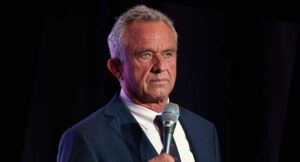
    Robert F Kennedy Jr, one of President Donald Trump’s most controversial cabinet picks, has been sworn in as the next US Health and Human Services Secretary.

    The former presidential candidate will now oversee key health agencies with about 80,000 employees and a trillion-dollar budget. Lawmakers on both sides of the aisle had questioned his baseless health claims and vaccine scepticism.

    On Thursday, Kennedy was confirmed by a 52-48 vote. No Democrats backed him. Former Senate Majority Leader Mitch McConnell was the lone Republican to vote against Kennedy.

    Trump swore Kennedy in himself in the Oval Office, marking another win for the president as he seeks to rapidly overhaul almost every level of government.

    The Senate is putting in late nights and early mornings as they hurry to round out the president’s cabinet by confirming his remaining nominees. Lawmakers also approved Brooke Rollins as head of the Department of Agriculture by a vote of 72-28.

    Kennedy is the second controversial cabinet pick to be confirmed this week after Tulsi Gabbard, another contested pick, was confirmed as director of National Intelligence in a narrow Senate vote on Wednesday.

    He will now oversee agencies such as the Centers for Disease Control and Prevention (CDC), the Food and Drug Administration (FDA), the National Institutes of Health (NIH) and the Centers for Medicare and Medicaid Services.

    Kennedy will also be charged with overseeing the US health industry which includes food safety, pharmaceuticals, public health and vaccinations. He ran for the White House himself in 2024 as an independent, but dropped out and backed Trump.

    The president’s decision to tap Kennedy to lead the federal health agency drew scepticism from several Republicans. Many questioned Kennedy’s past comments on immunisations, his ties to groups making unsubstantiated health claims and his views on abortion.

    Kennedy is the founder of the anti-vaccine group Children’s Health Defense, which gained prominence in the US for casting doubt on the safety and efficacy of childhood vaccinations and making the discredited claim that the shots are linked to autism.

    Kennedy, the nephew of former President John F Kennedy, has denied that he is anti-vaccination, pointing out his own children are immunised. He insisted during his confirmation hearings that he merely supports more stringent studies and safety tests for injections.

    Some Republicans have praised Kennedy for his criticism over the use of food additives and push to curb big pharma.

    During the hearings, lawmakers also grilled Kennedy on his promotion of health misinformation and knowledge of the US healthcare system.

    He was asked to explain his stance on abortion, as he previously indicated that he was in favour of abortion rights. He responded by telling lawmakers he agreed with Trump that access to abortion should be controlled by individual states and that “every abortion is a tragedy”.

    The exchange drew scrutiny from Democrats who accused Kennedy of “selling out” his pro-choice values in order to secure President Trump’s nomination.

    One of his hearings was interrupted by shouting protesters. But he also received loud applause when promising to make America healthy again, a slogan used by Trump’s administration.

    Ahead of the hearing, Caroline Kennedy – the cousin of Robert F Kennedy Jr – urged US senators to reject him as the next health and human services secretary. She said Kennedy’s views on vaccines disqualify him from the role of being one of America’s leading health policymakers.

    It wasn’t enough to dissuade several Republicans who previously withheld their support from Kennedy but wound up approving his nomination during Thursday’s vote.

    Many eyes were on Louisiana Senator Bill Cassidy, a Republican, who chairs the Senate Health Committee.

    Cassidy, a doctor, previously indicated that he was struggling with Kennedy’s stance on vaccines. He voted to confirm Kennedy.

    “We need to make America healthy again, and it is my expectation that Secretary Kennedy will get this done,” Cassidy posted on X after the vote.

    Others closely watched McConnell, a Kennedy critic and polio survivor. McConnell had warned Kennedy not to undermine the polio vaccine.

    He voted against confirmation.

    “Individuals, parents, and families have a right to push for a healthier nation and demand the best possible scientific guidance on preventing and treating illness,” McConnell said in a statement. “But a record of trafficking in dangerous conspiracy theories and eroding trust in public health institutions does not entitle Mr. Kennedy to lead these important efforts.”

    The Senate continues moving forward with Trump’s nominees. After confirming Kennedy, lawmakers are expected to advance the nomination of Howard Lutnick as the next Secretary of Commerce.

    This tees up the final vote for his confirmation to take place by the end of the week.

    Lawmakers are also expected to take up the nomination of Kash Patel, Trump’s controversial choice to lead the Federal Bureau of Investigation (FBI), after the pick received approval from a key committee on Thursday.

    Trump’s pick to head the education department, Linda McMahon had her confirmation hearing on Thursday as well. BBC

  • Andhra sets 45 deadline for govt hospitals to clear medical waste

    Andhra sets 45 deadline for govt hospitals to clear medical waste

    Health minister Satya Kumar Yadav has directed government hospitals to dispose of all unused medical equipment and waste materials within 45 days.

    To facilitate this, the minister has introduced relaxations and amendments to existing disposal guidelines. Committees will be set up at hospitals to identify and assess waste for auction. If the expected income exceeds Rs 25,000, the auction will be conducted through the e-auction portal or sold via the Metal Scrap Trading Corporation.

    The minister stated that this initiative would clear hospitals of waste and create more space for healthcare services.

    Previously, biomedical engineers from the AP Medical Services and Infrastructure Development Corporation identified waste for disposal. However, a shortage of engineers and a lack of support from the Council for Scientific and Industrial Research led to years of accumulation in hospitals. Deccan Chronicle

  • Trump says TikTok deadline could be extended

    Trump says TikTok deadline could be extended

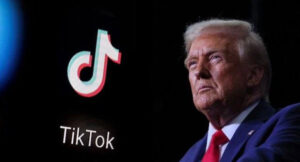
    US President Donald Trump said on Thursday that his 75-day delay in enforcing a ban on the popular short-video app TikTok could be extended, but said he doesn’t think that will be necessary.

    In remarks to reporters in the Oval Office, Trump said he still hopes to make a deal on TikTok to keep the app alive in the U.S., crediting it with helping him win the 2024 presidential election.

    The app’s fate has been up in the air since a law requiring its Chinese owner ByteDance to either sell it on national security grounds or face a ban took effect on January 19.

    Trump, after taking office on January 20, signed an executive order seeking to delay by 75 days enforcement of the law.

    Asked if the deadline was running out, Trump said, “Well, I have 90 days from about two weeks ago, and I’m sure it can be extended. But let’s see. I don’t think you’ll need to.”

    It wasn’t immediately clear what the 90-day reference meant.

    Trump said there were a lot of people interested in acquiring the social media company, and said its image had changed since the 2024 election. He said he found the app to be fair and useful in appealing to young voters.

    Trump said he believed Chinese President Xi Jinping would agree to approve the sale of TikTok to a U.S. buyer as it would also be in China’s interest.

    “I’m going to make it worthwhile for China to do,” he said, without giving any details. “I think it would be to China’s advantage to have the deal be made.” Reuters

  • US-Taiwan semiconductor JV plan could harm TSMC

    US-Taiwan semiconductor JV plan could harm TSMC

    An alleged US government plan to encourage Taiwan Semiconductor Manufacturing Co (TSMC) to form a joint venture with Intel to boost US chipmaking would place the Taiwanese foundry giant in a more disadvantageous position than proposed tariffs on imported chips, a semiconductor expert said yesterday.

    If TSMC forms a joint venture with its US rival, it faces the risk of technology outflow, said Liu Pei-chen (劉佩真), a researcher at the Taiwan Industry Economics Database of the Taiwan Institute of Economic Research.

    A report by international financial services firm Baird said that Asia semiconductor supply chain talks suggest that the US government would ask TSMC to send engineers to Intel’s US fab, applying the company’s know-how to ensure both the fab and subsequent manufacturing projects are viable.

    Although TSMC has built production facilities in Dresden, Germany, and Kumamoto, Japan, through joint ventures, the local businesses it partners with are its customers, Liu said.

    If a joint venture with Intel is formed, it would inevitably focus on advanced semiconductor technology and once technology leaks occur, that could jeopardize TSMC’s leading edge in advanced technology, he said.

    As US President Donald Trump is committed to prioritizing US interests, if TSMC cooperates with Intel it might be placed at a disadvantage, he added.

    TSMC’s leadership in advanced technology is irreplaceable and gives it strong bargaining power, Liu said, adding that if the US imposes tariffs on imported chips, the increased costs could be passed on to TSMC’s customers in the US.

    Therefore, a joint venture with Intel is the worse choice for TSMC and more unfavorable than Trump’s tariff plans, he said.

    Intel is facing operational difficulties and is encountering bottlenecks in technological development, while TSMC is in a leading position. If a TSMC-Intel joint venture is formed, it would help Intel overcome difficulties and bolster the development of the US semiconductor manufacturing industry, Liu said.

    TSMC chairman C.C. Wei (魏哲家) has said the company has no interest in acquiring Intel’s chip manufacturing facilities after the US firm spun off its foundry business, he said.

    Baird analyst Tristan Gerra said that while there is no confirmation and the potential completion of the project could take a long time, the move would make sense, “further building on Intel’s prior CEO’s focus on the company’s core competency, manufacturing.” Taipei Times

  • PM Modi meets Elon Musk, discuss technology, space issues

    PM Modi meets Elon Musk, discuss technology, space issues

    Prime Minister Narendra Modi met SpaceX CEO Elon Musk at Washington DC on Thursday.

    US President Donald Trump has chosen Musk to head a new Department of Government Efficiency (DOGE) last month.

    Musk arrived at Blair House with his three young children, who were sitting with Musk when he met Modi.

    “Had a very good meeting with @elonmusk in Washington DC. We discussed various issues, including those he is passionate about such as space, mobility, technology and innovation. I talked about India’s efforts towards reform and furthering Minimum Government, Maximum Governance,” Modi said in a social media platform X.

    Earlier, Modi met US National Security Advisor Michael Waltz.

    The meeting with Waltz was the first engagement of the day. External Affairs Minister Dr S Jaishankar and NSA Ajit Doval were also present at the meeting.

    Modi arrived in the US capital Wednesday evening for a bilateral meeting with President Trump.

    After arriving at Blair House, the President’s Guest House, Modi met the US Director of National Intelligence Tulsi Gabbard.

    Just hours before her meeting with Modi, Gabbard took the oath of office as the 8th Director of National Intelligence in the presence of Trump. NDTV Profit

  • Centre directs Karnataka to act on Infosys layoffs

    Centre directs Karnataka to act on Infosys layoffs

    The Ministry of Labour and Employment has directed Karnataka’s state labour department to take urgent action regarding Infosys’s termination of employees at its Mysuru campus, following complaints from an IT employees’ association. In a letter from the office of the chief labour commissioner, as viewed by the Times of India, the central ministry instructed state officials to investigate the matter and report back to both the association and the Labour Ministry.

    The intervention comes after the Nascent Information Technology Employees Senate (NITES), a registered IT workers’ body, lodged a formal complaint, labelling the terminations as “illegal, unethical, and in violation of labour laws.”

    Infosys defends terminations, NITES disputes claims
    Infosys claims that fewer than 350 employees resigned through “mutual separation”, stating that they had failed three attempts at an internal assessment following foundational training. However, NITES disputes this figure, arguing that the actual number of affected employees is closer to 700.

    “All freshers get three attempts to clear the assessment, failing which they will not be able to continue with the organisation, as is also mentioned in their contract. This process has been in existence for over two decades and ensures a high quality of talent availability for our clients,” the company said in a statement last week.

    Infosys under fire for ousting trainees
    The dispute gained attention after reports emerged that trainees were given only three hours to resign, with instructions to vacate the Mysuru campus by 6 pm on February 7. Many of these employees, hired as system engineers with monthly salaries below Rs 17,000, were left stranded without accommodation.

    Many trainees also claimed that the test syllabus and criteria were later changed, making it harder to pass, according to a report by The Economic Times. NITES in response condemned the move as “shocking and unethical”.

    “It has come to our attention, through numerous complaints, that Infosys Ltd. has resorted to forcibly terminating recently onboarded recruits, who had already suffered a two-year delay in their joining after being issued offer letters,” NITES said in its complaint.

    Labour ministry steps in
    NITES has demanded an immediate investigation, along with the reinstatement of terminated employees with compensation. The association warned that Infosys’s actions could “set a dangerous precedent for the IT industry”, potentially encouraging other companies to adopt similar cost-cutting measures under the guise of performance assessments.

    Infosys’s decision to fire the Mysuru trainees has drawn scrutiny from employee unions and industry analysts. Some accuse the company of using internal assessments as a cost-cutting strategy. Business Standard

  • Tencent secures exclusive Wimbledon rights in mainland China

    Tencent secures exclusive Wimbledon rights in mainland China

    Chinese digital giant Tencent has expanded its tennis portfolio after securing exclusive broadcast rights to the Wimbledon Championship grand slam in mainland China for the next three years.

    The deal, struck by Tencent and the tournament organizer – the All England Lawn Tennis Club – will see Tencent’s digital platform show coverage of the grand slam from 2025 to 2027.

    The rights package includes live broadcasts of games, as well as additional content such as match replays, on-demand viewing, and highlights across Tencent’s media and social platforms, including Tencent Video, Tencent Sports, WeChat, Tencent News, qq.com, and QQ.

    Paul Davies, associate director of broadcast, production, and media rights at the All England Club, has said: “We are delighted to be working with Tencent to showcase all the thrilling action from Wimbledon to tennis fans in China.

    “Whether it is live broadcast, match replays, highlights or features, Tencent’s multimedia platforms will ensure fans won’t miss a moment of their favorite players at Wimbledon.”

    Tencent previously held exclusive digital media rights for the 2017 Wimbledon edition and earlier this week also announced it had struck a live broadcast deal with women’s tennis’ WTA Tour to show all WTA 250, 500, and 1000 tournaments through to the season-ending WTA Finals in November for the 2025 season.

    IMG, the international sports marketing agency, distributes Wimbledon’s international broadcast rights and manages its sponsorship portfolio as part of a long-standing partnership with the AELTC that was last renewed in December 2022.

    The Wimbledon Grand Slam was previously shown by Chinese streaming platform Shinai Sports, which held exclusive digital rights in mainland China for the 2019 to 2024 editions, which it showed across its platforms including the iQIYI sports channel, app, website, and Qiyigou TV.

    Tennis is enjoying increased popularity in China, due to a new generation of Chinese tennis players showcasing their talents, headlined by women’s world number eight Zheng Qinwen, who won two WTA titles in 2024 and reached the WTA Finals that year.

    Other up-and-coming players the country is keen to showcase include Shang Juncheng, Zhang Zhizhen, and Wang Xinyu.

    Jeff Han, vice-president of Tencent Online Video, said: “An increasing number of people in China are paying attention to and participating in tennis.

    “The cooperation between the All England Club and Tencent will help drive a new wave of tennis enthusiasm. We hope that through the broadcast of Wimbledon and high-quality content, more users will be able to experience the charm of this century-old tournament up close.”

    This year’s edition runs from June 30 to July.

    Meanwhile, the women’s WTA Tour has announced bumper global audience numbers for 2024, reaching a record 1.1 billion on broadcast and streaming platforms worldwide.

    The number represents a 10% increase on the previous season, largely helped by the season-ending WTA Finals in Saudi Arabia attracting the biggest of any previous finals tournament, with a global audience of 78 million – up 160% against the audience for the previous year’s event.

    The tour attributed the jump in numbers to Chinese engagement in the tour, with five Chinese singles players in the top 100 of the WTA Rankings, and a large Chinese audience watching Zheng Qinwen make her debut at the WTA Finals.

    The 2024 WTA Finals was shown on Chinese state broadcaster CCTV, marking the first time the tournament had received linear TV coverage in the country since Peng Shuai, a prominent Chinese tennis player throughout the 2010s, disappeared in November 2021 following allegations of rape she made against a senior Chinese government member.

    In the aftermath of her disappearance, the WTA suspended all its events in China and online streaming service iQiyi ended its 10-year rights deal with the WTA, which first began in 2017.

    However, the WTA’s boycott ended in April 2023, with chief executive Steve Simon admitting a “different approach” was needed. Sportcal