Month: February 2025

  • Kuku FM launches micro drama OTT platform Kuku TV

    Kuku FM launches micro drama OTT platform Kuku TV

    India’s leading storytelling platform, KUKU FM, has entered the video streaming market with KUKU TV, pioneering vertical, serialized microdramas-a first in the country’s OTT landscape.

    With the ambition to become India’s largest vertical microdrama distribution platform within a year, KUKU TV brings a fresh format tailored for today’s mobile-first audience. Microdramas—short, episodic vertical videos with fast-paced storytelling and cliffhanger endings—are designed for quick, on-the-go entertainment. Each episode lasts up to 2 minutes, spanning over 50+ episodes per series, making them ideal for modern viewing habits.

    KUKU TV is available in Hindi, Telugu, Kannada, and Bangla, ensuring regional inclusivity while also curating content from around India. The library currently boasts over 300 hours of premium stories across genres like Action, Bollywood, Sci-Fi, and Mythology, and will be frequently updated with fresh microdramas and vertical movies. Starting next month, one Indian regional microdrama will be released every day.

    Why Vertical Microdramas? The Data Speaks
    As per an Ericsson study, 57% of global video plays come from mobile devices, with 94% of users holding their phones vertically. Social media platforms have already proven that vertical video drives engagement, yet no dedicated OTT platform existed to serve this demand—until now.

    Vinod Kumar Meena, Co-Founder & COO of KUKU, explains: “Traditional OTTs aren’t built for India’s mobile-first audience, whose attention spans are rapidly shrinking. 90% of Indians consume vertical videos on social media, yet there is no dedicated premium OTT platform for this format. With KUKU TV, we are bringing the next wave of entertainment—high-quality, serialized vertical storytelling, available across Indian languages. Our success with KUKU FM, which boasts 4.5 million active paying subscribers, has given us deep insights into what works for personalized content consumption. We are applying those learnings to revolutionize the video streaming experience.”

    A New Frontier for Filmmakers & Creative Industry
    The platform isn’t just about streaming—it’s about democratizing storytelling. 95% of Indian films and creative talent remain undiscovered because traditional distribution models don’t work for them. KUKU TV aims to change that, offering filmmakers and content creators a mobile-first, direct-to-consumer platform to distribute and monetize their work. The company is actively collaborating with directors, writers, and producers to develop and distribute micro dramas, while also acquiring rights to underrepresented films and shows.

    Monetization & Market Opportunity
    Unlike traditional OTTs that rely on Hybrid Video on Demand (HVOD), KUKU TV follows a pure subscription model—no ads, just premium content.

    • Annual Subscription
    • Quarterly Subscription

    The opportunity is vast. India already has 500M+ OTT users and 100M+ active paid subscriptions (Ormax Report). With KUKU TV, there is a chance to tap into the next major wave of digital entertainment—a platform built for the new-age mobile viewer. Today India has over 900 million Internet users of which around 150mn pay for content. Once this population crosses the threshold of 1 billion and more the number of users paying for content will be around 500 million users of which Kuku TV estimates that the market size for paying users for vertical drama will be around 300 million users.

    KUKU TV—Pioneering the Micro drama Revolution
    KUKU TV isn’t just another OTT—it’s the future of entertainment. By merging the popularity of short-form content with the depth of storytelling, KUKU is creating an entirely new category in India’s media landscape.

    For content creators,investors and filmmakers, the message is clear: Now is the time to be part of India’s vertical storytelling revolution with Kuku TV. Kuku TV is opening up applications for aspiring filmmakers and artists for collaboration. Business News Week

  • JioCinema and Disney+ merge today

    JioCinema and Disney+ merge today

    JioStar, the joint venture owned by Mukesh Ambani’s Reliance Industries Ltd and the Walt Disney Company, has set ambitious goals for its video streaming business as it sets to merge the two OTT apps — JioCinema and Disney+ Hotstar—into a new single OTT platform, JioHotstar today (14 February).

    With the merged platform, the company wants to disrupt conventional subscription models. It will offer free viewing of all content, except Hollywood films, for a limited number of hours every month to boost reach and let users sample a diverse range of programming.

    “The idea is to allow every consumer to sample our content extensively,” said Kiran Mani, chief executive officer-digital, JioStar. “JioHotstar invites everyone to come and watch their favourite content without the need for a subscription. We want users to experience a full journey, whether it’s a cricket match or a popular TV series.”

    Kevin Vaz, CEO-entertainment, JioStar, clarified that for current Disney+ Hotstar paid subscriber, nothing changes when they open the new app. But for JioCinema subscribers, subscription will be auto-upgraded to the premium service.

    “Our pricing remains familiar—for example, ₹149 for mobile subscriptions for a quarter and ₹499 a quarter for the ad-free experience,” said Vaz. “This consistency is crucial because it ensures that loyal users do not face any disruption.”

    The merger isn’t merely about combining two content libraries, according to Mani. “Instead, it’s about integrating diverse technologies—analog, network digital, and the app ecosystem—into one micro app that adapts seamlessly to any device, whether it’s a two-inch smartphone screen or a 200-inch display,” he said.

    “It’s about creating moments that matter. We want the app to be so intuitive that it feels like it was built just for you.”

    The company is setting sights on reaching a billion screens. “With our combined content and technology, we’re confident that we can activate a billion screens and offer every consumer a taste of our world-class content,” Mani said.

    The strategy also includes deep investments in regional and family-centric content. “We are not just focusing on high-budget blockbusters. We’re committed to offering a wide range of content—from big originals to TV serials that have run for hundreds of episodes. The idea is to ensure that there is something for every segment of the audience, no matter where they are in the country,” said Vaz.

    The company plans to double South Indian content on the platform—from 500 hours to 1100 hours—and there will be significant investments in original programming. “This move will not only enrich our content library but also deliver deeper, more engaging stories that resonate with local audiences,” said Vaz. LiveMint

  • Steve Kerr calls out NBA after Warriors vs Mavericks

    Steve Kerr calls out NBA after Warriors vs Mavericks

    The Golden State Warriors entered their Wednesday night contest against the Dallas Mavericks a perfect 2-0 in the Jimmy Butler era after acquiring the former All-Star from the Miami Heat before the NBA trade deadline. Going up against a shorthanded Mavericks team without several key bigs, it seems as if Golden State could walk into Dallas and win the game with size.

    However, Golden State’s advantage on the glass and points in the paint wasn’t enough, as Mavericks guard Kyrie Irving scored 42 points and led Dallas to a 111-107 victory over the Warriors. Golden State still has one game remaining against the Houston Rockets before beginning the All-Star break, as Warriors head coach Steve Kerr expressed his frustration with the league post-game.

    “That’s what makes this loss more frustrating,” Kerr said. “We’re gonna get into Houston at [3:00 AM] because the NBA in its infinite wisdom makes us play an 8:45 game. They clearly don’t care about rest or player health it’s just ratings and all that stuff, so I get it.”

    Kerr mentioned that the team might opt not to bring veterans like Steph Curry to Houston due to the fatigue it will cause playing two games so close to one another. Golden State’s three oldest players all played 32 or more minutes in Wednesday’s loss.

    Regardless of who plays, Golden State takes their one-game lead over the 11th-seed Phoenix Suns to Houston for a matchup against the fourth-seeded Rockets, with tip-off scheduled for 8:00 p.m. EST. Si

  • Toyam Sports Limited joins hands with Saudi Arabia Cricket Federation for Saudi Foundation Day Cup 2025

    Toyam Sports Limited joins hands with Saudi Arabia Cricket Federation for Saudi Foundation Day Cup 2025

    Toyam Sports Limited, through its subsidiary Pacific Star Sports, is thrilled to partner with the Saudi Arabian Cricket Federation (SACF) and the Eastern Province Cricket Association to launch the highly anticipated Saudi Foundation Day Cup 2025. Organized in collaboration with Axis United Trading Co. (AUTCO), the exclusive distributor of FIREOX, this marks Saudi Arabia’s first-ever domestic T20 cricket tournament. The event will take place from February 14 to 22, 2025, at Al-Tamimi Cricket Ground, Dammam.

    This landmark event celebrates Saudi Arabia’s flourishing passion for cricket while positioning the Kingdom as a rising hub for cricketing talent and entertainment. With 19 exciting matches featuring eight competitive domestic teams, the Saudi Foundation Day Cup 2025 promises to enthral fans and set a new benchmark for sporting excellence in the region. The tournament will be streaming live on the popular sports OTT platform ‘FANCODE’.

    Cricket has become a unifying force in Saudi Arabia, particularly among the Kingdom’s dynamic and diverse expatriate population. Highlighting the significance of the event, Tariq Zaid Sagga, CEO of the Saudi Arabian Cricket Federation, remarked: “Cricket is cherished across Saudi Arabia, especially among our vibrant expatriate community, where it is followed with immense enthusiasm and love. The Saudi Foundation Day Cup 2025 is more than just a series of matches–it’s an opportunity to bring communities together, create unforgettable moments, and showcase Saudi Arabia’s potential as a global cricketing destination. With thousands of fans anticipated to attend over the nine-day event and a significant online audience expected to tune in.”

    Beyond the action on the field, the tournament aims to nurture local talent, unite communities, and leave a lasting legacy of sporting excellence, further cementing Saudi Arabia’s reputation in the international cricketing arena.

    Tournament Highlights
    Venue: Tamimi Cricket Ground, Dammam Dates: February 14-22, 2025, Teams: 8 Competitive Domestic Teams Matches: 19 Thrilling T20 Games Over 9 Days

    Toyam Sports Limited CMD & Chairman, Mohamedali Budhwani, expressed his excitement about this collaboration, stating: “We are thrilled to partner for the Saudi Foundation Day Cup 2025, a landmark event that strengthens Toyam Sports Limited’s global footprint. This tournament opens new avenues in a dynamic market, and I am confident it will be a tremendous success, reinforcing our commitment to sports development worldwide. Saudi Arabia’s growing cricket scene is a promising frontier, and our association will play a key role in its expansion.”

    “Organizing this prestigious event alongside SACF and the Eastern Province Cricket Association is a privilege for Toyam Sports Limited and ours subsidiary Pacific Star Sports. We sincerely thank the Al-Tamimi Group for their invaluable support in providing a world-class venue for this tournament.”

    “We are proud to have esteemed sponsors and partners, both local and international, on board for this exciting journey. This collaboration offers a unique opportunity to engage with a passionate cricketing community and contribute to Saudi Arabia’s rise as a cricketing hub. Together, we are building a lasting legacy that will inspire future generations.” Business Standard

  • Sony Sports Network bags PCB’s international home matches and PSL’s broadcast rights

    Sony Sports Network bags PCB’s international home matches and PSL’s broadcast rights

    Sony Sports Network has secured the television broadcast rights for the Pakistan Cricket Board’s (PCB) home cricket series and the 2025 Pakistan Super League (PSL).

    The television rights are exclusive for India, Nepal, Bhutan, Maldives and Myanmar, and non-exclusive for Bangladesh, Afghanistan and Sri-Lanka.

    The agreement commenced with the recent tri-nation series between Pakistan, New Zealand, and South Africa. In addition to the tri-nation series, Pakistan will be hosting Bangladesh, Afghanistan, Ireland, South Africa and Sri Lanka during the course of the year.

    Sony Sports Network currently has rights for New Zealand Cricket, the England and Wales Cricket Board, Sri Lanka Cricket, and the Asian Cricket Council (ACC).

    Rajesh Kaul, chief revenue officer – distribution and international business and head – sports business, Sony Pictures Networks India (SPN), said, “Sony Sports Network’s key goals includes delivering the best cricketing action to our viewers. To that end, we are continuously enhancing our cricket offerings, and 2025 is set to be a landmark year with over 1,800 hours of live cricket on Sony Sports Network. Through this deal, we also have access to great archival content that includes Pakistan vs India matches that we will also showcase on our network. The acquisition of the Pakistan Cricket Board rights along with New Zealand Cricket, England and Wales Cricket Board, Sri Lanka Cricket and the Asian Cricket Council (ACC) positions us as the premier destination for cricket in India.” Manifest-Media

  • WHO facing new challenges as US withdrawal looms

    WHO facing new challenges as US withdrawal looms

    The World Health Organization on Tuesday wrapped up its executive board meeting, held against the backdrop of the United States — by far its largest donor — heading for the exit.

    The agenda-setting eight-day gathering at the WHO’s Geneva headquarters wrestled with the impact of US President Donald Trump’s January 20 decision to start the one-year process of withdrawing from the UN health agency.

    “We are operating with twin strategic goals: to mobilise resources and to tighten our belts,” WHO chief Tedros Adhanom Ghebreyesus said in his closing remarks.

    “We regret the announcement by the United States of its intention to withdraw, and it was also sad to see them participating less this week,” he said.

    “I think we all felt their absence. We very much hope they will reconsider and we would welcome the opportunity to engage in constructive dialogue.”

    The United States is on the executive board, but made only fleeting contributions throughout the eight-day event.

    The board is composed of 34 member states, who nominate a board member who is technically qualified in health.

    The board agrees the agenda and resolutions for the decision-making World Health Assembly in May.

    “We have had to face new realities, with the announcement of the withdrawal of the US from the WHO,” said Barbados’s health minister Jerome Walcott, the board’s chair, as he closed the meeting.

    “Despite the many challenges we faced, we have come together and found agreement on 40 decisions and seven resolutions, which aim to strengthen our work and to enhance good public health.”

    Prioritising funding
    If anything, the US move has driven home the need for more secure and reliable funding at WHO, which in recent years has relied heavily on voluntary contributions.

    As part of a plan to swell membership fees to cover at least half of the organisation’s budget by 2030, the board recommended a 20 percent fee hike.

    Boosting membership fees is seen as a way for WHO to reduce its reliance on a handful of major donors and ensure more predictable and flexible finances.

    “This is a very strong signal of your support, and it’s a major step towards putting WHO on a more predictable and sustainable financial footing,” Tedros said.

    “You said we need to prioritise based on realistic funding. We agree,” he added.

    “You said we need to improve efficiency, enhance oversight and reduce unnecessary expenditures. We agree.”

    Last week, the board also re-adopted a resolution on responding to the health conditions in the Palestinian territories.

    The total planned costs required to implement the decision were given as $648 million, including $275 million for emergency response and $265 million for early recovery and rehabilitation.

    Other topics discussed by the board included non-communicable diseases, mental health, skin diseases, environmental health, air pollution, the global health workforce, substandard and falsified medicines, maternal and newborn health, health emergencies, and universal health coverage. AFP

  • Wearable technology market to grow by USD 99.4 bn from 2025-2029

    Wearable technology market to grow by USD 99.4 bn from 2025-2029

    The global wearable technology market size is estimated to grow by USD 99.4 billion from 2025-2029, according to Technavio. The market is estimated to grow at a CAGR of over 17.3% during the forecast period. Popularity of wearable devices as a payment method is driving market growth, with a trend towards development of low-power electronics. However, rising penetration of counterfeit products poses a challenge.

    Key market trends fueling growth
    The wearable technology market is experiencing significant growth, with smartwatches, swimmers, cyclists, runners, gym-goers, and athletes among the key consumer groups. Smart clothing and IoT-based apparel are also gaining popularity. Healthcare is a major sector, with smart wearables offering real-time health monitoring for patients and healthcare providers. Counterfeit products pose a challenge, but consumer electronics companies are innovating with electronic displays, connectivity, and mobile phone integration. Wearable technologies include fitness bands, AR/VR headsets, and pharma solutions. Older populations benefit from fall detection and gesture controls, while younger consumers drive demand for virtual and augmented reality devices. Wearables offer benefits for chronic diseases like cardiovascular disease and obesity, and fitness enthusiasts and the tech-savvy younger population are key consumers. Data security is a concern, but the benefits of wearable healthcare devices, including health self-efficacy and autonomy, outweigh the risks. The market is expected to grow further with the integration of MEMS sensors, GPS, IMU, and fitness-tracking wearables. The consumer electronics segment is driving technological innovativeness, with digital health technology becoming increasingly important.

    The global wearable technology market is experiencing significant growth due to the increasing demand for advanced wearable devices such as smartwatches, smart bands, smart rings, and Head-Mounted Displays (HMDs). To meet this demand, vendors are focusing on developing high-performance and low-power-consumption electronic components. These components, including sensors, processors, and batteries, are essential for enhancing the functionality and efficiency of wearable electronics. By adopting low-power-consumption semiconductors, vendors can create devices that offer extended battery life and improved performance. This trend is expected to continue as the market for wearable technology continues to expand.

    Research analysis
    Wearable technology is revolutionizing the way we monitor and manage our health and fitness. From smartwatches and fitness trackers for runners, cyclists, and swimmers, to IoT-based apparel for gym-goers, this market caters to various consumer needs. Healthcare professionals use wearables for remote patient monitoring, while consumers seek health self-efficacy through real-time data. Counterfeit products pose a challenge, but authentic wearables offer advanced features like electronic displays, connectivity to mobile phones, and health monitoring solutions using MEMS sensors, GPS, IMU, and clinical data. Wristwear includes fitness-tracking devices and head-mounted displays, expanding the realm of possibilities for this burgeoning industry. IoT-enabled garments and smart clothing further enhance the user experience, integrating electronic devices and electronic displays seamlessly into everyday life.

    Market research overview
    Wearable technology is revolutionizing the way we monitor and improve our health, with various types of devices catering to different consumer groups. Smartwatches, fitness bands, and IoT-based apparel are popular among athletes, adventurers, and fitness enthusiasts. Smart clothing and IoT-enabled garments are transforming the fashion industry, offering benefits like real-time health monitoring, connectivity, and even payment services. The healthcare sector is leveraging wearables for disease management, telehealth solutions, and medical practice, including pharma, surgical training, and health monitoring solutions. Consumers, from the younger population to older adults, are embracing wearable technologies as they offer benefits like health self-efficacy, health and autonomy, and technological innovativeness. However, concerns around data security and counterfeit products persist. The market for wearable technologies includes various electronic devices, from small sensors to smart hats, eyewear and headwear, footwear, neckwear, body wear, and more. The consumer electronics segment is a significant contributor, with companies exploring opportunities in multimedia industry, virtual reality, and augmented reality. Wearables are expected to become increasingly integrated with mobile phones, GPS, IMU, MEMS sensors, and mobile applications, offering clinical and non-clinical data to doctors and patients alike. The benefits of wearable technologies extend beyond fitness tracking, with applications in chronic diseases like cardiovascular disease and obesity. As technological literacy grows, the purchasing power of consumers is driving the market forward, with companies continuously innovating to meet the diverse needs of their customers. Technavio

  • South India becomes beacon of healthcare innovation

    South India becomes beacon of healthcare innovation

    South India plays a significant role as a global leader, particularly in the services sector, with a spotlight on healthcare, tourism and economic growth. The summit, which brought together industry leaders, policymakers, and innovators, marked a defining moment for South India as a dynamic force in economic growth and healthcare excellence,” said Ms Shobana Kamineni, Past President of CII and Executive Vice Chairperson of Apollo Hospitals at the closing of the CII Mystic South – Global Linkages Summit 2025.

    “As a region accounting for 31% of India’s GDP, South India continues to outpace the national average in annual growth, showcasing its resilience, innovation, and economic dynamism. India supplies 20 percent of global pharmaceuticals to the world. The IT, ITeS, and biotechnology sectors stand at the forefront of South India’s global economic footprint,” she stressed.

    Key to the region’s future growth, Ms Shobana pointed out the need for continuous investment in infrastructure, digital connectivity, and sustainable solutions. “We must invest in smarter cities, renewable energy, and a workforce ready for the challenges of emerging technologies to maintain our leadership in services and healthcare,” she pointed out.

    South India is home to some of the country’s leading hospitals and medical institutions, including Apollo Hospitals, Narayana Health, and Manipal Hospitals, which have set global benchmarks in medical excellence. “South India has become a beacon of healthcare innovation, with cities like Chennai, Bengaluru, Hyderabad, and Kochi not only offering cutting-edge treatments but also driving groundbreaking medical research,” she added.

    Over the past two days, attendees engaged in deep discussions, exploring South India’s contributions to India’s economic landscape. The summit also witnessed the announcement of several collaborations and partnerships aimed at enhancing South India’s infrastructure and healthcare capabilities. These initiatives are expected to bolster the region’s leadership role, further aligning with its commitment to developing smarter cities and sustainable solutions.

    With several data-driven insights and success stories from industry leaders, the summit illuminated the tangible progress made in South India’s healthcare and service sectors. The region’s increasing focus on digital connectivity and green technologies is laying the foundation for its future leadership on the global stage.

    Looking ahead, the summit has set the stage for South India’s next phase of growth. With its commitment to innovation, education, and sustainability, South India stands poised to lead the charge in shaping a resilient and globally competitive future. The summit has created a pathway for continued collaboration, ensuring the region’s role as a dynamic force in the global economy.

    As the summit concluded, participants left with renewed confidence in South India’s ability to drive India’s global ambitions forward. With its integrated approach to innovation, education, and healthcare, South India is well-positioned to continue its leadership in shaping the future of services and healthcare on the global stage. SMEStreet

  • IT raids Parivar Super Specialty Hospital and Research Center, Gwalior

    IT raids Parivar Super Specialty Hospital and Research Center, Gwalior

    The Income Tax (IT) Department conducted raids at a private hospital, along with other facilities linked with the same, on Wednesday. The action was taken after complaint of disproportionate assets.

    More than six teams from the department carried out simultaneous searches at two hospital branches, as well as the homes and offices of the hospital’s owners.

    According to information, the raids took place at Parivar Super Specialty Hospital and Research Center near Mandhre Ki Mata Temple and Parivar Hospital on Hospital Road.

    The IT teams are investigating financial documents following complaints of tax evasion. However, no official statement has been issued yet.

    As soon as news of the raid spread, panic gripped the market. Several hospital owners from the area left their offices, fearing further action.

    Investigation underway
    The IT officials directly took control of the accounts office and the owner’s office to examine financial records. While the exact amount of tax evasion is unclear, the detailed investigation suggests that the case could be significant.

    Security was tightened before the operation, and police personnel have been stationed outside the hospital. Only patient attendants who pass strict questioning are being allowed inside. The investigation is ongoing. Free Press Journal

  • Russia, China launch project on high-tech medical equipment production

    Russia, China launch project on high-tech medical equipment production

    A joint Russian-Chinese project on reverse engineering and localised production of high-tech medical equipment has been launched at I. M. Sechenov First Moscow State Medical University (Sechenov University).

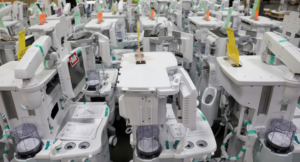
    Specialists will focus on the development, improvement, and small-scale production of critical medical devices, including mechanical ventilators, anaesthesia and respiratory systems, patient monitors, endoscopes, and consumables.

    According to Aleksander Kulish, Director of Technology Commercialisation at Sechenov University, the project aims not only to establish the production of in-demand equipment but also to achieve technological sovereignty for Russia in the field of medical equipment manufacturing. He clarified that Sechenov University will also set up a service department for technical maintenance.

    “Our leading engineers, as well as doctors, will be involved in enhancing these devices. The participation of clinicians – the end users of medical equipment – will help ensure the development of truly high-quality and user-friendly products,” Kulish noted.

    The initiative is being implemented at the university’s Centre for Engineering Development and Design Bureau, in collaboration with a major medical equipment manufacturer from China and other partners of Sechenov University. The production of key components and final products will be localised at industrial sites in Moscow and the Moscow region. TV BRICS