Month: February 2025

  • With a historic victory, Afghanistan eliminates England the prestigious Champions Trophy

    With a historic victory, Afghanistan eliminates England the prestigious Champions Trophy

    Ibrahim Zadran’s majestic 177 and pacer Azmatullah Omarzai’s fifer trumped Joe Root’s masterful hundred, as the brave Afghanistan registered a thrilling 8-run win to knock a largely-insipid England out of the Champions Trophy on Wednesday. England are winless after two matches and in their last league match in Group B they will face South Africa, who already have three points along with Australia. Afghanistan now have two points and will have to beat the Aussies in their final group match to entertain the hopes of reaching the last eight. For a long time, England’s chase merely rattled along as the dismissal of Phil Salt and Jamie Smith jolted them early. They were 30 for two then, and eventually ended up at 317 all out with a ball to spare as pacer Omarzai (5/58) struck at crucial junctures.

    But Root (120, 111b, 11×4, 1×6) brought stability to England’s innings through two alliances, adding 68 runs with Ben Duckett (38), who was dropped on 29, for the third wicket and then an 83-run stand with skipper Jos Buttler for the fifth wicket.

    They were not really blazing partnerships but kept England afloat, keeping them in the vicinity of the asking rate.

    But the jettisoning of Duckett and Buttler prematurely curtailed those blossoming joint ventures, as Root had to shoulder the burden all by himself.

    Root’s was a clever innings, as he hardly hit any ball in anger but still managed a strike-rate close to 100, and at times above 100.

    But there those little flourishes which are so central to a Root innings such as a reverse sweep four off wrist spinner Noor Ahmad or a scooped six behind wicketkeeper off Fazalhaq Farooqi.

    He brought up his 17th ODI hundred with a single off Rashid Khan, and looked to stay on. But a rather tired ramp off pacer Omarzai ended in the gloves of keeper Rahmanullah Gurbaz.

    But England had another willing soldier in Jamie Overton (32, 28b), who added precious 54 runs for the seventh wicket, but a feeble heave off Omarzai ended his stint.

    It also marked the end of England’s journey in this tournament.

    Earlier, Zadran’s remarkable innings helped Afghanistan pile 325 for seven.

    Zadran, whose daddy hundred came off 146 balls (12×4, 6×6), had solid support from skipper Hashmathullah Shahidi (40, 67b, 3×4), with whom he raised 103 runs for the fourth wicket, and Azmatullah Omarzai (41, 31b) with whom he milked 72 runs for the fifth wicket.

    Later, he plundered 111 runs for the sixth wicket with Mohammed Nabi (40, 24b) to put England through the wringer.

    But Afghanistan’s start to a must-win game was way off the mark after they elected to bat first. Jofra Archer’s (3/64) pace and accuracy put them under considerable strife inside the first 10 overs on an absolute batting beauty.

    Rahmanullah Gurbaz dragged an Archer delivery back onto his stumps while attempting a drive, Sediquallah Atal was trapped in front and Rahmat Shah pulled one straight to Adil Rashid at square leg as the Afghans slumped to 37 for three inside the Power Play.

    Zadran began the repair work in the company of Shahidi and they were understandably circumspect.

    But once he reached 50 off 65 balls, Zadran opened up more and smoked Jamie Overton for a couple of fours to signal the shifting of gears.

    However, Shahidi was dismissed when he tried to reverse sweep leg-spinner Rashid, whose front-of-the-arm delivery crashed onto the stumps.

    But Zadran flourished in the company of Omarzai as England felt the heat of double-barrel firing.

    England also had to deal with a knee injury to pacer Mark Wood, as he bowled only eight overs even after spending some time away from the field during the Afghan innings.

    Zadran, who brought up his sixth ODI hundred off 106 balls, soon slipped into overdrive, smashing Overton for 6, 4, 4, in an over.

    The departure of Omarzai did not slow down the 23-year-old as he blasted Archer for 6, 4, 4, 4 to reach the 150-run mark for the second time in his career.

    Listen to the latest songs, only on JioSaavn.com

    Along with a veteran batter Nabi, Zadran added quick runs for the sixth wicket at over 11 runs an over as England fell apart spectacularly in the final 10 overs, conceding 113 runs. Zadran eventually fell to Liam Livingstone in the final over. Sports NDTV

  • Global microscopy market to hit USD 13.3 bn

    Global microscopy market to hit USD 13.3 bn

    The global market is expected to grow from $9.7 billion in 2024 to $13.3 billion by the end of 2029, at a compound annual growth rate (CAGR) of 6.6% during the forecast period of 2024 to 2029, according to BCC Research.

    This study analyzes the global microscopy market, focusing on microscope types, accessories, and applications. It looks at current trends, future growth prospects, and key drivers and challenges. The report includes company profiles, financials, product details, and insights on new technologies and patents.

    Interesting facts
    The microscopy market is evolving with the impact of AI, improving tasks such as sample preparation and image analysis without human errors. There is growing demand for digital and surgical microscopes, and in response major companies have been launching new products continuously.

    Factors contributing to the market’s growth include:

    1. Technological advances: Improvements and innovations in technology are making processes faster, more efficient and more powerful. These advances lead to new products, better solutions, and increased capabilities in various fields.
    2. Increasing R&D investments: More money is being spent on studying and creating new products or technologies. This helps improve existing solutions and discover new ones to meet future needs.
    3. Other sectors, including semiconductors, nanotechnology and education: Industries such as electronics (semiconductors), tiny-scale science (nanotechnology), and learning (education) use advanced technologies and research for growth and innovation.

    BCC Research

  • Trump issues an executive order to increase the transparency of medical expenses

    Trump issues an executive order to increase the transparency of medical expenses

    US President Donald Trump signed an executive order on Tuesday aiming to improve price transparency on healthcare costs by directing federal agencies to strictly enforce a 2019 order he signed during his first term.

    The order directs the Departments of the Treasury, Labor, and Health and Human Services to within 90 days come up with a framework to enforce Trump’s 2019 executive order forcing health insurers and hospitals to disclose healthcare cost details.

    This includes requiring the disclosure of actual prices not estimates, update existing guidance or proposing new regulations that ensure price information is standardized, and updating or issuing enforcement policies that guarantee compliance.

    “You’re not allowed to even talk about it when you’re going to a hospital or see a doctor. And this allows you to go out and talk about it,” Trump told reporters as he signed the order. “It’s been unpopular in some circles because people make less money, but it’s great for the patient.”

    Trump’s initial 2019 order required hospitals to maintain a consumer-friendly display of pricing information for up to 300 shoppable services and a machine-readable file with negotiated rates for every single service a hospital provides.

    It required health plans to post their negotiated rates with providers, their out-of-network payments to providers, and the actual prices they or their pharmacy benefit manager pay for prescription drugs; and to maintain a consumer-facing internet tool making price information accessible.

    It was strongly opposed by hospital groups who unsuccessfully challenged it in court. They argue it forces them to disclose private negotiations with insurers, undermining competition and violating their First Amendment free speech rights, a claim rejected by the court. Reuters

  • A US Senator asks UnitedHealth Medicare for information about Medicare charges

    A US Senator asks UnitedHealth Medicare for information about Medicare charges

    US Senator Chuck Grassley requested detailed information on UnitedHealth’s Medicare billing practices in a letter to CEO Andrew Witty, amid reports suggesting the insurer may have leveraged billing rules to its advantage.

    Shares of the company fell before closing up 2% at $461.52 after the Wall Street Journal first reported news of the Grassley letter sent on Monday.

    A spokesperson for UnitedHealthcare said in a statement the company would provide Senator Grassley with the facts, not “misinformation”. It said its Medicare Advantage program, in which it manages plans for people aged 65 and older or who are disabled, is high performing and highly regulated and audited.

    Over the last several months, the Journal has run a series of stories detailing how UnitedHealth profited from using Medicare billing rules to its favor. On Friday, it reported the US Justice Department is investigating the company, while the health insurer said it was unaware of any new probe underway.

    Grassley, a Republican from Iowa who heads the Senate Judiciary Committee, demanded the health insurer provide all records relating to the company’s compliance program, training manuals and guidance documents to better understand its billing practices.

    The letter cited findings from the Journal’s articles and said “the apparent fraud, waste, and abuse at issue is simply unacceptable and harms not only Medicare beneficiaries, but also the American taxpayer.”

    Shares of rival Medicare Advantage insurer Humana and CVS Health ended up around 2% and 1%, respectively.

    Kevin Gade, chief operating officer at Bahl & Gaynor, said now could be a good time for long-term investors to buy managed healthcare stocks.

    He said that the Wall Street Journal reporting on the coding and billing issues that the investigations are believed to be based upon are backwards-looking and practices that the Medicare agency has already begun to tackle in auditing. Gade’s firm owns about 2.6% of UnitedHealth shares.

    The company is expected to provide details before March 10 on its steps to review all diagnoses submitted to the Centers for Medicare & Medicaid Services for Medicare Advantage enrollees, as well as identify whether they are obscure, irrelevant or inaccurate, according to the letter.

    Nearly half of the 65 million people covered by Medicare are enrolled in Medicare Advantage plans run by private insurers.

    Insurers are paid a set rate for each patient, but can be paid more for patients with multiple health conditions.

    UnitedHealth, with various businesses including a large pharmacy benefit manager, faces margin pressure from rising medical costs in its insurance business. Reuters

  • Millions of Europeans believe it challenging to afford expenses for basic medical treatment

    Millions of Europeans believe it challenging to afford expenses for basic medical treatment

    Millions of Europeans are struggling to afford essential healthcare services, forcing them to sacrifice basic needs due to high out-of-pocket medical expenses, according to a new report by the World Health Organization (WHO).

    The study highlights the financial burden placed on households, particularly low-income families, who must pay for medical services, dental care, and medication when treatment is outside hospital settings.

    Across WHO member states, catastrophic healthcare costs—where medical expenses take up a significant portion of household income—affect between 1% and 21% of households.

    In 25 countries, more than 5% of the population faces severe financial strain due to direct healthcare payments. Unmet medical needs due to cost, distance, or long waiting times impact up to 13% of the population for general healthcare and 16% for dental care.

    Greece is among the most affected countries, with nearly 5% of the population pushed into poverty due to healthcare costs. An additional 10% has faced such high medical expenses that they struggle to afford other basic necessities. The report attributes these financial hardships primarily to the cost of medications, which disproportionately affects low-income households.

    The WHO warns that many European health systems are unprepared for future health crises, posing risks to national security and compliance with international health regulations.

    Disparities in healthcare access and emergency preparedness remain significant across member states, while many systems struggle to meet the needs of aging populations.

    Elderly care is an increasing concern, with nearly half of Europeans over 65 who struggle with daily self-care lacking adequate support.

    In Greece, as in much of Europe, home care services remain scarce, with only 6.7% of people with moderate disabilities and 24.8% of those with severe disabilities receiving in-home assistance.

    Meanwhile, chronic illnesses such as cardiovascular diseases and cancer continue to rise. In Western and Northern Europe, cancer rates are increasing, but mortality is declining due to improved treatment.

    However, Eastern European countries, including Greece, continue to see higher cancer-related deaths, highlighting persistent healthcare inequalities across the continent. ΤΟ ΒΗΜΑ

  • BioAsia-2025: T-Hub & HIM unite to promote MedTech

    BioAsia-2025: T-Hub & HIM unite to promote MedTech

    Telangana is set to introduce India’s first Life Sciences Policy, Chief Minister A. Revanth Reddy announced on Tuesday while inaugurating the BioAsia-2025 summit at HICC. The policy aims to position Hyderabad and Telangana as global leaders in biotech, life sciences, and innovation.

    On the first day of the summit, 11 companies signed MoUs with the state government, committing to an investment of Rs 5,445 crore, which will generate 9,800 jobs.

    Revanth, along with IT and Industries Minister D. Sridhar Babu, emphasised the state’s focus on attracting further investments, stating, “We hope to create over five lakh new jobs. The Green Pharma City, a key initiative under the Future City project, is progressing rapidly—some of the biggest pharmaceutical companies have signed MoUs.”

    The chief minister highlighted the development of pharma villages between the Outer Ring Road (ORR) and Regional Ring Road (RRR) to facilitate the growth of the pharmaceutical sector. He also presented the Genome Valley Excellence Award to Professor Patrick Tan from Singapore.

    He noted that Hyderabad has long been a hub for major pharmaceutical, healthcare, biotech, and life sciences companies. “Long ago, we had the vision to create a great research institution that fostered a culture of innovation and excellence. The state government has invested in higher education, creating a vast talent pool of scientists, technologists, domain experts, and engineers. This led to the creation of Genome Valley years ago,” he said.

    As Telangana is a landlocked state, the government is developing a mega dry port and linking it to a seaport in neighbouring Andhra Pradesh. “These two ports will be connected by a dedicated rail and road link,” he confirmed, adding, “We will develop Hyderabad and Telangana into one of the world’s best and largest ecosystems for Biosciences, Biotech, and Life Sciences in innovation, research and development, manufacturing, skill development, and investment.”

    Revanth also spoke about Hyderabad’s emergence as the EV capital of India, citing the state’s efforts to replace 3,000 public transport buses with electric vehicles. “Outside the core urban area, I want to develop one of the world’s largest manufacturing hubs. I want to make it my offer to the world for its ‘China Plus One’ needs. We will connect ORR and RRR with several radial roads. These will help us create multiple manufacturing clusters for different verticals,” he stated.

    Expressing his long-term vision for the state, the chief minister said, “I want to transform my state’s economy into a $1 trillion economy in the next 10 years. The core urban area will become a service-only city and aim for Net Zero. This is where we are creating Future City, AI City, and many other big projects.”

    Revanth underscored the state’s commitment to providing an ideal business ecosystem with strong policies, infrastructure, and support. “In the last 25 years, Hyderabad has emerged as a powerhouse in pharma manufacturing, IT, and digital health. Telangana is the No. 1 state in India in attracting investments, both domestic and foreign. We have the lowest inflation and are creating maximum jobs,” he said.

    At the recently concluded WEF in Davos, Telangana secured investments worth Rs 1.78 lakh crore, expected to generate nearly 50,000 jobs across multiple sectors. Additionally, last year, the state attracted investments worth Rs 40,000 crore in the Life Sciences sector, he added.

    On the sidelines of the summit, Revanth and Sridhar Babu met representatives from the Queensland government in Australia. Discussions centred on investment opportunities in industry, sports universities, trade, and other sectors.

    Queensland Governor Jeannette Young and Finance, Trade, Employment, and Training Minister Ros Bates attended the meeting, with the Queensland representatives showing a positive response to entering investment agreements with Telangana.

    Meanwhile, several major developments were announced as part of Hyderabad’s growing stature in the Life Sciences sector. Green Pharma City expansion saw companies like Granules, Orbicular, Aizant, Biological E, Virchow, Virupaksha, Jubilant, Vimta, Aragen, Bharat Biotech, and Sai Life Sciences signing MoUs, bringing in Rs 11,100 crore in investments and generating over 22,300 jobs.

    Los Angeles-based Agilisium opened an office at RMZ Spire and launched a Life Sciences & Innovation Lab. Life Sciences announced the establishment of a Biopharma cGMP testing lab in Genome Valley, while Meishi Pharma (Lotus Company) set up its second R&D centre.

    Strategic partnerships were also formed to boost research and innovation. The University of Queensland and Telangana Life Sciences will collaborate on research, digital healthcare, and AI-driven innovations. Telangana became the first hub for the Indian Digital Health Activator, a World Economic Forum initiative to accelerate public-private collaboration in digital health.

    Additionally, 11 CRDMOs have united under the Innovative Pharmaceutical Services Organisation (IPSO) to drive industry advancements, regulatory support, talent development, and supply chain strengthening. Health Innovation Manchester and T-Hub have also partnered to promote innovation in MedTech, diagnostics, and digital health to enhance healthcare solutions. The New Indian Express

  • UK firms disclose significant growth in India; MedTech & life sciences are the features

    UK firms disclose significant growth in India; MedTech & life sciences are the features

    Companies in the UK’s tech and life sciences sectors are making huge strides in global markets and going for growth by announcing expansions in India.

    UK tech and science firms are thriving thanks to deals and partnerships valued at tens of millions of pounds, involving everything from supplying internet-based learning to pupils in disadvantaged communities to helping improve outcomes for patients undergoing complex surgery in hospitals.

    Trade Secretary Jonathan Reynolds has been in New Delhi this week, as the UK Government relaunched talks on a trade deal with India to bring more opportunity to UK businesses and deliver on its core mission to grow the economy, as part of the Plan for Change.

    Already an economic heavyweight, India is expected to become the fourth largest importer by 2035, presenting new opportunities for UK businesses. In the year to September 2024, UK businesses exported a total of £17 billion goods and services to India.

    Business and Trade Secretary Jonathan Reynolds said, “Tech and life sciences are two huge growth sectors for the UK economy that feature at the heart of our Industrial Strategy.

    “I’m proud that government support has helped some of our finest businesses in these sectors to expand into the exciting Indian market.

    “It’s great to see them going for growth, and their successes will amount to tens of millions of pounds for the UK economy, which will see living standards improve, and put money in people’s pockets.”

    UK businesses expanding their exports into India include:

    • Manufacturer of RF solutions to mobile networks, defence, and aerospace markets Radio Design, headquartered in Shipley, has expanded its global operations with a manufacturing facility in India.
    • Global Tech operations for Marcus Evans Group, London-based specialists in high-impact and bespoke events, are now established in Mumbai.
    • Appliansys, an innovative tech company based in Coventry whose internet-based education supports students in low or no internet areas, has worked with Tata Motors and developed a pilot which will be used across almost 5,000 Indian schools.
    • Leicester-based chemicals company Microfresh has now rolled out its smart antimicrobial technology across multiple Indian textile and leather players.
    • A digital health tech business headquartered in London, Novocuris has begun operating in multiple Indian hospitals.
    • Keele-based Biocomposites is supplying hospitals in India with its medical devices for use in complex bone, joint, and musculoskeletal infections.
    • York business Optibiotix Health has entered into a long-term partnership with Morepen Laboratories with its brand “Light life” containing its patented, award-winning and clinically tested SlimBiome, used as a pre-meal and on-the-go meal product.
    • REM3DY Health, a Birmingham based advanced manufacturing business has partnered with a leading Indian pharmacy giant to bring its innovative gummy vitamin products to India with discussions ongoing to expand into even more personalised solutions in the future.

    GOV.UK

  • State officials face criticism by the SC for their lack of action against false medical ads

    State officials face criticism by the SC for their lack of action against false medical ads

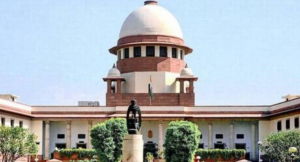
    The Supreme Court has questioned state governments for failing to act against misleading medical advertisements, despite clear legal provisions under the Drugs and Magic Remedies (Objectionable Advertisements) Act, 1954. It stressed the need for a grievance redress mechanism, including a dedicated helpline for consumers to report false medical claims.

    The case originated from a petition by the Indian Medical Association (IMA) against Ramdev, Patanjali co-founder Balakrishna, and Patanjali Ayurveda, accusing them of falsely promoting herbal products as cures for diabetes and respiratory diseases. The Supreme Court bench, led by Justices Abhay S. Oka and Ujjal Bhuyan, expressed concern over the lack of enforcement, despite laws banning misleading claims about medical cures.

    A key issue is the weak implementation of Rule 170 of the Drugs and Cosmetics Rules, 1945, which prohibits advertising Ayurvedic, Unani, and Siddha medicines as guaranteed cures. Last year, the Ministry of Ayush tried to remove this rule, but the Supreme Court stayed the move, citing public health concerns.

    The court also warned of contempt proceedings against states that fail to act against violators. Amicus curiae Shadan Farasat submitted a report highlighting that many states and Union Territories have been lax in enforcing the law.

    This case raises an important question: Who protects consumers from misleading medical claims? While regulations exist, enforcement is weak. With misleading health claims easily spreading online, stricter oversight is crucial. The Supreme Court’s intervention could push authorities to finally act, ensuring public health takes priority over unchecked marketing. The Financial Express

  • The Kerala Health Department will establish clinics of fatty liver disease in district hospitals

    The Kerala Health Department will establish clinics of fatty liver disease in district hospitals

    The Health department is, for the first time, starting fatty liver clinics in district hospitals so that liver diseases, especially fatty liver disease, can be diagnosed and treated early.

    The decision to start fatty liver clinics and step up early diagnosis of the condition was taken as metabolic dysfunction-associated steatotic liver disease (MASLD), formerly known as nonalcoholic fatty liver disease (NAFLD), has been increasing in significant proportion of the population, the Health department said here on Monday.

    If not detected and treated early through diet, lifestyle modification and exercise, fatty liver can progress to liver cirrhosis or liver cancer

    The department has allocated funds for districts to start fatty liver clinics and in the first phase, these clinics will become functional at the General Hospitals at Thiruvananthapuram and Ernakulam and the district hospital at Tirur, Malappuram. In phases, more clinics will be made functional in all districts.

    Fibroscan facility
    The clinics will be made functional after ensuring that fibroscan facility (to assess stage of liver fibrosis) is made available in these hospitals, alongside blood tests and scans. At present, fatty liver clinics are functional only in select medical college hospitals .

    That said, medical experts have pointed out that a simple ultrasound scan can detect fatty liver and that high grades of fatty liver, as detected in an ultrasound scan, alone need to be checked using a fibroscan to stage or score fibrosis. The Hindu

  • India surgical robotics market to reach USD 44.91M

    India surgical robotics market to reach USD 44.91M

    India surgical robotics market was valued at USD 24.72 million in 2024 and is expected to reach USD 44.91 Million by 2030 with a CAGR of 10.42% during the forecast period. The India surgical robotics market is experiencing rapid expansion, driven by increasing demand for minimally invasive surgeries (MIS), technological advancements, and growing healthcare infrastructure investments. The rising prevalence of chronic diseases such as cancer, neurological disorders, and orthopedic conditions has further fueled the adoption of robotic-assisted procedures, particularly in orthopedics, urology, neurology, and gynecology. Leading hospitals, including Apollo, Fortis, and AIIMS, are actively integrating surgical robots to enhance precision, reduce post-operative complications, and improve patient outcomes. Medical tourism is a significant contributor, with India emerging as a preferred destination for cost-effective yet advanced robotic surgeries.

    Despite the promising growth, the market faces several challenges, including high initial costs, a shortage of skilled robotic surgeons, and limited penetration in tier-2 and tier-3 cities. The cost of robotic surgical systems, such as Da Vinci (Intuitive Surgical) and Mako (Stryker), remains a significant barrier for mid-sized hospitals. Training requirements for surgeons and regulatory approvals slow down widespread adoption. However, government initiatives promoting “Make in India” and increased private-sector investments in robotic-assisted surgery centers are expected to bridge these gaps. As more domestic manufacturers and startups enter the market, the affordability and accessibility of surgical robotics are set to improve, making India a key player in the global landscape.

    Key market drivers
    Increasing healthcare infrastructure
    India’s expanding healthcare infrastructure plays a crucial role in accelerating the adoption of surgical robotics, particularly in tertiary care hospitals and specialized medical centers. The government’s emphasis on strengthening public healthcare facilities and increasing private sector investments is creating a strong foundation for advanced surgical technologies. As of March 31, 2023, India had a well-established network of 1,69,615 Sub-Centres (SCs), 31,882 Primary Health Centres (PHCs), 6,359 Community Health Centres (CHCs), 1,340 Sub-Divisional/District Hospitals (SDHs), 714 District Hospitals (DHs), and 362 Medical Colleges (MCs), catering to both urban and rural populations. While these facilities are instrumental in delivering essential healthcare services, the growing burden of chronic diseases, rising surgical volumes, and the demand for minimally invasive procedures are pushing for increased adoption of robotic-assisted surgeries in well-equipped hospitals.

    One of the key factors driving the expansion of robotic surgical procedures is the availability of skilled healthcare professionals. India currently has 2,39,911 Health Workers at SCs, 40,583 Doctors/Medical Officers at PHCs, 26,280 Specialists & Medical Officers at CHCs, and 45,027 Doctors and Specialists at SDHs and DHs. Additionally, the presence of 47,932 Staff Nurses at PHCs, 51,059 Nursing Staff at CHCs, and 1,35,793 Paramedical Staff at SDHs and DHs is enhancing the efficiency of surgical interventions, making hospitals more equipped to integrate robotic technologies. Moreover, with a total of 8,18,661 hospital beds available across PHCs, CHCs, SDHs, DHs, and medical colleges, the infrastructure is being upgraded to accommodate advanced surgical technologies, including robotic-assisted systems for orthopedics, urology, neurology, and gynecology.

    The private healthcare sector is also playing a significant role in the rapid adoption of surgical robotics. Leading corporate hospitals such as Apollo, Fortis, Manipal, and Max Healthcare are investing in state-of-the-art robotic surgical systems to enhance precision and efficiency in complex procedures. With government initiatives like “Ayushman Bharat” and incentives for private investments in healthcare, the robotic surgery market in India is set for substantial growth, making cutting-edge surgical procedures more accessible to a wider population.

    Growing prevalence of chronic diseases
    The increasing burden of chronic diseases in India is a key factor fueling the demand for robotic-assisted surgeries, particularly in specialties like orthopedics, cardiology, urology, and oncology. With a rising aging population and shifting lifestyles, the prevalence of non-communicable diseases (NCDs) has surged, necessitating advanced surgical interventions for better patient outcomes. As per the Longitudinal Ageing Survey in India (LASI) (September 2024), 21% of India’s elderly population suffers from at least one chronic condition, with urban areas showing a higher prevalence (29%) compared to rural areas (17%). The most common chronic ailments include hypertension and diabetes, together accounting for 68% of all chronic diseases among the elderly. These conditions often lead to complications requiring surgical interventions, such as coronary artery bypass grafting (CABG), robotic-assisted knee and hip replacements, and minimally invasive robotic procedures for diabetic complications.

    Furthermore, cardiovascular diseases (CVDs) affect 37% of individuals above 75 years, contributing to a significant portion of surgical procedures in India. The increasing number of heart-related surgeries, including robotic-assisted cardiac bypasses and valve repairs, is driving demand for precision-based robotic technology. Additionally, bone and joint diseases, such as osteoarthritis and rheumatoid arthritis, have led to a surge in robotic orthopedic surgeries, which provide superior outcomes compared to traditional methods. Chronic lung diseases are also a growing concern, often requiring thoracic surgeries, where robotic-assisted procedures offer enhanced accuracy with reduced complications.

    Globally, chronic diseases are responsible for 74% of all deaths, with 77% occurring in low- and middle-income countries like India, according to the World Health Organization (WHO). This underscores the critical need for advanced surgical solutions, as the rising disease burden increases pressure on India’s healthcare system. The integration of robotic-assisted surgery enhances procedural success rates, reduces recovery times, and minimizes post-operative risks, making it a preferred choice for treating chronic disease-related conditions. As India continues to witness a rising number of NCD cases, the role of surgical robotics in ensuring high-precision, minimally invasive treatments will expand, strengthening its adoption across leading hospitals and specialty centers.

    Key market challenges
    High cost of surgical robotics
    One of the biggest challenges in the India Surgical Robotics Market is the high cost associated with robotic surgical systems, maintenance, and procedural expenses. Advanced robotic platforms like Da Vinci (Intuitive Surgical), Mako (Stryker), and Rosa (Zimmer Biomet) require significant capital investment, often making them unaffordable for small and mid-sized hospitals, especially in tier-2 and tier-3 cities. The cost of a single robotic surgical system ranges between INR 10-20 crore ($1.2-$2.4 million), with additional expenses for training surgeons, software updates, and annual maintenance contracts (AMCs), further increasing the financial burden on healthcare providers.

    Beyond the initial purchase, robotic-assisted surgeries are generally more expensive than conventional procedures due to the cost of consumables, robotic instruments, and extended operating times. For example, a robotic-assisted knee replacement may cost anywhere between INR 3-5 lakh ($3,600-$6,000) per procedure, nearly double the cost of traditional surgery. This pricing disparity limits accessibility for a large section of India’s population, particularly in rural and semi-urban areas where affordability remains a critical concern.

    Additionally, insurance coverage for robotic surgeries is still limited, with many policies considering them an “elective procedure” rather than a necessity. This lack of financial support from insurers discourages patients from opting for robotic-assisted procedures, further restricting market penetration. While private hospitals in metro cities like Delhi, Mumbai, Bangalore, and Chennai are investing heavily in robotic surgery, government hospitals and mid-tier medical institutions struggle to justify the expenditure, given budget constraints and the need to cater to a larger patient base with cost-effective treatments.

    Key market trends
    Technological advancements in robotics
    The India Surgical Robotics Market is witnessing rapid growth, largely driven by continuous technological advancements in robotic-assisted surgery. Innovations in artificial intelligence (AI), machine learning (ML), haptic feedback, miniaturization, and 5G connectivity are transforming robotic systems, making surgeries more precise, minimally invasive, and efficient. These advancements are reducing procedure time, improving patient outcomes, and expanding the scope of robotic-assisted surgeries beyond traditional applications like orthopedics and urology to include neurosurgery, gynecology, and general surgery.

    One of the most significant advancements is the integration of AI and ML in surgical robotics, allowing systems to analyze vast amounts of surgical data, predict complications, and assist surgeons in decision-making. AI-powered real-time imaging and navigation technologies are enhancing precision in delicate procedures, such as brain and spinal surgeries, where millimeter-level accuracy is crucial. Additionally, haptic feedback and force-sensing technology are improving surgeons’ ability to perform complex operations with enhanced control, reducing the risk of human error.

    The development of next-generation robotic systems with smaller, more flexible robotic arms is another notable trend. Single-port robotic surgery, where the entire surgical procedure is performed through a single incision, is gaining popularity, minimizing trauma and shortening recovery times. Companies like Medtronic, CMR Surgical, and Johnson & Johnson (Verb Surgical) are investing in compact, cost-effective robotic systems to make robotic surgery more accessible in India’s mid-tier and government hospitals.

    Another game-changer is the integration of 5G connectivity and remote surgery capabilities. With ultra-low latency, telerobotic surgery allows expert surgeons from metro cities to operate on patients in remote locations, addressing India’s disparity in specialized healthcare access. This is particularly relevant for rural areas, where access to highly skilled surgeons is limited.

    Segmental insights
    End use insights
    Based on End Use, Inpatient have emerged as the dominating segment in the India Surgical Robotics Market in 2024. This is primarily due to the complex nature of robotic-assisted surgeries, the need for post-operative monitoring, and the high cost associated with these procedures. Most robotic surgeries, such as orthopedic joint replacements, urological procedures (prostatectomies), gynecological surgeries (hysterectomies), and neurosurgeries, are performed in multispecialty hospitals and tertiary care centers, where patients require longer recovery periods and specialized post-operative care.

    Additionally, the high infrastructure requirements for robotic-assisted surgeries, including dedicated surgical suites, trained personnel, and advanced robotic systems, make inpatient hospitals the primary adopters. Leading hospitals in metro cities, such as Apollo Hospitals, AIIMS, Max Healthcare, and Fortis Healthcare, have heavily invested in surgical robotics, reinforcing the inpatient segment’s dominance.

    Regional insights
    Based on Region, South India have emerged as the dominating region in the India Surgical Robotics Market in 2024. It is driven by its well-established healthcare infrastructure, high concentration of multispecialty hospitals, and faster adoption of advanced medical technologies. Cities such as Chennai, Bengaluru, Hyderabad, and Kochi have become key hubs for robotic-assisted surgeries, with hospitals investing heavily in state-of-the-art robotic surgical systems to enhance precision and patient outcomes.

    Tamil Nadu and Karnataka lead in the adoption of surgical robotics, with premier hospitals like Apollo Hospitals, Narayana Health, Manipal Hospitals, and Fortis Healthcare pioneering the use of robotic-assisted procedures in orthopedics, urology, gynecology, and neurology. Bengaluru, often referred to as the “Silicon Valley of India,” has also seen a rise in medical technology startups and research initiatives focused on robotic surgery, further fueling regional growth.

    Additionally, South India’s strong medical tourism sector plays a crucial role in market dominance. Cities like Chennai and Hyderabad attract a large number of international and domestic patients seeking robotic-assisted surgeries for knee replacements, prostate cancer, and minimally invasive procedures. The presence of renowned medical institutions and government support for advanced healthcare technologies has further solidified South India’s position as the top-performing region in India’s surgical robotics market. TechSci Research