Month: February 2025

  • Telcos target underserved regions as Starlink expands in Africa

    Telcos target underserved regions as Starlink expands in Africa

    As Starlink intensifies competitive pressures and African governments remain uncertain about intervening to protect telco incumbents, African telecom companies are increasingly focusing on underserved regions. In response, they are launching strategic initiatives to tackle the rising challenge of low Earth orbit (LEO) satellite connectivity to maintain their market position and tap into new growth opportunities, according to GlobalData, a leading data and analytics company.

    Recent tie-ups – including the Orange–Vodacom deal in Uganda for network deployment in rural areas; Safaricom partnering with local satellite operator ESD Kenya; ZainTech partnership with Arabsat covering North Africa; and Vodacom and MTN’s own desire to boost connectivity across their footprint via LEOs – point to this trend.

    Ismail Patel, Senior Analyst, Enterprise Technology and Services at GlobalData, says: “The rapid shift in focus by Africa’s telcos can largely be attributed to a confluence of factors, with Starlink being a key driver. These telcos are increasingly seeing unserved and underserved regions of the continent as opportunities rather than investment dead ends.”

    GlobalData analysis uncovered the existence of not only regulatory divergence in how to deal with Starlink, but also variation in Starlink’s attitudes to compliance with licensing or lack thereof in the wider MEA region. In Africa, some governments require it to be licensed, thus adopting a protectionist approach. Some are more hesitant to do so, ostensibly due to the potential of Starlink connectivity stimulating the economy in rural and underserved regions.

    Although its subscriber market share is small, Starlink is eating into the untapped revenue opportunities, with the potential of building up a loyal customer base. This represents a concern for the incumbents as Starlink builds up a base of higher-than-average revenue generating customers such as small office/home office (SOHOs) and small and medium-sized businesses (SMBs), on top of connecting underserved populations that include thousands of micro-businesses.

    With Starlink promising to launch in 14 new markets across Africa in 2025, pressures on the traditional telco incumbents will only become starker and sharper, leading to more collaboration among themselves as well as with alternative LEOs.

    Patel concludes: “Starlink has undeniably changed the competitive field for connectivity, resulting in telcos scrambling for a piece of the rural greenfield opportunity that was neglected for a considerable time. The global LEO is competitive on pricing and offer a quality connection that has not been the norm for many in Africa. But not all is lost for the continent’s telco groups, as they can typically offer the type of tech-based services to SMBs that a global LEO cannot, such as – inter alia – improved supply chain management, e-health, adverse weather mitigation, mobile payments, and natural resource management.” GlobalData


  • Vi shares drop over 8%, hit Rs 8.10 intraday low

    Vi shares drop over 8%, hit Rs 8.10 intraday low

    Vodafone Idea share price:Telecom operator Vodafone Idea shares plunged as much as 8.16 per cent to hit an intraday low of Rs 8.10 per share on Wednesday, February 12, 2025.

    The fall in Vodafone Idea share price came after the company posted a mixed set of results in the December quarter of financial year 2025 (Q3FY25).

    Vodafone Idea’s consolidated net losses narrowed marginally to Rs 6,609.3 crore in Q3FY25, from a loss of Rs 6,985.9 crore in Q3FY24.

    Revenue from operations, meanwhile, rose 4.2 per cent year-on-year (YoY) to 11,117.3 crore in Q3FY25, from Rs 10,673.1 crore in Q3FY24.

    At the operating front, earnings before interest, tax, depreciation, amortisation (Ebitda) rose 8.3 per cent YoY to Rs 4,712.4 crore in Q3FY25, from Rs 4,350.4 crore in Q3FY24.

    Subsequently, Ebitda margin improved 160 basis points (bps) to 42.4 per cent in Q33FY25, from 40.8 per cent in Q3FY24.

    The Capex spend for Q3FY25 was at Rs. 3,210 crore, taking the capex for the nine months to Rs 5,330 crore. The network rollout will accelerate further in Q4FY25 with the full year expected capex of ~Rs 10,000 crore.

    Meanwhile, the debt from banks reduced by Rs 5,290 crore during the last one year and stood at Rs 2,330 crore (was at Rs 7,620 crore in Q3FY24).

    “During the quarter, we expanded our footprint to more than 4,000 unique broadband towers, the largest addition in a quarter by the Company since merger,” Vodafone Idea said, in a statement.

    However, Vodafone Idea’s total data subscribers took a hit as it dropped to 13.42 crore in Q3FY25, from 13.74 crore in Q3FY24. It also dropped sequentially from 13.49 crore in Q2FY25

    The telecom company’s average revenue per user (ARPU) soared to Rs 163 in Q3FY25, as against Rs 145 in Q3FY24. The ARPU stood at Rs 156 in Q2FY25. Business Standard

  • $42 Billion Broadband Boondoggle brought internet to zero homes

    $42 Billion Broadband Boondoggle brought internet to zero homes

    The Broadband Equity, Access, and Deployment Program (BEAD) allocated $42 billion to extend broadband access to all homes nationwide. Nearly three years after passage, 16 states still lacked funding approval. In its first three years, the program connected precisely zero homes to the internet.

    The expressed objective of BEAD is to bridge the so-called digital divide — the lower levels of access and affordability for some rural residents, minority groups, and lower-income earners. Yet, the private sector is doing quite well at bridging this so-called divide. While the federal government dithered on allotting the $42 billion of BEAD funding, the percentage of Americans using the internet rose from 80 percent in 2021 to 83 percent in 2023 — an additional 13 million users. High-income household use has remained virtually unchanged for a decade — at 87 percent — while usage in low-income households earning less than $25,000 steadily rose to 75 percent by 2023. Even in rural areas, 72 percent already have fixed broadband coverage.

    Even the remaining gap overstates the extent of the problems with access and affordability. Less than 10 percent of the overall population lacks internet service. Of the 24 million households with no internet, more than half (58 percent) either have no interest in being online or no need to be online. Lack of availability accounts for just 4 percent of those without home internet. In other words, fewer than 1 million households (fewer than 1 in 100) nationwide are offline solely due to lack of availability.

    The per-household cost of the federal “solution” to this diminishing problem is steep. The $42 billion price-tag is sufficient to provide 12 years’ worth of Starlink service — $44,000 — for each impacted household. Even if we presume all the 24 million households currently without access will benefit from increased access and affordability, this comes to $1750 per household.

    Meanwhile, the cost per taxpayer of BEAD is simply added to our massive federal credit card balance, a marginal negative impact so distant it is barely discernible. But that’s the ugly truth of dispersed costs and concentrated benefits. A handful of broadband infrastructure companies stand to benefit immensely from these widely dispersed costs. Taxpayers foot 75 percent of the cost of capital investments from which these favored companies will generate revenue for decades to come.

    The private sector already has developed an alternative to high-capital expenditures for building our expensive infrastructure serving only sparse numbers of people in rural areas: Starlink.

    Starlink covers the entirety of the lower 48 states at a cost of just $120 per month for unlimited residential use. Typical download speed easily exceeds the FCC’s 25 Mbps threshold for “unserved” and often exceeds the FCC’s 100 Mbps threshold for “underserved.”

    Ironically, Biden claims this program is “not unlike what Roosevelt did with electricity.” At the founding of the Rural Electrification Administration in 1935, only one in ten farms had access to electricity. Incidentally, the number of US farms peaked in that year and agriculture comprised 21 percent of our workforce, lack of access to electricity posed a real impediment to growth. Contrast that with today when most families even in remote parts of the nation already utilize the internet — and fewer than 1 million are deprived due to lack of availability. Furthermore, in 1935, no practical substitute to hard, physical infrastructure — cables, poles, transformers, and power plants — existed, where today internet access via satellite link and portable equipment can substitute for physical broadband cables. Lastly, the funds provided by FDR’s administration were loans rather than pure giveaways of taxpayer money to favored companies. The differences in need, benefit, and mechanism between this wasteful broadband program and the rural electrification program are stark.

    It’s also no surprise deployment of these $42 billion in federal funds has been slow or even nonexistent. BEAD funding comes with various attached requirements, including mitigating climate change, hiring those with criminal records, conforming to a prevailing wage scheme, and hiring and training local residents. In addition, the rules specify that recipients of the subsidies provide services at “reasonable prices” for “middle class families.” Failing to provide an actual price cap skirted the legislation’s ban on outright regulation of broadband rates. But this workaround acted as an even worse form of price control — one in which bureaucrats decide retroactively whether a price is “reasonable.”

    Reliance on government funding will discourage private sector investment in broadband infrastructure, as companies might wait for government subsidies rather than investing their own capital. This could slow down overall broadband expansion and innovation in the long term, affecting consumer access and service quality. Rather than focus on investing in infrastructure where returns on capital will prove most profitable, companies instead must predict the geographies and market segments most likely to receive government subsidies. Reliance on federal or state broadband coverage maps can misallocate capital to areas where investments are less efficiently employed. A company spending its own capital on infrastructure would be a costly mistake if taxpayers will provide those resources instead (or provide them to a competitor). The promise of BEAD funds will likely deter private investment in areas where this funding is anticipated.

    The marketplace shows an uncanny ability to improve affordability. For instance, across parts of South Florida, Breezeline was the only residential broadband provider.

    Household costs topped $150 per month. This changed rapidly in 2024 as Verizon expanded home internet service to many neighborhoods, offering similar access at less than half their competitor’s price. Breezeline’s onerous pricing provided an incentive for Verizon to invest heavily in an alternative. Profit is a motivator for private investment, benefiting both shareholders and the public.

    Why not simply allow the market to work? Rural residents with no access to broadband can use Starlink. Over time, private companies may decide that broadband infrastructure development in these areas is worth the capital investment. They are in a far better position to make this determination than bureaucrats doling out borrowed taxpayer resources. The track record of BEAD’s inefficiencies and delays caused by lack of intergovernmental coordination and funding compliance requirements should spell its end.

    It’s time to repeal this especially wasteful component of the 2021 infrastructure law. The Daily Economy

  • iCubesWire expands video production, launches iCubesWire Films

    iCubesWire expands video production, launches iCubesWire Films

    Global adtech platform with content production and influencer marketing capabilities- iCubesWire has now taken its next step towards expansion with iCubesWire Films, a dedicated division for ad film production.

    This strategic move underscores the company’s commitment to put forward its creative storytelling capabilities, addressing the rising demand for compelling branded content across digital and traditional media channels.

    Known for its expertise in influencer partnerships, and performance-driven campaigns, iCubesWire has consistently redefined how brands connect with their audiences and the introduction of iCubesWire Films amplifies its capabilities, empowering brands to craft visually stunning ad films that resonate deeply with today’s digitally savvy consumers.

    The new division will welcome a talented team of directors, scriptwriters, cinematographers, and editors, all dedicated to producing high-quality ad films. Having said that, leveraging advanced production techniques, iCubesWire Films will create tailored narratives designed for digital platforms, television, and OTT services.

    Furthermore, this expansion strengthens iCubesWire’s reputation as a comprehensive marketing solutions provider, enabling brands to effortlessly integrate digital, influencer, and film-based content into their campaigns.

    As the digital landscape continues to evolve, iCubesWire’s latest initiative positions it as a leader in crafting innovative, audience-centric content that drives results. Brands looking to go creative with their storytelling and engagement strategies now have a powerful new partner in iCubesWire Films.

    Commenting on the launch, Sahil Chopra, Founder and CEO, iCubesWire, said, “Storytelling is what connects brands with their audiences, and with the launch of iCubesWire Films, we’re taking that connection to the next level. By combining creativity, technology, and data-driven insights, we are looking forward to creating ad films that not only capture attention but also drive meaningful engagement. Our focus is on delivering storytelling that aligns seamlessly with brands’ strategic goals.” Marketing Mind

  • YOU Broadband launches high-speed internet plans in Pune city

    YOU Broadband launches high-speed internet plans in Pune city

    YOU Broadband, one of India’s leading high-speed internet providers, has unveiled its latest broadband plans, offering industry-best pricing and unmatched affordability. With the growing demand for seamless connectivity, YOU Broadband aims to make high-speed internet more accessible to Indian households. The newly launched broadband plans for Pune City start at just Rs799 for a blazing-fast 300 Mbps connection, making it one of the most competitively priced options available today. Additionally, users can now avail of 500 Mbps broadband plans at just Rs999, ensuring a superior internet experience at an unbeatable value.

    Designed for seamless streaming, gaming, and work-from-home needs, these broadband plans offer 50% lower pricing compared to similar plans in the market. With the surge in digital consumption, YOU Broadband remains committed to delivering fast, reliable, and affordable internet solutions to customers across India. The latest plans also come with special offers on longer validity subscriptions, allowing users to enjoy uninterrupted connectivity at even more attractive rates.

    Customers can conveniently apply for these high-speed broadband plans through the official YOU Broadband website or mobile app, ensuring a hassle-free subscription process. For entertainment lovers, YOU Broadband also offers exciting combo packages that include access to 27+ OTT apps, providing an all-in-one solution for high-speed internet and premium digital entertainment.

    “With increasing digital consumption, users need a broadband connection that is not just fast but also economical. YOU Broadband is dedicated to providing the best broadband plans at unbeatable prices, ensuring seamless connectivity for our customers,” said Mr. Sameer Mahapatra, CEO, YOU Broadband.

    As YOU Broadband continues to revolutionize the broadband industry, customers can expect such aggressive high-speed internet plans across various part of the country in the coming months, further strengthening India’s journey toward a digitally empowered future. ThePrint

  • Starlink satellite-based internet services arrive in Bhutan

    Starlink satellite-based internet services arrive in Bhutan

    The Bhutan Information, Communication, and Media Authority (BICMA) recently granted approval to Starlink Services Private Limited, a foreign direct investment (FDI) company, to provide satellite-based internet services in Bhutan, and the services are now available.

    This development marks a significant shift in the country’s internet connectivity, particularly benefiting rural and remote areas, where traditional networks face challenges due to Bhutan’s mountainous terrain and infrastructure limitations.

    Before licensing Starlink, BICMA officials evaluated key factors, including the company’s FDI registration, the appointment of local representatives for regulatory compliance, and commitments to service quality and data privacy. The license permits internet services through user terminals but does not include direct satellite-to-mobile cellular services.

    Starlink Pricing Plans in Bhutan

    • Residential Plan: Designed for household use, offering 25-110 Mbps download and 5-10 Mbps upload speeds with unlimited data for 4,200 BTN per month.
    • Priority Plan: Suitable for high-demand users such as businesses and government entities, providing 50-220 Mbps download and 8-25 Mbps upload speeds. Data options range from 40 GB to 6 TB, with prices between 5,900 BTN and 106,000 BTN per month.
    • Roam Plan: Offers mobility with 30-100 Mbps download and 5-25 Mbps upload speeds. Plans range from 50 GB to unlimited data, priced between 4,200 BTN and 37,000 BTN monthly.
    • Mobile Priority Plan: Designed for mobile users with high data needs, offering 5-220 Mbps download and 10-30 Mbps upload speeds. Data caps start at 50 GB and go up to unlimited, with monthly costs from 21,000 BTN to 2,100,000 BTN.
    • Residential Lite Plan: A budget-friendly alternative with speeds similar to the Residential Plan but at 3,000 BTN per month.

    Starlink Equipment Costs in Bhutan

    • Standard Starlink Kit: 33,000 BTN + shipping
    • Flat High-Performance Starlink Kit: 231,000 BTN + shipping
    • Mini Starlink Kit: 17,000 BTN + shipping

    Billing begins upon service activation or 30 days after equipment shipment, with no early termination fees for cancellations.

    It is expected that Starlink’s satellite-based connectivity will help bridge Bhutan’s digital divide by providing reliable internet access in remote and rural areas where traditional infrastructure remains a challenge. FoneArena

  • NBA open to revamping All-Star selection process amid era of positionless basketball

    NBA open to revamping All-Star selection process amid era of positionless basketball

    It’s no secret that the NBA All-Star Games in recent years have lacked…well, everything. From lazy competition to lackluster games, the once-celebrated event has become rather monotonous – a formality of sorts.

    NBA Commissioner Adam Silver has wanted a more competitive All-Star event for some time and has brought about the change finally after the All-Star teams combined to score a record 397 points — 211-186 was the final — in last season’s game at Indianapolis.

    A new mini-tournament format has been proposed for this year’s All-Star Game, where four teams of 8 players each shall battle it out in fast games up to 40-point totals. The first team to reach the total shall win and the two semi-final winners will meet in the All-Star final to play for ultimate glory.

    NBA Deputy Commissioner and Chief Operating Officer Mark Tatum also reinstated his belief in the new mini-tournament format to bring some much-needed change and excitement back to the storied All-Star weekend.

    “We knew very clearly that we needed to bring up a format that would be more engaging for the fans, and one that would showcase our best players in the league. This mini-tournament that we have arrived at is an attempt at doing the same,” Tatum stated in a roundtable conversation with international media on Monday.

    One major weapon that the NBA could utilize to do the same is the rise of international superstars.

    Players such as Luka Doncic, Nikola Jokic, Giannis Antetokounmpo, and many more have brought about a paradigm shift in modern times. They have increased the league’s global reach by elevating the level of competition by bringing diverse playing styles, and have influenced the development of basketball internationally, particularly in regions like Europe, Africa, and Asia, where these players originate from; essentially making the NBA a more global sport with a wider fan base.

    Tatum emphasized the undeniable impact international players continue to have and spoke about how the paradigm shift in competition can also act as a crowd-puller.

    “It’s no doubt that international players have well and truly made their mark in the league. I mean, look at Charles’ (Barkley) team. I thought it was interesting that 6 of the 8 players on his team are international. What I think the tournament now is going to do is allow fans to see the influence and skill set of the international players being pitted against some veterans and rising talents as well. I think it is going to create an interesting dynamic for the fans and it will certainly be entertaining as well,” Tatum stated.

    Yet another possible manner that change could be brought about potentially lies in changing how the All-Stars themselves are selected as well.

    For ages, the NBA has stuck to the format of giving the nod to three frontcourt and two backcourt players in their initial All-Star starters, a testament to constructing the perfect starting five. But with the ever-rising versatility of players to play multiple positions, it would not be a far cry to open up the playing field and throw the gauntlet out for the best and most popular players to get the nod to be an All-Star.

    When asked about the possibility of restructuring the All-Star selection process, Tatum stated that the NBA shall be open to entertaining such changes as well sometime in the future.

    “Potentially. We have made changes to the All-Star Game format over the years, and I think we will continue to look into it. It is interesting that certain players don’t fit into one particular role anymore, and they can switch between multiple positions. So, I think that making away with the now-standard rubric for selecting All-Stars is something we will look into. There is so much talent in our league right now,” Tatum replied.

    The All-Star Game is set to be played on February 16 in San Francisco. News18

  • Chorley Hospital to close down 24-bed facility

    Chorley Hospital to close down 24-bed facility

    The closure of a hospital ward is among the “real-world impacts” of the difficulties facing a hospital trust in “financial special measures”, its chief executive has told a board meeting.

    Lancashire Teaching Hospitals NHS Foundation Trust (LTH) which runs Chorley and South Ribble Hospital is funded by the Lancashire and South Cumbria Integrated Care Board (ICB).

    The ICB has to make more than £530m in efficiency savings this financial year.

    Staff on the Cuerden ward at the Chorley hospital were told last month the 24-bed facility, which is less than three years old, would shut at the end of March.

    The Cuerden ward building opened in July 2022 to provide additional space for diabetes, endocrinology and other general medical patients, the Local Democracy Reporting Service said.

    Confirming the closure last month, LTH said it was part of the process of “flexing” how many beds were open according to demand, which is greatest during the winter.

    However, Silas Nicholls, LTH boss acknowledged at a board meeting on Thursday the “difficult decision” also had its roots in the budgetary pressure the trust is under.

    Just days earlier LTH had been placed by NHS England into the equivalent of financial special measures officially known as NHS oversight framework segment 4 along with East Lancashire Hospitals Trust, Blackpool Teaching Hospitals NHS Foundation Trust and the overarching ICB.

    All of those organisations will now receive “intensive support” to recover their financial positions.

    ‘Avoid redundancies’
    Referring to the Cuerden ward closure, Mr Nicholls said it was also the result of the fact the facility had initially been funded by additional money pumped into the NHS to deal with Covid pressures earlier in the pandemic.

    One of its initial uses was to assist with patient flow through the hospital system and provide beds for those close to being discharged.

    He told board members “good progress” was being made in attempts to avoid redundancies and redeploy staff in the wake of the ward closing.

    “We are working to make sure that no staff lose their jobs over this,” he said.

    Mr Nicholls said the aim was to repurpose the modular-designed building for another use, rather than leave it vacant. BBC

  • EMA establishes standard procedure for high-risk MedTech manufacturers

    EMA establishes standard procedure for high-risk MedTech manufacturers

    EMA, in close collaboration with the European Commission, has established a standard procedure for manufacturers of certain high-risk medical devices to request scientific advice on their intended clinical development strategy and proposals for clinical investigation.

    Manufacturers of class III devices and class IIb active devices intended to administer or remove medicines can now submit their request for advice via a portal and consult the medical device expert panels at different stages of the clinical development.

    Advice given by the medical device expert panels is a key tool to foster innovation and promote faster patient access to safer and more effective devices.

    This regular scientific advice procedure follows a pilot launched in February 2023, which has helped to establish this procedure and gathered positive feedback from manufacturers and panel experts. EMA will publish a report on the pilot in the coming weeks.

    There are currently no fees associated with these requests.

    More information on the submission process, including step-by-step instructions for applicants and monthly submission deadlines is available on EMA’s website.

    Manufacturers of high-risk medical devices intended for the treatment of a rare condition should apply for advice via the ongoing pilot programme to support orphan medical devices. European Medicines Agency

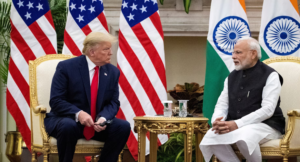
  • Modi’s US visit: India considering tariff cuts on medical, surgical equipment, others

    Modi’s US visit: India considering tariff cuts on medical, surgical equipment, others

    Indian Prime Minister Narendra Modi is preparing additional tariff cuts ahead of a meeting this week with US President Donald Trump that could boost American exports to India and avoid a potential trade war, government officials said.

    Trump’s top economic adviser Kevin Hassett said on Monday that India has high tariffs that lock out imports and Modi would have a lot to discuss with Trump when the two leaders meet.

    As well as tariff cuts, Modi is expected to propose increased energy and defence imports during a two-day US visit from Wednesday.

    Trump said on Sunday he plans announce new 25% tariffs on all steel and aluminum imports into the US on Monday, on top of existing metals duties, and reciprocal tariffs on Tuesday or Wednesday, to take effect almost immediately.

    He has previously called India a “very big abuser” on trade.

    Trump believes the United States should impose reciprocal tariffs that are at least equal to those imposed by other countries, Hassett said in an interview with CNBC, adding, “If they go down, we’ll go down.”

    India is considering tariff cuts in at least a dozen sectors, from electronics to medical and surgical equipment, and chemicals, to boost US exports in line with New Delhi’s domestic production plans, three government officials said.

    The officials spoke on condition of anonymity as they were not authorised to speak to the media.

    India’s trade and foreign ministries, and the prime minister’s office, did not respond to requests for comment.

    India is in talks with the United States for the purchase and co-production of combat vehicles as well as finalising a fighter jet engine deal, people familiar with the matter said. Trump asked Modi in a call last month to buy more US-made security equipment and move “toward a fair trading relationship”.

    In a statement on Monday, Modi said, “This visit will be an opportunity to build upon the successes of our collaboration in his (Trump’s) first term.”

    He added that technology, trade, defence, energy, and supply chain resilience were areas in which the partnership could be elevated and deepened.

    Trade ties between the two nations have grown steadily over the last decade, with Washington increasingly viewing New Delhi as a counterbalance to China’s growing regional influence.

    The Indian government officials said concessions were being considered on items that India primarily sources from the United States or has more potential appetite to buy, such as dish antennas and wood pulp.

    Two-way trade exceeded $118 billion in fiscal 2023-2024, with India posting a surplus of $32 billion.

    Mini-trade deal
    As well as discussing tariffs with Trump, India is open to discussing a possible mini trade deal, two government officials said.

    Modi’s early visit aims to avoid a “trade war-like situation that is happening between the United States and China,” a third official said.

    The meeting has been overshadowed by the recent deportation of Indians from the United States.

    Trump has already slapped sweeping tariffs of 10% on imports from China, spurring Beijing to respond with duties on American energy.

    India’s budget this month cut average import tariff rates to 11% from 13% on several items, besides reducing taxes on high-end bikes and luxury cars. India is also reviewing surcharges on more than 30 items, including luxury cars and solar cells.

    Nearly a fifth of India’s exports of engineering goods — comprising steel and aluminum and worth about $25 billion — are at risk if Trump adopts the proposed 25% tariff, an official of an industry body said.

    “We are in a wait-and-watch mode and hope the issue can be amicably resolved during Prime Minister Narendra Modi’s visit,” the official said, speaking on condition of anonymity as the matter is a sensitive one.

    Metals stocks led losses in Indian shares after news of Trump’s tariff plans on steel and aluminium. India’s benchmark indexes fell 0.8%, with the metals index dropping 3%. Reuters