Month: February 2025

  • Medtronic is looking into ways to enhance its production footprints globally

    Medtronic is looking into ways to enhance its production footprints globally

    Medical device maker Medtronic is looking at options to modify its global manufacturing footprint as part of efforts to mitigate any impact of US President Donald Trump’s tariff plans, a company executive told Reuters on Tuesday.

    The company, whose products range from insulin pumps to surgical robots, has been closely monitoring Trump’s tariff plans due to its presence in Mexico. The country houses the device maker’s third largest manufacturing facility, according to its latest annual report.

    “We continue to look at ways to optimize our manufacturing footprint,” Medtronic’s Chief Technology Officer Ken Washington said on the sidelines of the BioAsia conference in the southern Indian state of Telangana.

    Trump imposed 25% duties on imports from Mexico and Canada that were to go into effect in early February, but then paused them until March 4, pending negotiations with those two nations.

    Medtronic’s Washington did not comment on whether India was part of the strategy to refine the manufacturing operations. The company had in 2021 launched its largest research and developmental center outside of the US in Telangana.

    Washington said the company would stay focused on its core work in a reply to Trump’s threats to impose a “25% or higher” levies on semiconductors and pharmaceutical imports.

    “A company like Medtronic can’t survive for 75 years if you don’t learn the skill of navigating the ups and downs, and ebbs and flows of different political platforms.”

    Washington said he was focused on the adoption of artificial intelligence. He expects digital and AI roles to grow and digital spending to increase, without providing specific details.

    “We have set expectations that everyone should embrace AI as a way of doing business.” Reuters

  • FDA warns that Chinese-made medical devices are a serious risk

    FDA warns that Chinese-made medical devices are a serious risk

    A popular medical monitor is the latest device produced in China to receive scrutiny for its potential cyber risks.  However, it is not the only health device we should be concerned about. Experts say the proliferation of Chinese health-care devices in the U.S. medical system is a cause for concern across the entire ecosystem.

    The Contec CMS8000 is a popular medical monitor that tracks a patient’s vital signs.  The device tracks electrocardiograms, heart rate, blood oxygen saturation, non-invasive blood pressure, temperature, and respiration rate.  In recent months, the FDA and the Cybersecurity and Infrastructure Security Agency (CISA) both warned about a “backdoor” in the device, an “easy-to-exploit vulnerability that could allow a bad actor to alter its configuration.”

    CISA’s research team described “anomalous network traffic” and the backdoor “allowing the device to download and execute unverified remote files” to an IP address not associated with a medical device manufacturer or medical facility but a third-party university — “highly unusual characteristics” that go against generally accepted practices, “especially for medical devices.”

    “When the function is executed, files on the device are forcibly overwritten, preventing the end customer—such as a hospital—from maintaining awareness of what software is running on the device,” CISA wrote.

    The warnings says such configuration alteration could lead to, for instance, the monitor saying that a patient’s kidneys are malfunctioning or breathing failing, and that could cause medical staff to administer unneeded remedies that could be harmful.

    The Contec equipment’s vulnerability doesn’t surprise medical and IT experts who have warned for years that medical device security is too lax.

    Hospitals are worried about cyber risks
    “This is a huge gap that is about to explode,” said Christopher Kaufman, a business professor at Westcliff University in Irvine, California, who specializes in IT and disruptive technologies, specifically referring to the security gap in many medical devices.

    The American Hospital Association, which represents over 5,000 hospitals and clinics in the U.S., agrees. It views the proliferation of Chinese medical devices as a serious threat to the system.

    As for the Contec monitors specifically, the AHA says the problem urgently needs to be addressed.

    “We have to put this at the top of the list for the potential for patient harm; we have to patch before they hack,” said John Riggi, national advisor for cybersecurity and risk for the American Hospital Association.  Riggi also served in FBI counterterrorism roles before joining the AHA.

    CISA reports that no software patch is available to help mitigate this risk, but in its advisory said the government is currently working with Contec.

    Contec, headquartered in Qinhuangdao, China,  did not return a request for comment.

    One of the problems is that it is unknown how many monitors there are in the U.S.

    “We don’t know because of the sheer volume of equipment in hospitals. We speculate there are, conservatively, thousands of these monitors; this is a very critical vulnerability,” Riggi said, adding that Chinese access to the devices can pose strategic, technical, and supply chain risks.

    In the short-term, the FDA advised medical systems and patients to make sure the devices are only running locally or to disable any remote monitoring; or if remote monitoring is the only option, to stop using the device if an alternative is available. The FDA said that to date it is not aware of any cybersecurity incidents, injuries, or deaths related to the vulnerability.

    The American Hospital Association has also told its members that until a patch is available, hospitals should make sure the monitor no longer has access to the internet, and is segmented from the rest of the network.

    Riggi said the while the Contec monitors are a prime example of what we don’t often consider among health care risk, it extends to a range of medical equipment produced overseas. Cash-strapped U.S. hospitals, he explained, often buy medical devices from China, a country with a history of installing destructive malware inside critical infrastructure in the U.S.  Low-cost equipment buys the Chinese potential access to a trove of American medical information that can be repurposed and aggregated for all sorts of purposes. Riggi says data is often transmitted to China with the stated purpose of monitoring a device’s performance, but little else is known about what happens to the data beyond that.

    Riggi says individuals aren’t at acute medical risk as much as the information being collected and aggregated for repurposing and putting the larger medical system at risk. Still, he points out that, at least theoretically, it can’t be ruled out that prominent Americans with medical devices could be targeted for disruption.

    “When we talk to hospitals,  CEOS are surprised, they had no idea about the dangers of these devices, so we are helping them understand.  The question for government is how to incentivize domestic production, away from overseas,”  Riggi said.

    Chinese data collection on Americans
    The Contec warning is similar at a general level to TikTok, DeepSeek, TP-Link routers, and other devices and technology from China that the U.S. government says are collecting data on Americans. “And that is all I need to hear in deciding whether to buy medical devices from China,” Riggi said.

    Aras Nazarovas, an information security researcher at Cybernews, agrees that the CISA threat raises serious issues that need to be addressed.

    “We have a lot to fear,” Nazarovas said. Medical devices, like the Contec CMS8000, often have access to highly sensitive patient data and are directly connected to life-saving functions. Nazarovas says that when the devices are poorly defended, they become easy prey for hackers who can manipulate the displayed data, alter vital settings, or disable the device completely.

    “In some cases, these devices are so poorly protected that attackers can gain remote access and change how the device operates without the hospital or patients ever knowing,” Nazarovas said.

    The consequences of the Contec vulnerability and vulnerabilities in an array of Chinese-made medical devices could easily be life-threatening. “Imagine a patient monitor that stops alerting doctors to a drop in a patient’s heart rate or sends incorrect readings, leading to a delayed or wrong diagnosis,” Nazarovas said. The Contec CMS8000, and Epsimed MN-120 (a different brand name for the same tech), “can be used as an entry point into the hospital’s network,” Nazarovas added.

    More hospitals and clinics are paying attention. Bartlett Regional Hospital in Juneau, Alaska, does not use the Contec monitors but is always looking for risks. “Regular monitoring is critical as the risk of cybersecurity attacks on hospitals continue to increase,” says Erin Hardin, a spokeswoman for Bartlett.

    However, regular monitoring may not be enough as long as devices are made with poor security.

    Potentially making matters worse, Kaufman says, is that the Department of Government Efficiency is hollowing out departments in charge of safeguarding such devices. According to the Associated Press, many of the recent layoffs at the FDA are employees who review the safety of medical devices. However, on Monday, the government said it was reinstating workers who focus on medical device safety, among other tasks, and who had been let go.

    Kaufman laments the likely lack of government supervision on what is already, he says, a loosely regulated industry. A U.S. Government Accountability Office report as of January 2022 indicated that 53% of connected medical devices and other Internet of Things devices in hospitals had known critical vulnerabilities. He says the problem has only gotten worse since then. “I’m not sure what is going to be left running these agencies,” Kaufman said.

    “Medical device issues are widespread and have been known for some time now,” said Silas Cutler, principal security researcher at Censys, a cybersecurity firm with expertise in health care and government sectors. “The reality is that the consequences can be dire – and even deadly. While high-profile individuals are at heightened risk, the most impacted are going to be the hospital systems themselves, with cascading effects on everyday patients.” CNBC

  • Chennai’s Govt Hospital, Kolathur, which was build worth ₹210 crore, will shortly operate

    Chennai’s Govt Hospital, Kolathur, which was build worth ₹210 crore, will shortly operate

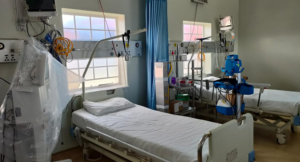
    The newly constructed six-storey building of the Government Hospital in Kolathur in Chennai built at a cost of ₹210 crore and awaiting inauguration, would be named after late social reformer ‘Periyar’ E.V. Ramasamy, the Tamil Nadu government said on Sunday.

    Chief Minister M.K. Stalin issued directions in this regard. He also inspected the new building during his visit to Periyar Nagar in his Kolathur Assembly constituency on Sunday. The hospital is to be inaugurated by him later this month.

    Following its decision to upgrade the Government Peripheral Hospital in Periyar Nagar, the TN government laid the foundation stone in March 2023 for the construction of an additional building with three floors. Eventually, it decided to add three more floors to the building.

    Mr. Stalin also visited the ‘Mudhalvar Padaippagam’, a coworking and learning space that he had inaugurated in November last year, and interacted with students there. The learning space was designed to benefit students preparing for national and State-level competitive examinations.

    Ministers Ma. Subramanian, P.K. Sekarbabu and Anbil Mahesh Poyyamozhi; Chennai Mayor R. Priya; MPs A. Raja and Kalanidhi Veeraswamy and senior officials accompanied the CM during his visit. The Hindu

  • The Merger of Aster, QCIL will be completed in eight months

    The Merger of Aster, QCIL will be completed in eight months

    The merger between Aster DM Healthcare and Blackstone-backed Quality Care India Limited (QCIL) is expected to reduce HR and procurement costs for the combined entity while eliminating resource duplication.

    Anoop Moopen, the company’s director, stated that the merger would be completed within eight months.

    “The merger is in the process of integration, and we expect to close it out in eight months to a year,” said Moopen. “It will take us to the top league, increasing our overall capacity to over 10,000 beds once completed.”

    Aster DM Healthcare and QCIL merged in November through a share-swap deal, with 977 Aster shares allotted for every 1,000 QCIL shares.

    Aster DM Healthcare shareholders are expected to own 57.3% of the merged entity, which will operate over 10,000 beds across 38 hospitals.

    “We are focusing on optimising existing assets and ensuring synergies in procurement and talent,” Moopen added. “Once the merger is complete, we aim to eliminate resource duplication and reduce HR and procurement costs.”

    Observers and analysts note that once the merged entity is listed, it will rank among the top three healthcare providers in India, or as Moopen put it, “in the big league.”

    The merger will also strengthen Aster’s presence in Kerala, where the company is developing three hospital projects in Thiruvananthapuram, Kasaragod, and Kochi.

    “Our 450-bed Thiruvananthapuram hospital will be commissioned within a year, while the 250-bed facility in Kasaragod will open in less than six months,” Moopen said. “We are also exploring other locations within Kerala to expand our presence.”

    Aster’s market position in Kerala is set to grow further as KIMS Healthcare, which is part of the merged entity, will play a significant role in driving regional revenue.

    Currently, Kerala contributes 55% to 60% of Aster’s total revenue, and this share is expected to rise post-merger.

    The company is also considering expansion into cities like Bhubaneswar, Aurangabad, and Kolhapur.

    “Our primary focus will remain on South India, as there is ample opportunity for growth in Tamil Nadu, Kerala, and Karnataka,” Moopen stated. “We have achieved a 25% CAGR and 30% EBITDA growth over the last five years, and the expanding insurance and healthcare market remains a strong tailwind for us.” CNBCTV18

  • PE firms make betting on Indian healthcare; MedTech funding raised fivefold to $1.2B

    PE firms make betting on Indian healthcare; MedTech funding raised fivefold to $1.2B

    India is one of the fastest-growing healthcare markets in the world, and the entry of more corporate players is a positive development, according to Viren Shetty, Executive Vice-Chairman of Narayana Health. However, while capital expenditure (capex) is important, it is also crucial to hire skilled doctors and train nurses to improve quality, he noted.

    Shetty explained that as more hospitals are built, overall industry standards will rise. He also stated that large business groups entering the sector could help bring better organisation and attract more investment.

    One key challenge, according to Shetty, is India’s reliance on imported medical equipment and consumables. “The larger the domestic healthcare industry grows, the more entrepreneurs come in and start becoming suppliers to Indian hospitals. So yes, I mean, long term, this is something that would only benefit the industry,” he said.

    Shetty acknowledged concerns about rising healthcare costs due to increasing privatisation. He explained that different business models cater to various market segments—some focus on cost-efficient, affordable healthcare, while others provide premium services with high-end infrastructure.

    He also shared his views on private equity (PE) investment in healthcare. “Private equity (PE), like any other fund, who is financing this industry is looking for the return of their money. It is just that the sources of capital are very different and the business model we build around that has to cater to that.” He added that a growing and competitive industry with investor interest will ultimately benefit consumers by offering more choices.

    Ankit Thakker, CEO of Jupiter Life Line Hospitals, who also participated in the discussion, highlighted the need for strong ethical standards as more private equity and industrial houses enter the healthcare sector.

    On the issue of affordability, he stressed that healthcare costs worldwide are beyond the reach of the average person without insurance. “Nowhere in the world, a quality healthcare cost is within the reach of an average person out of pocket. So, the aspiration for affordability has to be through the insurance procurement, and that is the way we need to look at it,” Thakker said.

    Private equity and venture capital firms are increasingly betting on India’s healthcare sector. In 2024, PE/VC deals surged to 84 transactions, up from 62 last year, signalling strong investor confidence. However, the deal value has shifted—investments in hospitals and clinics have fallen sharply from $4.6 billion in 2023 to $1.2 billion this year. At the same time, funding in medical equipment and devices has increased nearly fivefold to $1.2 billion, reflecting a growing focus on technology and innovation.

    Narayana Health has a market capitalisation of ₹30,422.17 crore, with its shares gaining around 7% in the past year and Jupiter Life Line Hospitals has a market capitalisation of ₹9,474.29 crore, but its shares have declined by nearly 2% over the past year. CNBCTV18

  • Metropolis is approaching the end of its deals with potential acquisition aims

    Metropolis is approaching the end of its deals with potential acquisition aims

    Mumbai-based diagnostic chain Metropolis Healthcare expects margin dilution in the next financial year ending March 2026 following its acquisition of Core Diagnostic. CEO Surendran Chemmenkotil said, “Core Diagnostic is relatively on a lower single-digit margin, so you can say 10% of the next year’s revenue coming at a much lower margin. Maybe there will be a little bit of margin dilution because of Core Diagnostic.

    However, the company’s goal is to bring Core Diagnostic in line with Metropolis’ overall margin levels by the third year.

    The company acquired Core Diagnostics to expand its oncology offerings and strengthen its position in India’s growing cancer testing market.

    The acquisition is nearing completion and the integration process will begin soon. Core Diagnostics’ revenue will start reflecting in Metropolis group financials by the start of the next financial year.

    In October–December 2024 (Q3FY25), Metropolis reported revenue of ₹322 crore, with margins at 22% and profit after tax at ₹31 crore.

    “Year-to-date (YTD) quarter three we are done at 12.5% growth in our revenues and earnings before interest, taxes, depreciation, and amortisation (EBITDA) is around 24.5%. We expect the year to be ending in the similar trends as we have been trending in the YTD quarter three,” Chemmenkotil said.

    He noted that the third quarter is typically a slow period for the company’s business, particularly in diagnostics and overall healthcare.

    However, the fourth quarter tends to see a recovery, with increased activity in the wellness segment as people complete their health checkups before the year ends.

    Metropolis Healthcare is also in the final stages of discussions with several potential acquisition targets, particularly in northern India. Once these deals are finalised, they are expected to further enhance growth in the coming year, building on the 12-13% increase already seen this year.

    Overall growth for the company will come from a combination of the company’s existing organic expansion, revenue contributions from the Core Diagnostics acquisition, and any additional acquisitions that are completed.

    Metropolis Healthcare’s current market capitalisation is ₹8,460 crore. Its shares have declined 2% over the last year. CNBCTV18

  • GeM plans to acquire from 1 lakh procurement

    GeM plans to acquire from 1 lakh procurement

    Public procurement portal GeM is aiming to onboard one lakh government-registered startups on its platform as it would provide a huge buyer base to these entities, an official statement said on Tuesday.

    The Government e-marketplace (GeM) is also looking at doubling the number of women entrepreneurs on the portal and increasing their share percentage in overall procurement of the country from the current 3.78 per cent.

    “With an ambitious goal of onboarding one lakh Department for Promotion of Industry and Internal Trade registered startups onto the portal, GeM is determined to become a vibrant startup ecosystem in public procurement,” the commerce ministry said.

    It added that GeM is intending to provide direct access for women entrepreneurs with government buyers, sans intermediaries, thereby ensuring better product prices, spurring hyper-local job creation and igniting inclusive growth. PTI

  • DeepSeek expands after disrupting markets with low-cost AI

    DeepSeek expands after disrupting markets with low-cost AI

    The Chinese startup triggered a $1 trillion-plus sell-off in global equities markets last month with a cut-price AI reasoning model that outperformed many Western competitors. Now, the Hangzhou-based firm is accelerating the launch of the successor to January’s R1 model.

    Deepseek had planned to release R2 in early May but now wants it out as early as possible, two of them said, without providing specifics. The company says it hopes the new model will produce better coding and be able to reason in languages beyond English. Details of the accelerated timeline for R2’s release have not been previously reported.

    Rivals are still digesting the implications of R1, which was built with less-powerful Nvidia chips but is competitive with those developed at the costs of hundreds of billions of dollars by U.S. tech giants.

    “The launch of DeepSeek’s R2 model could be a pivotal moment in the AI industry,” said Vijayasimha Alilughatta, chief operating officer of Indian tech services provider Zensar. DeepSeek’s success at creating cost-effective AI models “would likely spur companies worldwide to accelerate their own efforts … breaking the stranglehold of the few dominant players in the field,” he said.

    R2 is likely to worry the U.S. government, which has identified leadership of AI as a national priority. Its release may further galvanize Chinese authorities and companies, dozens of which say they have started integrating DeepSeek models into their products.

    Little is known about DeepSeek, whose founder Liang Wenfeng became a billionaire through his quantitative hedge fund High-Flyer. Liang, who was described by a former employer as “low-key and introverted,” has not spoken to any media since July 2024.

    Reuters interviewed a dozen former employees, as well as quant fund professionals knowledgeable about the operations of DeepSeek and its parent company High-Flyer. It also reviewed state media articles, social-media posts from the companies and research papers dating back to 2019.

    They told a story of a company that functioned more like a research lab than a for-profit enterprise and was unencumbered by the hierarchical traditions of China’s high-pressure tech industry, even as it became responsible for what many investors see as the latest breakthrough in AI.

    Different path
    Liang was born in 1985 in a rural village in the southern province of Guangdong. He later obtained communication engineering degrees at the elite Zhejiang University.

    One of his first jobs was running a research department at a smart imaging firm in Shanghai. His then-boss, Zhou Chaoen, told state media on Feb. 9 that Liang had hired prize-winning algorithm engineers and operated with a “flat management style.”

    At DeepSeek and High-Flyer, Liang has similarly shunned the practices of Chinese tech giants known for rigid top-down management, low pay for young employees and “996” — working from 9 a.m. to 9 p.m. six days a week.

    Liang opened his Beijing office within walking distance of Tsinghua University and Peking University, China’s two most prestigious education institutions. He regularly delved into technical details and was happy to work alongside Gen Z interns and recent graduates that comprised the bulk of its workforce, according to two former employees. They also described usually working eight-hour days in a collaborative atmosphere.

    “Liang gave us control and treated us as experts. He constantly asked questions and learned alongside us,” said 26-year-old researcher Benjamin Liu, who left the company in September. “DeepSeek allowed me to take ownership of critical parts of the pipeline, which was very exciting.”

    While Baidu and other Chinese tech giants were racing to build their consumer-facing versions of ChatGPT in 2023 and profit off of the global AI boom, Liang told Chinese media outlet Waves last year that he deliberately avoided spending heavily on app development, focusing instead on refining the AI model’s quality.

    Both DeepSeek and High-Flyer are known for paying generously, according to three people familiar with its compensation practices. At High-Flyer, it is not uncommon for a senior data scientist to make 1.5 million yuan annually, while competitors rarely pay more than 800,000, said one of the people, a rival quant fund manager who knows Liang.

    The largesse was funded by High-Flyer, which became one of China’s most successful quant funds and, even after a government crackdown on the sector, still manages tens of billions of yuan, according to two people in the industry.

    Computing power
    DeepSeek’s success with a low-cost AI model is based on High-Flyer’s decade-long and substantial investment in research and computing power, three people said.

    The quant fund was an earlier pioneer in AI trading and a top executive said in 2020 that High-Flyer was going “all in” on AI by re-investing 70% of its revenue, mostly into AI research.

    High-Flyer spent 1.2 billion yuan on two supercomputing AI clusters in 2020 and 2021. The second cluster, Fire-Flyer II, was made up of around 10,000 Nvidia A100 chips, used for training AI models.

    DeepSeek had not been established at that time, so the accumulation of computing power caught the attention of Chinese securities regulators, said a person with direct knowledge of officials’ thinking.

    “Regulators wanted to know why they need so many chips?” the person said. “How they were going to use it? What kind of impact would that have on the market?”

    Authorities decided not to intervene, in a move that would prove crucial for DeepSeek’s fortunes: the U.S. banned the export of A100 chips to China in 2022, at which point Fire-Flyer II was already in operation.

    Beijing now celebrates DeepSeek, but has instructed it not to engage with the media without approval, according to a person familiar with Chinese official thinking.

    Authorities had asked Liang to keep a low-profile because they were worried that too much hype in the media would draw unnecessary attention, the person said.

    As one of the few companies with a large A100 cluster, High-Flyer and DeepSeek were able to attract some of China’s best research talent, two former employees said. “The key advantage of vast (computing) resources is that it allows for large-scale experimentation,” said Liu, the former employee.

    Some Western AI entrepreneurs, like Scale AI CEO Alexandr Wang, have claimed that DeepSeek had as many as 50,000 higher-end Nvidia chips that are banned for export to China. He has not produced evidence for the allegation or responded to requests to provide proof.

    DeepSeek has not responded to Wang’s claims. Two former employees attributed the company’s success to Liang’s focus on more cost-effective AI architecture.

    The startup used techniques like Mixture-of-Experts (MoE) and multihead latent attention (MLA), which incur far lower computing costs, its research papers show.

    The MoE technique divides an AI model into different areas of expertise and activates only those related to a query, as opposed to more common architectures that use the entire model.

    MLA architecture allows a model to process different aspects of one piece of information simultaneously, helping it detect key details more effectively.

    While competitors like France’s Mistral have developed models based on MoE, DeepSeek was the first firm to depend heavily on this architecture while achieving parity with more expensively built models.

    DeepSeek’s pricing was 20 to 40 times cheaper than what OpenAI charged for equivalent models, analysts at Bernstein brokerage estimated in early February.

    For now, Western and Chinese tech giants have signaled plans to continue heavy AI spending, but DeepSeek’s success with R1 and its earlier V3 model has prompted some to alter strategies.

    OpenAI cut prices this month, while Google’s Gemini has introduced discounted tiers of access. Since R1’s launch, OpenAI has also released an O3-Mini model that relies on less computing power.

    Adnan Masood of U.S. tech services provider UST said that his laboratory had run benchmarks that found R1 often used three times as many tokens, or units of data processed by the AI model, for reasoning as OpenAI’s scaled-down model.

    State embrace
    Even before R1 gripped global attention, there were signs that DeepSeek had caught Beijing’s favor. In January, state media reported that Liang attended a meeting with Chinese Premier Li Qiang in Beijing as the designated representative of the AI sector, ahead of the leaders of better-known firms.

    The subsequent fanfare over the cost competitiveness of its models has buoyed Beijing’s belief that it can out-innovate the U.S., with Chinese companies and government bodies embracing DeepSeek models at a pace that has not been offered to other firms.

    At least 13 Chinese city governments and 10 state-owned energy companies say they have deployed DeepSeek into their systems, while tech giants Lenovo, Baidu and Tencent — owner of China’s largest social media app WeChat — have integrated DeepSeek’s models into their products.

    Chinese leader Xi Jinping and Li “have signaled they endorse DeepSeek,” said Alfred Wu, an expert on Chinese policymaking at Singapore’s Lee Kuan Yew School of Public Policy. “Now everyone just endorses it.”

    The Chinese embrace comes as governments from South Korea to Italy remove DeepSeek from national app stores, citing privacy concerns.

    “If DeepSeek becomes the go-to AI model across Chinese state entities, Western regulators might see this as another reason to escalate restrictions on AI chips or software collaborations,” said Stephen Wu, an AI expert and founder of hedge fund Carthage Capital.

    Further limits on advanced AI chips are a challenge that Liang has acknowledged.

    “Our problem has never been funding,” he told Waves in July. “It’s the embargo on high-end chips.” Reuters
  • Musk’s satellite firm in prime position for major US air traffic contract

    Musk’s satellite firm in prime position for major US air traffic contract

    A satellite company owned by Elon Musk has the inside track to potentially take over a large federal contract to modernise the nation’s air traffic communications system.

    Equipment from Musk’s Starlink has been installed in Federal Aviation Administration facilities as a prelude to a takeover of a $2 billion contract held by Verizon, according to government employees, contractors and people familiar with the work.

    Musk said that the network used by air traffic controllers is aging and requires drastic and quick action to modernise it.

    The Verizon system is not working and so is putting air travelers at serious risk, Musk on Monday posted on X, the social media site he has owned since 2022.

    The emergence of Starlink as a potential replacement for the Verizon-led effort underscores the extraordinary conflicts of interest inherent in Musk’s position as both a senior White House adviser to President Donald Trump and a business mogul in charge of a sprawling array of companies. It is not clear what role Musk might be playing in helping Starlink parent company SpaceX win such business.

    There’s very limited transparency, said Jessica Tillipman, a contracting law expert at George Washington University. Referring to Musk, she said: Without that transparency, we have no idea how much non-public information he has access to or what role he’s playing in what contracts are being awarded.

    Former FAA officials also told The Associated Press that they were alarmed at the prospect of Starlink being used as a critical part of the nation’s aviation system without adequate testing, review and debate about its benefits and drawbacks.

    SpaceX is angling to use its constellation of satellites to replace an aging ground-based communications system that facilitates the FAA’s text and voice communication, the sources said. The Verizon contract, awarded in 2023, was to update part of that system to a more modern standard relying on fiber optic cables.

    Contracting records show that nearly $200 million in work has already been done on Verizon’s 15-year modernization effort to update the FAA’s communications system. A Verizon representative said the company is unaware that the contract is being amended or terminated.

    The FAA announced on X on Monday that the agency is testing a Starlink terminal at its facility in Atlantic City and two terminals at non-safety critical sites in Alaska. Terminals are ground-based receivers that connect devices or computers to orbiting satellites.

    Another FAA contractor, L3 Harris, confirmed it was responsible for acquiring and testing Starlink terminals for incorporation into the FAA’s telecommunications infrastructure network. An L3 Harris spokesperson said the company has been working with SpaceX on the initiative for many months.

    Details about SpaceX employees deployed to work on the project are unclear, but three of its software developers appeared on a Trump administration list of government workers given ethics waivers to do work that could benefit Musk’s company.

    Government ethics laws require that people who could profit from government work either recuse themselves from specific projects or first sell their financial holdings or sever ties with the company that could benefit. Waivers can be granted by the heads of government departments or other officials, but only in limited circumstances.

    Ted Malaska, a senior director of application software at SpaceX, got a waiver along with two software engineers, Brady Glantz and Thomas Kiernan, according to the waiver list and LinkedIn profiles. The AP could not determine if the three are still working for SpaceX or the precise nature of work for the federal government.

    Malaska posted on social media on Thursday that he had been meeting at FAA headquarters with officials responsible for implementation of the telecommunications modernization.

    The FAA contract is not Musk’s only conflict. His acolytes have also taken over many of the operations at the General Services Administration, which controls real estate and contracting for numerous government agencies. GSA currently offers other agencies the ability to launch payloads through an existing SpaceX contract – putting the agency in a position to direct business toward Musk. The Department of Transportation regulates aspects of SpaceX and his electric car company Tesla. NASA and the Department of Defense are major customers of SpaceX. His brain-computer interface company Neuralink has regulatory issues in front of the US Food and Drug Administration. AP

  • American Tower shares jump 6.7% on strong Q4 revenue beat

    American Tower shares jump 6.7% on strong Q4 revenue beat

    American Tower Corporation reported fourth quarter financial results that exceeded analyst expectations, as the cell tower operator saw solid demand across its global portfolio.

    American Tower shares were down 0.07% in pre-market trading following the earnings release.

    The company posted adjusted funds from operations (AFFO) of $2.32 per share in Q4, up from $2.29 per share in the year-ago quarter and above the consensus estimate. Revenue rose 3.7% year-over-year to $2.55 billion, topping analyst projections of $2.52 billion.

    For the full year 2024, American Tower generated AFFO of $10.54 per share on revenue of $10.13 billion.

    “We posted another year of solid results at American Tower, delivering AFFO per Share growth supportive of our long-term target, while demonstrating effective execution of the strategic priorities I laid out a year ago,” said CEO Steven Vondran.

    Looking ahead, the company forecast 2025 AFFO in a range of $10.31 to $10.50 per share. American Tower expects 2025 revenue between $9.92 billion and $10.07 billion.

    The company said demand for connectivity across its global platform continues unabated, despite a challenging macroeconomic environment.

    It believes strategic steps taken to enhance earnings quality through portfolio management and disciplined capital allocation have positioned it well to navigate volatility. Reuters