
Month: March 2025

  • With the Starlink deal, Airtel and RIL face regulatory and price issues

    With the Starlink deal, Airtel and RIL face regulatory and price issues

    India’s biggest telecom players, Bharti Airtel and Reliance Industries-backed Jio Platforms, will soon bring Elon Musk-led SpaceX’s Starlink satellite services to India. The move, analysts said, could boost India’s tele-density, especially in rural areas, and may be an opportunity for investors to add the two stocks on dips for long-term gains.

    In the near-term, though, ambiguity over regulatory clarity may keep upside in the stocks restricted, they cautioned.

    “Long-term investors may find attractive entry points in these stocks amid market corrections. Gradually adding these stocks during dips can enhance portfolio value, especially as telecom expansion, 5G adoption, and digital initiatives drive sustained growth prospects for Bharti Airtel and Reliance Jio,” said Siddhesh Mehta, research analyst at SAMCO Securities.

    Earlier this week, Sunil Bharti Mittal-led Bharti Airtel announced its partnership with SpaceX to bring Starlink’s high-speed internet services to its customers in India.

    Mukesh Ambani-backed Jio Platforms, too, announced a similar agreement with SpaceX, revealing that Reliance Jio will not only offer Starlink equipment at Jio’s retail outlets but will also establish a mechanism to support customer service installation and activation.

    The deals, analysts at Citi Research said, would be more suited for servicing remote rural areas where there are coverage gaps rather than high-density urban areas where satellites may not be able to match terrestrial networks in terms of capacity and coverage.

    That apart, both the telecom players could use this partnership to expand their business-to-business (B2B) connections and related offerings to enterprises and businesses in areas that otherwise lack fibre/fixed wireless access (FWA) connectivity, analysts pointed out.

    Pricing, regulatory hurdles
    While the move remains sentimentally positive as tying up with Starlink, rather than competing with it had it come by itself in India, has tilted the scales in the favour of Airtel and Jio, analysts say it is too early to cheer the wins given the regulatory hurdles and pricing pressure.

    The agreements, they said, are contingent upon obtaining necessary regulatory approvals from the Government, which has earlier expressed concerns over its privacy policies.

    India’s cost-sensitive market, they added, presents a challenge as Starlink’s global pricing is significantly higher than local internet rates.

    According to an analysis by JM Financial, Starlink (and other satcom companies) have globally priced satellite internet plans at $10-500 per month excluding one-time cost for hardware (which is $250-380). This, the brokerage said, is 7-18 times more expensive than Indian telcos’ home broadband plans (i.e., FTTH/FWA) that start from $5-7/month.

    Starlink’s satellite internet use case, thus, will focus on providing network to rural and remote regions, complementing Bharti/Jio Fiber and AirFiber broadband business, the brokerage noted.

    “We believe the agreement seems limited to Bharti/Jio distributing Starlink’s satellite broadband services via their extensive retail network, mostly to B2C and B2B customers in rural and remote areas, in return for some distribution income. However, the direct contribution to their overall revenue is likely to remain limited,” it said.

    Moreover, Jio and Airtel have their own satellite broadband ventures – Bharti-backed Eutelsat OneWeb and Jio’s JV with SES (Orbit Connect India), which are ahead of Starlink in terms of securing the licence from the Department of Telecommunications (DoT) and approvals from IN-SPACe.

    “We believe this agreement with Starlink will only help telcos position themselves as facilitators in bringing satellite connectivity to a wider customer base in India,” JM Financial said.

    Against this backdrop, analysts suggested investors closely monitor revenue growth, subscriber additions, and the impact of 5G adoption on profitability.

    “Reliance Industries presents a better earnings momentum, going ahead, and the potential listing of the Jio telecom unit, amid Starlink deal, could be a major positive factor supporting the company,” said Vishnu Kant Upadhyay, AVP for Research & Advisory, Master Capital Services. Business Standard
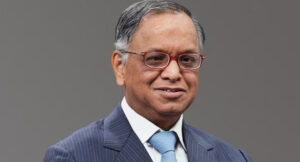

  • Narayana Murthy urges India about “exaggerated” AI claims

    Narayana Murthy urges India about “exaggerated” AI claims

    Infosys co-founder NR Narayana Murthy cautioned against what he called “exaggerated” claims surrounding artificial intelligence (AI) in India, while asserting that poverty can be tackled by innovation and job creation and not by freebies.

    Murthy pointed out that many systems labelled as AI are just conventional programs.

    “I find that most of the so-called AI, I see, is silly and old programming,” he said while speaking at TiEcon Mumbai 2025.

    “It has become a fashion in India to talk of AI in everything. Ordinary programs are touted as AI,” he said, adding that true AI involves two fundamental principles: machine learning, which enables large-scale correlation for predictive analysis, and deep learning, which mimics human brain functions to handle unsupervised algorithms.

    “Unsupervised algorithms which use deep learning and neural networks are the ones that have much greater potential to do things that will mimic human beings better and better,” he said.

    Murthy highlighted that with every technological advancement, certain jobs may be eliminated, but if implemented in an assistive manner, it can drive economic growth.

    “In each tech, certain jobs will be eliminated, but if used in an assisted manner, we can grow the economy,” he said.

    Drawing parallels with AI, he explained that while automation may replace certain roles, it also has the potential to create new industries and employment opportunities.

    “AI for example, if you use it in autonomous vehicles for transport, hospital care, it will lead to expansion of those companies and create jobs,” he said.

    He urged startups to benchmark themselves against the best global standards.

    “In the beginning, it looks impossible, but the moment the mind-set has been created, you’ll start making progress,” he said. He also stressed the need to hire talent that is “smarter than you” and to foster a workplace that is open to new ideas.

    “That’s how you solve the problem, and not with freebies. Our poverty will vanish like dew on a sunny morning,” he added.

    “Every startup that failed did not follow this,” said Murthy.

    An advocate of compassionate capitalism, Murthy took a critical stance on government freebies, arguing that subsidies should be tied to measurable outcomes.

    “What you can do is, when subsidies are provided, you can ask for something in return. If you give free electricity for the first six months, at the end of it, we’ll find out if children are reading more and if their performance is better in school,” he added.

    Offering guidance to entrepreneurs, Murthy emphasised the importance of earning respect from all stakeholders, including customers, employees, investors, and regulators.

    “If you think in terms of doing good to society, you’ll get repeat business, employees will join and investors, vendors will put up with you in difficult times, politicians will want you to succeed,” he said. Business Standard

  • FTC no longer want the Amazon trial to be delayed due to DOGE

    FTC no longer want the Amazon trial to be delayed due to DOGE

    The US Federal Trade Commission said it does not need to delay a September trial against Amazon, reversing an attorney’s statement earlier in the day that resource shortfalls due to cost-cutting required an extension.

    Jonathan Cohen, an attorney for the FTC, said he was wrong about the lack of resources in a statement addressed to U.S. District Judge John Chun in Seattle.

    “The Commission does not have resource constraints and we are fully prepared to litigate this case. Please be assured that the FTC will meet whatever schedule and deadlines the court sets,” Cohen said.

    FTC Chairman Andrew Ferguson reiterated the agency’s commitment to the consumer protection case.

    “I have made it clear since Day One that we will commit the resources necessary for this case. The Trump-Vance FTC will never back down from taking on Big Tech,” Ferguson said in a statement.

    Earlier on Wednesday, Cohen had outlined a “dire resource situation,” describing the effect of cost-cutting measures enacted under President Donald Trump.

    “We have lost employees in the agency, in our division and on our case team,” Cohen said during the morning hearing.

    Other agencies – including the Environmental Protection Agency, Department of Education and United States Agency for International Development – have faced drastic cuts under Trump advisor and Tesla CEO Elon Musk’s campaign to shrink government. The FTC, which enforces consumer protection and antitrust laws, has not seen large-scale reductions in force.

    However, Cohen said at the hearing that some employees on the case took a resignation offer sent out in January, and others have resigned for other reasons, or are scheduled to be on leave during the trial, with a hiring freeze in force.

    Trump signed an executive order in February forbidding government agencies to hire more than one employee for every four who leave.

    The FTC accused Amazon in 2023 of using “deceptive user-interface designs known as ‘dark patterns’ to trick consumers into enrolling in automatically renewing Prime subscriptions.”

    Cohen said the case over what he called the world’s largest subscription program – which Amazon says has more than 200 million subscribers worldwide – involves claims worth at least $1 billion.

    Amazon has denied any wrongdoing. The lawsuit also names three of its senior executives as defendants.

    Cohen cited new rules limiting FTC attorneys to buying legal proceeding transcripts on the cheapest delivery schedule, which means they may take weeks to arrive.

    The Trump administration has also decided not to renew the lease on the building where most FTC attorneys work, so staff may be required to move offices in the middle of trial preparation, Cohen said. Travel accounts for FTC staff have been limited, he said.

    “If you are in crisis now as far as resources, how are things going to be different in two months?” Chun asked.

    “I cannot guarantee that things won’t be even worse,” Cohen replied. But he said a delay would relieve strain on attorneys.

    Amazon attorney John Hueston had urged the judge not to reschedule, saying trial attorneys come and go in every case, “DOGE or no DOGE,” referring to Musk’s Department of Government Efficiency. Reuters

  • Promoters of UniHealth Hospitals will get 7,00,000 Zero Coupon CCDs

    Promoters of UniHealth Hospitals will get 7,00,000 Zero Coupon CCDs

    UniHealth Hospitals Limited has announced the issuance of 7,00,000 Zero Coupon Compulsorily Convertible Debentures (CCDs) at Rs151 each, aggregating Rs10.57 crore, on a preferential basis to its promoters, Dr Akshay Parmar and Dr Anurag Shah. The issuance is subject to shareholder approval.

    Each CCD will be converted into one equity share of Rs10 at a premium of Rs141 in one or more tranches within 18 months from the allotment date. The promoters will subscribe to equal numbers of CCDs, with 25% of the issue price payable at the time of subscription and the remaining 75% payable upon conversion into equity shares.

    Following this capital infusion, Dr Anurag Shah’s stake in the Company will increase from 32.47% to 33.23%, while Dr Akshay Parmar’s holding will rise from 27.14% to 28.14%. This investment underscores the promoters’ confidence in the Company’s growth trajectory and will support its expansion across the domestic and African markets, further strengthening the UniHealth brand.

    Dr Akshay Parmar, Founder & Managing Director of UniHealth Hospitals, emphasized the significance of this capital infusion, stating, “This investment represents a significant milestone in UniHealth’s journey toward expanding our reach and elevating healthcare standards. By strengthening our financial position, we can accelerate our efforts to upgrade medical infrastructure, introduce advanced treatment modalities, and enhance the overall patient experience. Our commitment to unwavering innovation and excellence drives us to create a healthcare ecosystem that is both accessible and world-class. With this initiative, we reaffirm our dedication to delivering superior medical care while expanding our footprint in key regions.”

    Dr Anurag Shah, Managing Director overseeing the Group’s African operations, highlighted the impact of this initiative, stating, “This investment strengthens our ability to grow and innovate, enabling us to expand our capacity and introduce specialized medical services. With a strong focus on operational efficiency, technology-driven advancements, and patient-centric care, we aim to redefine healthcare delivery in the regions we serve. This investment will empower us to expand existing facilities, introduce specialized services, and drive sustainable improvements in medical accessibility.” VMPL

  • Haryana vigorously combats illicit maternity clinics

    Haryana vigorously combats illicit maternity clinics

    Haryana chief minister Nayab Singh Saini said that strict action is being taken against those found operating an illegal maternity clinic in the state.

    The chief minister was responding to a question asked by Congress’ Ferozepur Jhirka segment MLA Mamman Khan regarding illegal maternity clinic operating in Nuh without a degree and licence, during the Question Hour of the ongoing budget session of the Haryana Vidhan Sabha.

    Saini said that the aim of the state government is to provide accessible and better healthcare services to the citizens, and the government is continuously working towards this goal.

    He said that Prime Minister Narendra Modi had launched the “Beti Bachao-Beti Padhao” campaign from Haryana, and the Haryana government is working diligently in this direction. If any illegal maternity clinic is operating without a licence or degree, it will be thoroughly investigated, and strict action will be taken against the offenders, Saini assured the assembly.

    Earlier, Haryana health minister Arti Singh Rao said that no illegal maternity clinic is being run in Nuh district without a degree and licence.

    She said that in Nuh district, four private hospitals are registered under the Medical Termination of Pregnancy (MTP) Act and 92 clinics are registered under the Health Management Information System (HMIS). Apart from these, 106 clinics are registered under the Central Registration System (CRS).

    She also informed that if any complaint/information is received regarding the death of a mother and newborn, immediate action is taken in the case under the Act. No such complaint has been received in Nuh district, she said. Hindustan Times

  • 1,178 medical devices will be evaluated by the center using a risk-based approach

    1,178 medical devices will be evaluated by the center using a risk-based approach

    Tackling the issue of sub-standard drugs, supporting small and medium-sized drug manufacturers, and aligning the medical device vertical are the priority areas for India’s apex drug regulator, the Drugs Controller General of India (DCGI), who has been granted an extension of his tenure on a contractual basis.

    “DCGI Rajeev Singh Raghuvanshi has been given the mandate to work on weeding out quality issues along with upgrading standards at small manufacturing sites by giving support to MSME drug-makers and seamlessly adding medical devices vertical into CDSCO which is only known for handling drugs so far,” said a senior official requesting anonymity.

    “The ministry is satisfied with his performance as he has been able to drastically improve the manufacturing quality of drugs via risk-based inspections. His zero-tolerance approach has created an environment of fear. Based on the same, renewed responsibilities have been given till the time we find the appropriate candidate.”

    Despite some concerns, the appointments committee of the cabinet has approved the proposal of the department of health and family welfare for the re-employment of Raghuvanshi as drugs controller, Central Drugs Standard Control Organisation (CDSCO), on a contract basis for one year starting March 1.

    He has been given the charge “…beyond his attaining the age of superannuation or till the appointment of the regular incumbent to the post, or until further orders, whichever is the earliest…”

    The announcement specifically mentions that the decision has been taken “…by keeping the recruitment rules of the post in abeyance”.

    Wipe out sub-standard drugs
    India has been battling the issue of sub-standard or not-of-standard quality drugs (NSQs). Last year, in September, top pharmaceutical companies indicated that spurious drugs are to blame after the antacid Pan D, calcium supplement Shelcal, anti-diabetic drug Glimepiride, high blood pressure drug Telmisartan and many more biggest-selling medicines were flagged for failing quality tests in the monthly drug alert released by the country’s drug regulation watchdog CDSCO.

    Pharma companies had approached CDSCO to change the pattern of alert announcements due to the high chances of spurious drug failures instead of original drugs. In fact, India’s largest lobby of domestic drug-makers, the Indian Pharmaceutical Alliance (IPA), said that the lobby will collaborate with the government to strengthen regulations against counterfeit products to protect public health and India’s global standing.

    Falsified medicines are not only a domestic concern but also a global issue. In 2019, the ‘Special 301 Report’ released by the Office of the United States Trade Representative (USTR) blamed India for its growing problem of counterfeit medicines.

    It said that almost 20 per cent of all pharmaceutical goods sold in the Indian market are counterfeit. Hence, the drug regulator needs to strengthen its monitoring mechanism to solve the issue of spurious drugs in India.

    According to Sudarshan Jain, Secretary General of the Indian Pharmaceutical Alliance (IPA), three priority areas that DCGI must look into immediately include, “implementation of Schedule M and Move to PIC/S (Pharmaceutical Inspection Co-operation Scheme (PIC/S) standards, management of counterfeit drugs and regulatory simplifications with thrust on simplifying new product processes”.

    Handholding MSME firms
    Hit by risk-based inspections (RBI), micro, small and medium enterprises (MSMEs) are feeling the heat. The Union government has mandated the need to upgrade facilities to follow Schedule M, making manufacturing standards on par with WHO-Good Manufacturing Practices (GMP).

    The move was aimed to retain the confidence of global health regulators in made-in-India medicines. However, these drug-makers have asked the government to extend hand-holding in the form of financial and technical support to improve quality standards.

    “We need the government to help and guide us to upgrade our facilities. Also, they should understand that we are not earning in crores. So many of us won’t have the budget to upgrade our factories. We have requested the government not to treat us as criminals but as small businessmen who need help to make our factories on par with global standards,” said an officer of the MSME industry.

    Overall, once the drug-makers are upgraded to follow global standards, India’s reputation in the global arena will be enhanced along with trust in Indian medicines, leading to a jump in exports of pharmaceutical products and creating a win-win situation for both the government and the drug-makers.

    Syncing Medical Devices With Drugs
    To bring regulatory uniformity in medical devices, the government is working to classify around 1,178 medical devices into four categories based on their risk approach.

    Till now, medical devices were treated on par with drugs, which was unfair. However, the drug regulator is revising the existing list of medical devices and classifying them into four categories—interventional radiology, radiology therapy, oncology and a newly introduced category named class A non-sterile and non-measuring medical devices.

    Presently, the medical device industry is already simmering with discontent and asking for a “predictable regulatory environment”.

    “Industry cannot be invited to invest in a state of chaos, yesterday- today- tomorrow- every day a new confusion will not build confidence, so we need a predictable regulatory and policy environment where we are not challenged by arbitrary demands of NoCs (no-objection certificate) being sought or SLAs (state licensing authorities) insisting manufacturers to get written clarification from DCGI,” Rajiv Nath, forum Coordinator of Association of Indian Medical Device Industry (AIMED), said. News18

  • Republicans want the Biden-era medical debt rule to be reversed

    Republicans want the Biden-era medical debt rule to be reversed

    Medical debt is a struggle for millions of Americans, and recent moves from a federal government watchdog to help people tackle it are up in the air right now.

    The Consumer Financial Protection Bureau (CFPB) issued new regulations at the start of the year, but the fate of the CFPB and its regulations are now uncertain.

    “Your credit report is that report card that shows financial institutions, lenders, anyone that’s going to give you money. This is why it’s your report card to prove, ‘I’m good for it,’” said financial coach Maureen Paley.

    Credit reports are critical to financing many aspects of American life, like owning a home, a car or starting a business. But for the millions of Americans with medical debt, reaching those goals could be harder.

    “Medical debt has been getting in the way of folks getting approved for financing either completely or approved at reasonable terms,” said Paley.

    In early January, in the final days of the Biden administration, the CFPB announced new regulations barring medical debt from credit reports, effective March 17, 2025.

    The CFPB workforce was ordered to stop working by acting director Russ Vought in February after President Donald Trump took office.

    Paley says there’s concern the new rule could be reversed.

    “They could remove that order, which would again be a burden. We would bring the burden back to the consumers and the everyday consumers that incur this medical debt and have a hard time getting out of it,” said Paley. “And, it would benefit those organizations that benefit from people being in those debts.”

    Paley says medical debt is the cause of 60% of bankruptcies. The new regulation could open doors to people struggling with it.

    The change is estimated to raise credit scores by an average of 20 points or so.

    “Twenty points can save you tens of thousands of dollars…A 20-point difference on your credit score could be the difference between you getting financing at an exorbitant high interest cost or one at a more moderate interest cost. It could also be the difference between you getting approved at all,” said Paley.

    The CFPB website is back up and running after a brief shutdown last month coinciding with the stop-work order and the Consumer Complaint Database is still online, but there may be no one available to take those complaints or help.

    Paley has advice for people managing medical debt.

    “One thing I would suggest is call the entity that’s issuing the debt and understand, one, where the debt came from,” said Paley.

    Get the details of the charge and call the provider for “charity care” to try and get the debt reduced. You can also ask them to negotiate the debt.

    Keep in mind, the credit reports of Californians are safe from most medical debt thanks to a law signed last year by Gov. Gavin Newsom. ABC10

  • Europe’s regulatory issues drive MedTech companies to the US

    Europe’s regulatory issues drive MedTech companies to the US

    For years, MedTech firms around the globe (and certainly European companies) introduced their products in Europe, which requires obtaining a CE mark certifying compliance with relevant EU health and safety standards, prior to entering the US market. But more recently, especially with the EU’s implementation of the complex and burdensome Medical Device Regulation (MDR) requirements for obtaining a CE mark for MedTech products, Europe has started losing its status as the preferred MedTech product launchpad.

    International companies have more recently been shifting operations to the US in preparation for launching their products in the region. About 89% of MedTech executives said they will prioritize US regulatory approval, according to a Boston Consulting Group (BCG) and UCLA Biodesign survey.1

    As a result, the world’s largest MedTech market, accounting for roughly 40% of the global MedTech market, will now see MedTech companies entering much earlier in their life cycle. This transition necessitates that companies navigate US-specific regulatory, corporate, and intellectual property regimes at an earlier point in their life cycle than many of their past predecessors. We will explore each of these topics in a series of articles.

    European Regulatory challenges drive MedTech firms to US
    The introduction of MDR in 2021 is likely a key catalyst in driving more MedTech companies to seek device approvals in the US.

    The MDR regulation increases the safety criteria required for medical device regulatory approval, in many cases including new clinical evidence. Devices with software components are subject to particularly rigorous requirements due to potential data privacy risks.

    Companies are required to obtain a certificate confirming that they meet MDR safety requirements before marketing and selling their devices. As feared, the stringent rules have created bottlenecks and delays: more devices are now falling into higher classifications under the MDR, meaning increased data requirements and increased review from Notified Bodies, who are themselves adjusting to an increased volume of work on an increased number of devices under the MDR regime. This all impacts the timeline for certification.

    According to a 2022 survey of MedTech Europe members, the time required for device certification roughly doubled after the MDR regulations took effect. More than 85% of previously certified devices had not received MDR certificates at the time of the survey.

    According to a more recent 2024 MedTech Europe survey, uncertainty around certification timelines persists and costs significantly increased for clinical evaluation, post-market surveillance, and certification.

    Established US Regulatory processes may Lure MedTech companies
    MedTech companies pursuing approval for devices across a range of uses have been increasingly turning to the FDA for initial regulatory approvals. Many end up establishing and growing their operations in the US.

    The preference for the US in part reflects a much more positive view of the US regulatory process compared with more than a decade ago.

    For example, a Stanford University survey of MedTech companies published in 20102 showed only 16% of respondents had excellent or very good experiences with the FDA, compared with 75% in the EU . In comparison, the 2022 BCG/UCLA Biodesign survey indicated a dramatic change. About 62% of surveyed MedTech executives found the FDA approval process for standard medical technology predictable, while only 22% said the same for the EU.

    These data suggest that the steps taken by the FDA designed to expedite the development and approval processes are paying off. The Breakthrough Devices Program, for instance, offers companies enhanced opportunities to gain clarity on regulatory expectations and potentially accelerate their entry into the market. Such measures have positioned the FDA as a more innovation-friendly regulator, particularly for companies developing cutting-edge technologies. Indeed, 79% of the BCG/UCLA Biodesign survey respondents agreed that the FDA has responded well to advances in MedTech innovation over the past decade, while only 13% disagreed.

    The hard data underscores the FDA’s strides towards establishing pathways to get advanced technologies to market.

    The strong market potential and smoother regulatory process will likely continue to draw MedTech companies into the US sooner than anticipated. As a result, many firms will face unfamiliar regulatory, corporate, and intellectual property issues and decisions. We will unpack these topics in more depth in our “MedTech Coming to America” series. JD Supra

  • Champions Trophy: A victorious Indian squad keeps cricket’s windmill turning

    Champions Trophy: A victorious Indian squad keeps cricket’s windmill turning

    Even as they set the stage for the presentation ceremony, in one corner of the Dubai International Stadium turf, Rohit Sharma would stamp the winning stump. The stadium sound system played ‘Jo Jeeta Wahi Sikandar’ in the background which felt more like a metaphorical music overlay over the Indian captain’s action.

    There are those in the cricket community who have attached an asterisk to India’s Champions Trophy triumph for an ‘undeniable advantage’ they enjoyed by playing all their matches at one venue.

    Could the International Cricket Council (ICC) have had it any other way? Hosts Pakistan Cricket Board (PCB) didn’t have a level playing field in mind during their negotiations with the ICC. They were even okay if India agreed to play all their matches in Lahore, on the most batting-friendly pitches of the tournament. Some have suggested India should have been forced to play in varied conditions in UAE, Sharjah as well as Abu Dhabi.

    “Dubai’s preference was obviously with the consent of both the host and the ICC,” Subhan Ahmed, Emirates Cricket Board (ECB), COO said. “In Dubai, it is plug and play. It is very easy. Not that other venues are not available. But the capacity here is such that it can cater to 25,000 people. Other venues do not have the capacity to host big matches.”

    The central theme in big-ticket tournaments is those big tickets. One understands the PCB struck an agreement with the Emirates’ board under which they took home a flat $2 million from gate receipts for India’s matches in Dubai. While the ECB refused to discuss finances, a source estimates they would have made ten times of the PCB, with India’s unbeaten run stretching to five matches lapped up by the Indian diaspora, the biggest expat base in the Emirates.

    Tickets for the Dubai matches were exorbitantly priced with the lowest priced India-Pakistan match ticket worth ₹12,000. Given the appetite for cricket, the premium tickets were worth ₹3.5 lakh. Ticket rates for the India-New Zealand final were similar, with only early bird entrants handed out cheaper tickets. Except for the India-Bangladesh tie, stands were mostly packed.

    “The pricing was set in consultation with both the ICC and hosts. We were reasonably confident that the people would turn up, that people would pay for it,” Ahmed said during the India-New Zealand league tie.

    Soon after India qualified for the final, there were NRIs in London willing to shell out the priciest Dubai airfare, once they secured a match ticket through the resale route. Sponsored super fans took flights to add noise and colour and corporate bookings picked up speed.

    Low-key response in Pak

    In contrast, big cricket’s return to Pakistan after nearly three decades – they hosted 10 of the 15 matches – met with lukewarm response. Surprisingly, even the tournament opener where the host team took on New Zealand saw big chunks of stands vacant in the first half of the game. More people came in towards the evening, but it painted a sorry picture of ODI cricket; people habituated with the T20 format, refusing to queue up for eight hours of cricket, half of it under the baking sun.

    Once Pakistan’s performances became progressively worse, the interest levels around the tournament nosedived in the host country. The New Zealand-South Africa semi-final was played to half-empty stands in Lahore. It looked anything but cricket’s marquee event on the other side of India’s border.

    Those may not have been great optics for the PCB, but they won’t be overly worried. 20.6 crore viewers watched Virat Kohli’s stellar run chase against Pakistan on Indian TV. Indian viewership accounts for 90 percent of ICC revenue and PCB gets to take home 34.5 million every year.

    “It was the second-most watched cricket match, outside of World Cups,” said a tailored press release from the broadcasters.

    Whether the Indo-Pak rivalry was losing sheen or not, the match’s viewership was still 40 times the population of New Zealand.

    Whether there is a pre-match opening ceremony or not, even if there is no all-captain’s get-together, so long as India’s Men in Blue are performing – spinning a web or swinging for sixes – public mood in India remains vibrant. Pictures of fans flashing mobile lights, scrambling for a glimpse of Rohit and Co on their return home after the win were illustrative of the lasting love for cricket in India.

    Not a single journalist travelled from Australia and New Zealand to Dubai for the semi-final and the final, even as Indian media persons filled the press box.

    A report from the Times in UK says The Lord’s has slashed ticket revenue estimates to the extent of 4 million pounds for June’s World Test Championship final after India failed to qualify.

    The Champions Trophy 2025 was a resounding success, only because it was a big Indian party. Rohit’s team simply played to the draw and very well at that. PTI

  • By 2025, global e-commerce sales will reach $4.4T

    By 2025, global e-commerce sales will reach $4.4T

    Online consumer spending is set to reach $4.4 trillion in 2025, with the U.S. contributing $1.4 trillion. By 2029, this figure will surge to $6.6 trillion, with the US accounting for $2 trillion of total online expenditure, according to Omdia.

    The projected growth in online consumer spending outpaces even the expansion of the media and entertainment sector, which is expected to grow from $1.07 trillion in 2025 to $1.3 trillion by 2029. Video content continues to lead this charge, driving 70% of global revenues, with online video (up 13%), cinema (12%), and gaming (7%) seeing the most significant growth in 2025.

    While media and entertainment remain a key growth area, the acceleration of online consumer spending presents the most significant opportunity. Retail media and shoppable TV are driving a transformation in how content, commerce, and advertising intersect, creating new avenues for businesses to capitalize on.

    With digital commerce continuing to expand rapidly, leading retailers are pivoting to adapt. Amazon has surpassed Walmart as the world’s largest retailer, highlighting the e-commerce shift. In response, Walmart has positioned itself as a digital-first powerhouse, making strategic moves like its recent acquisition of Vizio to enhance its digital advertising capabilities and integrate shoppable TV into its offerings. Currently, 20% of Walmart’s revenue comes from digital channels, and this figure is expected to grow significantly as the company invests more in retail media and connected TV (CTV).

    As CTV adoption accelerates, TV operating systems (TV OS) are becoming essential in shaping the future of advertising and commerce. The integration of CTV, TV OS, and retail media is creating seamless pathways from content consumption to purchase, unlocking new revenue streams for broadcasters, advertisers, and retailers alike.

    “Shoppable TV presents a massive opportunity for retailers, advertisers, and content creators. However, challenges remain such as seamless checkout, consumer trust, and platform integration which must be addressed before its full potential is realized,” said Omdia Senior Research Director, Maria Rua Aguete.

    As shoppable TV and retail media continue to mature, the industry will see new partnerships and innovations emerge. The convergence of entertainment and commerce is reshaping the digital media landscape. Companies that successfully integrate CTV, TV OS, and retail media into their strategies will be well-positioned to capture significant market share and drive growth in the next era of digital commerce. Omdia