Month: March 2025

  • US tech companies aren’t targeted by the EU’s new tech law

    US tech companies aren’t targeted by the EU’s new tech law

    Europe’s new tech rule aims to keep digital markets open and is not targeted at US tech giants, EU antitrust and tech chiefs told U.S. congressmen, reminding them that US enforcers have in recent years also cracked down on these companies.

    The comments by EU antitrust chief Teresa Ribera and EU tech chief Henna Virkkunnen came after U.S. House Judiciary Chair Jim Jordan and Scott Fitzgerald, chairman of the subcommittee on the administrative state, regulatory reform and antitrust demanded clarifications on the Digital Markets Act (DMA).

    “The DMA does not target U.S. companies,” Ribera and Virkkunnen wrote in a joint letter dated March 6 to Jordan and Fitzgerald seen by Reuters.

    “It applies to all companies which fulfil the clearly defined criteria for being designated as a gatekeeper in the European Union irrespective of where they are headquartered,” they said.

    Ribera and Virkkunnen also dismissed criticism that the DMA hinders innovation.

    “By preventing gatekeepers from engaging in unfair practices vis-à-vis smaller companies, the DMA keeps the door open to the next wave of innovation in vital digital markets,” they said.

    They pointed to similar concerns of unfair practices that led to U.S. antitrust investigations and lawsuits filed under the first Trump administration and other recent actions against Alphabet’s Google, Amazon, Apple and Meta Platforms.

    Ribera and Virkkunnen also rejected claims that EU antitrust fines are a form of European tax on American companies. U.S. President Donald Trump in a memorandum last month threatened to impose tariffs against countries which impose fines on U.S. companies.

    “The objective of DMA enforcement, as in any other piece of EU law, is to ensure compliance – not to issue fines. Possible sanctions, also common to U.S. laws and regulations, are not an end in themselves but a prerequisite for credible engagement,” they said. Reuters

  • By 2029, virtual card payments are expected to grow by 235% to $5.2T

    By 2029, virtual card payments are expected to grow by 235% to $5.2T

    The value of virtual card payments will grow 235% by 2029; rising from $5.2 trillion in 2025, according to Juniper Research.

    This represents significant acceleration compared with 2021 to 2025, during which time virtual card transaction values grew by 175%. This acceleration will be fuelled by growth in the subscription economy in both B2B and consumer markets; driving a surge in demand for seamless recurring payment solutions that virtual cards are uniquely positioned to deliver.

    Virtual Cards Simplify Subscription Management, Creating Opportunities
    The report identified the rise in subscription-based services will drive the increased adoption of virtual cards, as businesses and consumers seek more efficient ways to manage recurring payments. Virtual cards are optimised for managing subscriptions via the ability to set limits, track payments in real-time, and assign virtual cards to specific subscriptions or companies. This will be especially valuable in B2B markets, as companies seek to balance automation with oversight when making high-value recurring payments.

    The Emerging Markets Opportunity
    The research also found that consumers in emerging markets are seeking convenient payment methods to access digital subscriptions from overseas companies; creating a lucrative opportunity for virtual card providers. To harness this and bypass the low level of banking penetration in emerging markets, virtual card providers should partner with telecoms companies to offer virtual cards to their vast customer bases.

    Research author Lorien Carter commented “Collaborating with local telecoms companies is crucial for connecting financially excluded consumers to the international digital subscription market. To appeal to this group, virtual card providers should innovate their cross-border capabilities, particularly by improving their multi-currency functionalities.” Juniper Research

  • US lawmakers ask Chinese telecoms about their military & govt ties

    US lawmakers ask Chinese telecoms about their military & govt ties

    The leaders of a US House of Representatives panel have called on top Chinese telecom companies to detail any links to the Chinese military and government, citing national security concerns posed by the companies’ US presence.

    Representative Raja Krishnamoorthi, the top Democrat on the House Select Committee on China and the panel’s chair, Republican John Moolenaar, asked China Mobile, China Telecom and China Unicom to answer a series of questions by March 31, according to letters seen on Friday by Reuters.

    The lawmakers raised concerns the firms could exploit access to American data through their US cloud and internet businesses by providing it to Beijing, citing a 2024 Reuters report that revealed a Commerce Department investigation into the matter.

    “China Telecom’s ongoing US operations – particularly in internet backbone exchanges and cloud computing environments – could … allow unauthorized data access, espionage, or sabotage by the Chinese Communist Party,” the lawmakers wrote in one of the letters to the firms seen by Reuters.

    The firm’s “documented connections to (Chinese) intelligence raise urgent national security questions in light of the Chinese government’s increasingly aggressive attacks on US telecommunications networks,” they added.

    The letters show growing bipartisan concern about the Chinese telecoms’ U.S. footprint following a series of high-profile Chinese-led attacks on American telecoms infrastructure.

    Salt Typhoon, described by the top Democrat on the Senate Intelligence Committee Mark Warner as “the worst telecom hack in our nation’s history,” compromised sensitive data of millions of Americans.

    Volt Typhoon, tied to China’s Ministry of State Security, is waging what the FBI calls China’s “most significant cyber-espionage campaign in history,” the letters add. Beijing has denied responsibility.

    China Telecom, China Mobile and China Unicom have long been in Washington’s crosshairs. The Federal Communications Commission denied China Mobile’s application to provide US telecommunications service in 2019 and revoked China Telecom and China Unicom’s authorizations in 2021 and 2022.

    In April 2024, the FCC went further and said it was barring the companies from providing broadband service once new rules took effect on net neutrality. But the net neutrality rules were blocked by a court.

    Nothing prevents Chinese telecoms from providing cloud services and routing wholesale U.S. internet traffic, which gives them access to Americans’ data, the lawmakers said. Reuters

  • Microsoft offers the Nordic region priority for emission-free AI infra

    Microsoft offers the Nordic region priority for emission-free AI infra

    Microsoft is shifting its data centre strategy to be driven by power availability rather than user demand or creating supply, and sees the Nordic region as a prime location for emission-free capacity to sustain artificial intelligence, its director in charge of AI Infrastructure said.

    Microsoft, which operates some 300 data centres globally and is investing about $80 billion more in them by the end of June, has a goal to become carbon negative by 2030, meaning it needs to find emission-free renewable power to be able to sustain the AI-driven expansion of its cloud-based data storage and usage.

    Alistair Speirs, Microsoft’s senior director for Datacentre & AI Infrastructure, said the global expansion in the use of artificial intelligence was creating new workloads that are not tied to a specific location by legislation, allowing Microsoft to build data centres where abundant emission-free power is available, such as the Nordic region.

    “There’ll be locations across the world but efficient energy infrastructure is going to be the deciding factor for a lot of these areas,” he told Reuters on a visit to Finland.

    Microsoft is currently developing a dozen new data centres on three sites in Finland and has partnered with local district heating producers, such as utility Fortum, that will redistribute the waste heat from the data centres to heat homes.

    “As we look at the Nordic region, Finland in particular, it has huge advantages to grow this sort of infrastructure,” Speirs said, referring to the region’s cold climate that helps cool data centres, reliable power grids and abundant availability of carbon-neutral power among other factors.

    Microsoft’s strategy for its data centre expansion was initially driven by where demand was, then shifted to creating supply where it anticipated more demand, before taking on what the company now calls its “power first” approach, in which affordable and emission-free power supply is a decisive factor driving investment, he said.

    Fortum, which will collect waste heat on two new Microsoft data centre sites in the Helsinki region, said the collaboration would allow it to cut emissions further towards its goal of reaching carbon neutrality in its district heating – or heat supplied and distributed from a central source – business in Finland by 2029. Reuters

  • IIT Roorkee establishes the first nanofabrication facility in Uttarakhand

    IIT Roorkee establishes the first nanofabrication facility in Uttarakhand

    In a major boost to India’s semiconductor research ecosystem, the Indian Institute of Technology (IIT) Roorkee has established Uttarakhand’s first nanofabrication facility.

    As reported, developed at a cost of Rs 15 crore, the state-of-the-art center is designed to enhance India’s semiconductor capabilities through advanced research and laboratory testing.

    The facility, funded by the Department of Science and Technology, has been in development since 2019. It has also benefited from IIT Roorkee’s collaboration with leading institutions in Taiwan, a global semiconductor manufacturing hub, facilitating expertise exchange and technological advancements.

    Equipped with cutting-edge tools, the facility features a 50 kV electron beam lithography (EBL) system with 10nm resolution and an inductively coupled plasma reactive ion etching (ICP-RIE) system, a critical technology used in semiconductor device manufacturing.

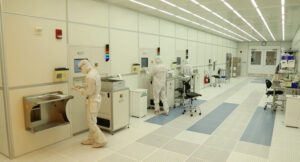
    To maintain precision in nanotechnology research, the center also houses ultra-clean rooms with controlled environments, including Class 100 and Class 1000 spaces spanning 300 and 600 sq ft, respectively.

    Currently operational, the center is backed by five faculty members and has already trained 30 in-house research scholars and MTech students. Additionally, 12 PhD scholars are utilizing the facility for their research.

    The center focuses on key areas such as quantum sensors, quantum optics, spintronics, memory devices, thin-film devices, photodetectors, and photonic crystals, with ongoing efforts to further optimize its capabilities.

    IIT Bombay and IIT Madras Driving Semiconductor Innovation
    While IIT Roorkee’s new nanofabrication facility marks a significant step for Uttarakhand, IIT Bombay and IIT Madras have also been instrumental in shaping India’s semiconductor industry.

    IIT Bombay’s Nanofabrication Facility (IITBNF) is a premier multidisciplinary, open-access research and development center under the Department of Electrical Engineering. IIT Bombay has been a leader in semiconductor device characterization and modeling since the 1980s.

    Its comprehensive fabrication capabilities were significantly bolstered in 2006 with the establishment of the Centres of Excellence in Nanoelectronics (CEN) at IIT Bombay and the Indian Institute of Science (IISc) Bangalore, an initiative supported by the Ministry of Electronics & Information Technology (MeitY).

    IITBNF is widely used by researchers across India, with its semiconductor R&D spanning applications such as communications, radar, encryption, quantum information, AI, photodetectors, power switching, and energy conversion.

    The facility has contributed to significant scientific breakthroughs, industry collaborations, and startup-driven semiconductor product development. It also plays a key role in training semiconductor professionals through the Indian Nanoelectronics Users’ Programme (INUP).

    Meanwhile, IIT Madras has taken strides in indigenous semiconductor design and development. Earlier this year, in collaboration with the Indian Space Research Organisation (ISRO), IIT Madras successfully booted the SHAKTI-based semiconductor chip, a milestone in India’s push for self-reliant aerospace-grade processors.

    The SHAKTI microprocessor project, led by Prof. V. Kamakoti at the Prathap Subrahmanyam Centre for Digital Intelligence and Secure Hardware Architecture (PSCDISHA) within IIT Madras’ Department of Computer Science and Engineering, focuses on RISC-V-based open-source microprocessors.

    Supported by MeitY under the Digital India RISC-V (DIR-V) initiative, the project aims to develop secure, indigenous microprocessors for diverse applications, reinforcing India’s strategic push toward semiconductor independence.

    India’s Expanding Semiconductor R&D Landscape
    With IIT Roorkee strengthening semiconductor research in Uttarakhand, IIT Bombay advancing nanofabrication and semiconductor technology, and IIT Madras pioneering indigenous chip design, India’s academic institutions are playing a crucial role in the country’s semiconductor ambitions.

    These initiatives align with the government’s larger vision of boosting domestic semiconductor capabilities and reducing reliance on foreign technologies, paving the way for India’s emergence as a key player in the global semiconductor ecosystem. APAC News Network


  • NBA fans’ reacting to Jalen Brunson’s scary injury in the Lakers’ OT loss: “Reaves is a dirty player”

    NBA fans’ reacting to Jalen Brunson’s scary injury in the Lakers’ OT loss: “Reaves is a dirty player”

    On Thursday, Jalen Brunson got hurt during a crucial moment of the thrilling New York Knicks-LA Lakers showdown in Crypto.com Arena. In the aftermath, fans went on social media to post their reactions, including some jabs at one Lakers player in particular.

    With the Lakers up 107-105 under two minutes to go in overtime, Brunson attempted to go coast-to-coast after picking up a defensive rebound. Standing in his way underneath the rim was Austin Reaves, and in the layup attempt that ensued, Brunson ended up stepping on Reaves’ left foot.

    Though the Knicks guard gutted it out to take his free throws, the impact of his apparent leg injury caused him to head to the locker room for the remainder of the game. Even as the Lakers picked up the 113-109 OT win, netizens posted their reactions as they processed what happened to Brunson:

    The All-Star guard had 39 points, four rebounds, and 10 assists when he left the game. Now, the NBA community is waiting for the official medical report on Brunson’s injury.

    Jalen Brunson on New York Knicks’ record against other top teams: “We got to wake the hell up”

    Brunson’s importance to the Knicks is not only seen in the numbers that he contributes but also in his leadership skills on and off the court.

    In a clip posted last week on the official X account of “The Roommates Show,” Brunson spoke to podcast co-host Josh Hart about the Knicks’ 0-7 record against top teams like the Cleveland Cavaliers and the Boston Celtics:

    It will be interesting to see how Brunson continues to challenge his teammates as he potentially misses a number of games. Sportskeeda

  • Shami asks that the saliva restriction be lifted for shiny cricket balls: Mechanics of swing, explained

    Shami asks that the saliva restriction be lifted for shiny cricket balls: Mechanics of swing, explained

    Indian pacer Mohammad Shami on Thursday (March 6) appealed to the ICC to lift the ban on using saliva to shine cricket balls that was introduced during the Covid-19 pandemic.

    Since 2011, two balls have been used per innings in ODIs. This means that balls are not as scuffed up as they used to be. Add to this the prohibition on using saliva, generating reverse swing has gotten much more difficult.

    “We are trying to reverse, but you are not getting the use of saliva into the game,” Shami told reporters in Dubai.

    What is swing? Why does a cricket ball swing?
    Swing refers to the lateral movement of a cricket ball in the air, before it lands on the pitch. It is essentially a product of an air pressure differential on either side of the ball.

    A thin layer of air forms along the ball’s surface after it is released by the bowler. But the so-called “boundary layer” must separate from the surface at some point. Where this separation occurs on either side of the ball determines the air pressure on that side.

    Bowlers generally tilt the seam towards one direction or the other. In a new ball, the raised seam disturbs the airflow on the side towards which it is tilted. This turbulent flow on the seam side sticks to the ball’s surface longer and travels faster than the smooth laminar flow on the other side.

    According to Bernoulli’s principle, faster travelling air on the seam side results in a decrease of air pressure on that side, making the ball swing in that direction. In theory, a new ball that is held straight — with the seam perfectly aligned to the direction it is travelling — will not swing because the airflow on both sides of the ball is even.

    What is reverse swing and why does it occur?
    What has been discussed so far is conventional swing which generally occurs with a new ball. Things get more interesting when the ball gets older, its lacquer wears off, and its surface gets more abrasive. This is when the ball starts to reverse, that is, move in the direction opposite to the seam side.

    From the moment they are handed the ball, the fielding team makes efforts to shine one side. Consequently, as the ball gets older, one side is smoother than the other. That said, the so-called shiny side is nonetheless rougher than a new ball. This means that this side still generates sticky, turbulent airflow.

    However, the rougher side generates even more turbulent airflow than the shinier side, which can be further aggravated with the help of the seam. This extra turbulent airflow is not as sticky as the turbulent airflow on the other side. It shears off — meaning that the point of separation for the boundary layer moves towards the front of the ball. As a consequence, the air pressure on the seam side is now relatively higher than on that on the shiny side. This makes the ball swing on the side opposite to the seam.

    To aid reverse swing, bowlers also try to ensure that the shiny side is slightly heavier than the other side. This gives the ball a natural tendency to fall in that direction.

    Where does saliva figure in all this?
    Cricketers have traditionally used saliva to shine one side of the ball, smoothen the surface, and make it a tad heavier on that side. The idea is to create as great of a contrast between the two sides of the ball as possible, which helps generate reverse swing. Cricketers have chewed on all kinds of mints and candy to aid the shining process — sugary saliva is heavier, and thus considered more effective for shining a cricket ball.

    Can something else be used in saliva’s place? In theory, yes. But saliva is the most readily accessible shining agent that works the way cricketers want it to.

    Take sweat, for example. Rubbing the ball with sweat is legal but sweat is not as good a polishing agent as saliva, presumably because it does not contain mucus.

    Moreover, the ball tends to soak up sweat — too much sweat can soften the ball which is not something bowlers want. Softer balls do not bounce as much, they do not turn as quickly, or retain much pace after pitching. In short, they are easier for a batter to deal with.

    Then there is the fact that unlike saliva, sweating is condition-dependent. Players simply do not sweat enough in cold conditions for it to be an effective shining substance.

    Other substances like vaseline have also been touted, although they are not as effective. Notably, vaseline is lighter than sweat. As former Indian pacer Ashish Nehra once said: “Vaseline can help keep the shine, but it does not make the ball heavier on one side”. Indian Express

  • India & Belgium engage in boosting their medical collaboration

    India & Belgium engage in boosting their medical collaboration

    As part of the ongoing Belgian economic mission to India, a seminar titled “Innovation for a Healthier World: Uniting Strengths from India and Belgium” took place on March 5, 2025, at the Veermata Jijabai Botanical Udyan and Zoo in Mumbai.

    The event brought together leaders, researchers, and key stakeholders in the life sciences sector to explore how Belgian expertise and Indian pragmatism are converging to address global healthcare challenges.

    Belgium, particularly its Wallonia region, has long been a European hub for vaccine and biotherapeutics development, hosting leading biopharmaceutical companies, biotech startups, and research institutions.

    India, known as the “pharmacy of the world,” produces over 60% of the world’s vaccines and meets 20% of the global demand for generic medicines.

    With such complementary strengths, collaborations between the two nations can potentially drive impactful, globally scalable healthcare solutions.

    Strengthening Belgium–India partnerships in life sciences
    The seminar showcased several groundbreaking Belgium–India partnerships that are transforming healthcare innovation.

    GSK Belgium, a leader in vaccine development, has established strong partnerships with Indian companies like Bharat Biotech and Biological E. to enhance vaccine accessibility globally. These collaborations ensure a more resilient supply chain and long-term vaccine availability.

    Belgian biotech pioneers Univercells and Quantoom Biosciences have joined forces with the Serum Institute of India (SII) to accelerate the production of mRNA-based cancer therapies.

    This partnership is focused on reducing costs and production timelines and making advanced cancer treatments more accessible to diverse populations.

    Another key collaboration involves Sagitta Bioconcept, which has teamed up with an Indian partner to develop novel vaccines using a viral vector platform based on a deactivated measles virus.

    This joint research effort showcases how expertise from both nations can drive transformative discoveries in vaccine technology.

    Bio Sourcing, backed by the European Innovation Council Accelerator, is working with Indian companies to reduce the production costs of monoclonal antibodies, a critical component in modern biotherapeutics.

    By making these treatments more affordable and widely available, the partnership aims to enhance global healthcare accessibility.

    Based in Wallonia, the diagnostic technology firm Synabs currently produces 80% of India’s sickle cell disease detection kits and is expanding its expertise to thalassemia detection.

    With growing interest from organizations such as the Bill & Melinda Gates Foundation, this initiative could extend its benefits beyond India to African markets where these diseases are prevalent.

    In nuclear medicine, the Oncidium Foundation has partnered with the Sri Venkateswara Institute of Medical Sciences (SVIMS) in Tirupati, Andhra Pradesh, to support radioligand therapy for underserved cancer patients.

    The foundation aims to democratize access to innovative cancer treatments worldwide by leveraging advanced nuclear medicine therapies.

    Bridging Global Health Challenges Through Innovation
    From proton therapy and vaccine development to cancer treatments and ophthalmic implants, India–Belgium collaborations are paving the way for groundbreaking healthcare advancements.

    The seminar emphasized how Wallonia’s expertise in research and manufacturing—combined with India’s expansive market reach—can lead to the creation of sustainable and scalable global health solutions.

    Recent Belgian investments in India underscore the growing importance of this alliance. Quantoom Biosciences has announced plans to set up a new facility for mRNA vaccine production, further strengthening India’s role in vaccine manufacturing.

    Additionally, IBA, a Belgian company specializing in proton therapy, is supplying proton therapy units for cancer treatment, enhancing India’s capacity to provide advanced oncology care. Digital Health News

  • US lawmakers point to a security risk when warn about Chinese-made routers

    US lawmakers point to a security risk when warn about Chinese-made routers

    A US congressional committee urged Americans to remove Chinese-made wireless routers from their homes, including those made by TP-Link, calling them a security threat that opened the door for China to hack U.S. critical infrastructure.

    The House of Representatives Select Committee on China has pushed the Commerce Department to investigate China’s TP-Link Technology Co, which according to research firm IDC is the top seller of WiFi routers internationally by unit volume.

    US authorities are considering a ban on the sale of the company’s routers, according to media reports.

    Rob Joyce, former director of cybersecurity at the National Security Agency, told Wednesday’s committee hearing that TP-Link devices exposed individuals to cyber intrusion that hackers could use to gain leverage to attack critical infrastructure.

    “We need to all take action and replace those devices so they don’t become the tools that are used in the attacks on the U.S.,” Joyce said, adding that he understood the Commerce Department was considering a ban.

    TP-Link said in a statement to Reuters that the hearing did not provide a “shred of evidence” the company was linked to China’s government. “No government has access to or control over the design and production of our routers,” it said.

    “Any claims suggesting our products pose a unique risk to U.S. national security are baseless and without merit,” said Jeff Barney, president of TP-Link Systems Inc.

    The company said it had split with its former China affiliate and now manufactures its routers in Vietnam.

    Democratic Representative Raja Krishnamoorthi, holding up a consumer-grade TP-Link router, said at the hearing: “Don’t use this.

    “I don’t have one at home either. It’s not a good idea,” Krishnamoorthi said.

    Joyce said Chinese government-linked hackers were “approaching a peer status” with U.S. cyber capabilities, and said he had grave concerns that the Trump administration’s efforts to cut the federal workforce could undermine U.S. cyber defenses.

    Democratic Representative Shontel Brown said the Trump administration had laid off more than 130 officials from the Cybersecurity and Infrastructure Security Agency.

    In 2023, CISA said TP-Link routers had a vulnerability that could be exploited to execute remote code.

    Krishnamoorthi said the U.S. must deter Chinese hackers by going on offense.

    “I think that we should also consider potentially enlisting private sector actors to hack back at the hackers. I’m going to get in a lot of trouble for saying that, but I think you have to sometimes use fire against fire,” Krishnamoorthi said. Reuters

  • SBI Holdings denies discussing a Japanese chip facility with SK Hynix and UMC

    SBI Holdings denies discussing a Japanese chip facility with SK Hynix and UMC

    SBI Holdings denied that it is negotiating with South Korea’s SK Hynix and Taiwan’s UMC about collaboration on a chips plant in Miyagi prefecture.

    SBI aims to collaborate with SK Hynix on back-end DRAM processes and with UMC on chips for vehicles, according to the Nikkan Kogyo report, which did not cite sources.

    SBI announced in September it was dissolving a joint venture with Taiwan’s Powerchip Semiconductor Manufacturing Corp.

    The companies had been seeking government subsidies to build a foundry in northern Japan. SBI said at the time it would consider partnering with other firms on chip-related business. Reuters