Month: March 2025

  • Starlink gains approval for Pakistan launch

    Starlink gains approval for Pakistan launch

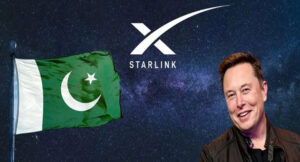
    Elon Musk’s Starlink has obtained a no-objection certificate (NOC) to launch its services in Pakistan.

    Following clearance by the govt, the Pakistan Telecommunication Authority (PTA) is expected to issue licenses to Starlink within the next two weeks, local broadcaster ARY News reported. Starlink has already submitted its application for a license to the PTA.

    ARY News further reported that Starlink has completed three registration phases and now, the final stage is left that is the issuance of a license by the PTA.

    Interestingly, Elon Musk-owned X (formerly Twitter) is banned in Pakistan.

    Recently, Starlink has entered into a partnership with Bharti Airtel and Reliance Jio to enter the Indian telecom market but a govt approval is still pending for the same.

    “This partnership will deliver reliable broadband services across the country, including in the most remote and rural regions,” Jio stated in its announcement.

    Notably, Starlink is a satellite internet constellation developed by SpaceX, a private aerospace manufacturer and space transport services company. Business Standard

  • Kerala-Cuba MoU Boosts Healthcare, Research

    Kerala-Cuba MoU Boosts Healthcare, Research

    The state government has strengthened its healthcare and medical research collaboration with Cuba following discussions held in New Delhi. Health Minister Veena George met with Cuban First Deputy Health Minister Tania Margarita Cruz Hernández and a Cuban delegation on Thursday to advance the partnership.

    According to Veena, the collaboration is set to bring significant advancements to the state’s health sector. Cuban expertise in research will be integrated with the approval of the Centre, ICMR, and DCGA. A memorandum of understanding (MoU) in this regard is expected to be signed by April.

    The decision to partner with Cuba’s research sector in four key health areas was made after Chief Minister Pinarayi Vijayan’s visit to the country in 2023. The collaboration will focus on developing a triple-negative breast cancer vaccine, a lung cancer vaccine, treatment for diabetic foot ulcers, a dengue vaccine, and therapies for neurodegenerative diseases like Alzheimer’s.

    The Institute of Advanced Virology in Thonnakkal, Thiruvanathapuram, will lead the vaccine development using Cuban technology. Research on cancer will be conducted in collaboration with Malabar Cancer Centre, diabetic foot treatment with Thrissur and Kozhikode Medical Colleges, and Alzheimer’s treatment with Thiruvananthapuram Medical College. The New Indian Express

  • Trump predicts India’s Tariff Cuts on U.S. Products

    Trump predicts India’s Tariff Cuts on U.S. Products

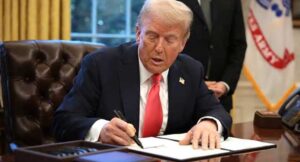
    President Donald Trump has said that he believes India will lower its tariffs on American goods, even as he reiterated his threat to impose reciprocal US tariffs on the country starting April 2.

    In an interview with Breitbart News, an American news, opinion, and commentary website, Trump discussed the US’ relationship with India.

    Asked about his summit with Prime Minister Narendra Modi last month, Trump said he has a “very good relationship with India.

    “But the only problem I have with India is they’re one of the highest tariffing nations in the world, the website quoted Trump as saying believe they’re…probably going to be lowering those tariffs substantially, but on April 2, we will be charging them the same tariffs they charge us.

    When asked about the India-Middle East-Europe-Economic Corridor (IMEC), a deal he signed the US onto during Modi’s visit to the US, Trump did not mention China in particular but said it was a “group of wonderful nations banding together countering other countries that look to hurt us on trade.

    We have a powerful group of partners in trade, Trump said.

    Again, we can’t let those partners treat us badly, however. We do better in many ways frankly with our foes than we do with our friends,” Trump was quoted as saying by the website.

    “The ones that wouldn’t be as friendly to us in some cases treat us better than the ones that are supposed to be friendly, like the European Union, which treats us terribly on trade,” Trump said.

    “India and everybody would think of them as an ally. I can say the same for others. But this is a group of wonderful nations that is countering other countries that look to hurt us on trade,” he added.

    Trump earlier this month said that India has agreed to cut its tariffs “way down” as he reiterated his claim that the country charges America massive tariffs that make it difficult to sell products there.

    Commerce Secretary Sunil Barthwal, however told a Parliamentary panel in New Delhi on March 10 that negotiations are still on and no agreement on trade tariffs has been reached so far between India and the US.

    Trump has been criticising the high tariffs charged by India.

    In his address to the joint session of Congress on March 4, the first of his second term in the White House, Trump criticised the high tariffs charged by India and other countries and termed them “very unfair.

    In the past, Trump has called India a “tariff king” and a “big abuser.

    India had said it was looking at deepening trade ties with the US, including by reducing tariff and non-tariff barriers, under a bilateral trade agreement.

    During Prime Minister Modi’s visit to the US last month, both sides announced plans to negotiate a mutually beneficial, multi-sector Bilateral Trade Agreement (BTA). PTI

  • AI Mammograms: Beyond Cancer Detection

    AI Mammograms: Beyond Cancer Detection

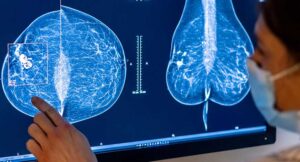
    The findings are being presented at the American College of Cardiology’s Annual Scientific Session (ACC.25). They highlight how these important cancer screening tools can also be used to assess the amount of calcium buildup in the arteries within breast tissue—an indicator of cardiovascular health.

    The U.S. Centers for Disease Control and Prevention recommends that middle-aged and older women get a mammogram—an X-ray of the breast—to screen for breast cancer every one or two years. About 40 million mammograms are performed in the United States each year. While breast artery calcifications can be seen on the resulting images, radiologists do not typically quantify or report this information to women or their clinicians. The new study, which used an AI image analysis technique not previously used on mammograms, demonstrates how AI can help fill this gap by automatically analyzing breast arterial calcification and translating the results into a cardiovascular risk score.

    “We see an opportunity for women to get screened for cancer and also additionally get a cardiovascular screen from their mammograms,” said Theo Dapamede, MD, PhD, a postdoctoral fellow at Emory University in Atlanta and the study’s lead author. “Our study showed that breast arterial calcification is a good predictor for cardiovascular disease, especially in patients younger than age 60. If we are able to screen and identify these patients early, we can refer them to a cardiologist for further risk assessment.”

    Heart disease is the leading cause of death in the United States but remains underdiagnosed in women and there is also lagging awareness. Researchers said the use of AI-enabled mammogram screening tools could help identify more women with early signs of cardiovascular disease by taking better advantage of screening tests that many women routinely receive. A buildup of calcium in blood vessels is a sign of cardiovascular damage associated with early-stage heart disease or aging. Previous studies have shown that women with calcium buildup in the arteries face a 51% higher risk of heart disease and stroke.

    To develop the screening tool used for this study, researchers trained a deep-learning AI model to segment calcified vessels in mammogram images—which appear as bright pixels on X-rays—and calculate the future risk of cardiovascular events based on data obtained from the electronic health record data. The segmentation approach is what separates this model from previous AI models developed for analyzing breast artery calcifications. Researchers said the model is also strengthened by its use of a large dataset for training and testing, which included images and health records from over 56,000 patients who had a mammogram at Emory Healthcare between 2013 and 2020 and had at least five years of follow-up electronic health records data. “Advances in deep learning and AI have made it much more feasible to extract and use more information from images to inform opportunistic screening,” Dapamede said.

    Overall findings showed the new model performed well at characterizing patients’ cardiovascular risk as low, moderate or severe based on mammogram images. After calculating the risk of dying from any cause or suffering an acute heart attack, stroke or heart failure at two years and five years, the model showed that the rate of these serious cardiovascular events increased with breast arterial calcification level in two of the three age categories assessed—women younger than age 60 and age 60-80, but not in those over age 80. This makes the tool particularly well suited for providing early warning of heart disease risk in younger women, who can benefit more from early interventions, researchers said.

    The results also showed that women with the highest level of breast arterial calcification (above 40 mm²) had a significantly lower five-year rate of event-free survival than those with the lowest level (below 10 mm²). For example, 86.4% of those with the highest breast arterial calcification survived for five years compared with 95.3% of those with the lowest level of calcification. This translates to approximately 2.8 times the risk of death within five years in patients with severe breast arterial calcification compared to those with little to no breast arterial calcification.

    The AI model was developed as a collaboration between Emory Healthcare and Mayo Clinic and is not currently available for use. If it passes external validation and gains approval from the U.S. Food and Drug Administration, researchers said the tool could be made commercially available for other health care systems to incorporate into routine mammogram processing and follow-up care. The researchers also plan to explore how similar AI models could be used for assessing biomarkers for other conditions, such as peripheral artery disease and kidney disease, that might be extracted from mammograms. American College of Cardiology

  • EU AI Act’s risk-based AI classification

    EU AI Act’s risk-based AI classification

    Medical device manufacturers should use a risk pyramid to determine whether their products are classified as high-risk and require conformity assessments by notified bodies under the EU’s Artificial Intelligence Act, according to Sebastian Fischer, regulatory strategy principal at TÜV SÜD Product Service GmbH.

    Fischer and other experts discussed what manufacturers must do to comply with upcoming requirements under the act at DIA Europe 2025 on Wednesday.

    The AI Act came into force on 1 August 2024. It will apply to products with high-risk applications on 2 August 2026, which includes medical devices placed in the Class IIa category or higher. It will then apply more broadly on 2 August 2027, with full implementation anticipated by 31 December 2030.

    Fischer stated that the EU AI Act introduces a risk-based system for classifying AI applications. This system ranges from minimal-risk devices at the bottom of the pyramid to unacceptable-risk systems at the top. Fischer said that any system that uses harmful AI-based manipulation or deception, or a system that uses social scoring is an unacceptable risk and is prohibited.

    Medical devices are classified as high risk if they use AI-embedded software used to diagnose or detect abnormalities and would require assessment by a notified body.

    Devices with limited-risk include those that are not used to diagnose or detect abnormalities, which are subject to specific transparency obligations under the AI Act. At the bottom of the pyramid are those minimal-risk devices, and these are unregulated. This category is not explicitly mentioned in the AI regulations.

    Fischer noted that while AI regulation may be new, the use of AI in medical devices is not.

    Fischer recommended that manufacturers review a position paper from Team-NB and the German Notified Bodies Alliance for Medical Devices entitled Questionnaire: Artificial Intelligence in Medical Devices.

    Thorsten Stumpf, project lead for regulatory affairs at Metecon GmbH elaborated on some of the requirements for providers for high-risk AI systems in addition to needing to undergo a conformity assessment before placing the product on the market or putting it into service.

    Manufacturers must adhere to labeling requirements, which includes providing identification on the packaging. This should include the manufacturer’s name, registered trade name, trademarks, contact address, and CE marking.

    In addition, risk management teams should be in place to assess the AI system. Lastly, manufacturers must also have technical documentation which includes keeping record-keeping logs over the lifetime of the AI system.

    Fischer said that implementing the AI regulations is mostly an administrative exercise in getting the documentation in order.

    Rajarshi Banerjee, CEO of Perspectum Ltd, emphasized the need to prepare for a new wave of applications utilizing advanced AI tools in medical devices. Many of these devices herald a future focused on the use of non-invasive technology to diagnose diseases.

    His company has received FDA clearance and EU CE marking for its LiverMultiScan software application, which is a non-invasive test used to detect liver disease. He explained how the use of algorithms in the technology can be used to replace liver biopsies, which he said are often inaccurate.

    The technology can determine whether the whole liver or only a part or it is diseased through an MRI scan. Scans from the MRI are sent to a laboratory that employs a proprietary algorithm. The result is a summary of images that detail the health of the liver. RAPS.org

  • Odisha to establish Puri cable landing hub

    Odisha to establish Puri cable landing hub

    In a strategic move to establish Odisha as a global digital hub, the state government’s Electronics and IT department has initiated plans to set up a Cable Landing Station (CLS) in Puri.

    Chief Secretary Manoj Ahuja on Wednesday reviewed the progress of the detailed project report (DPR), being jointly prepared by RailTel and Deloitte.

    According to an official release, the initiative will strengthen the state’s digital infrastructure, catalyse investments in data centres, attract top-tier technology players and generate jobs.

    Ahuja emphasised the need for consultations with hyperscalers and key ecosystem players to ensure a comprehensive and future-ready implementation.

    He directed early submission of the DPR for approval with a focus on completion of the project within three years, it stated.

    The Odisha Cable Landing Station is a flagship initiative of the state government, designed with a strategic vision for scalability and ecosystem development. The government remains committed to making the state a magnet for digital investments, unlocking immense opportunities for businesses, technology companies, and the workforce, the release stated.

    Puri was identified as the ideal location for the cable landing station due to its strategic geographic position, suitable coastline, scalability potential and robust infrastructure.

    The facility will provide direct international fibre connectivity, reducing latency, improving internet speed, and positioning Odisha as a prime destination for hyperscalers, Global Capability Centres (GCCs), and enterprises, it added.

    Once implemented, the state will become a key node in the global digital network, further strengthening India’s role in the data-driven economy, it said.

    A Cable Landing Station (CLS), also known as a submarine cable landing station, is a coastal facility where undersea fiber optic cables carrying international telecommunications and internet traffic connect to land-based networks.

    Cable landing station is also known as a submarine cable landing station. It is a facility located on the coast where undersea fibre optic cables carrying international telecommunications and internet traffic connect to terrestrial networks. PTI

  • Manish Tewari Questions Govt’s Guts on X, Grok Notice

    Manish Tewari Questions Govt’s Guts on X, Grok Notice

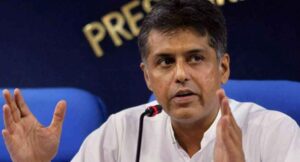
    Claiming that the Trump administration is being run by Elon Musk “by proxy,” the Congress leader asked if the union government will have the gumption to give a notice to X.

    “This government is bending over backwards to praise, to try and somehow curry favour with the Trump administration. So therefore, under those circumstances, the Trump administration is proxy being run by Mr Elon Musk. Do you think that the government of India will have the gumption to give notice to X over Grok?” Tewari told ANI on the premises of Parliament.

    Earlier today, a post by Tewari on X claimed the same, “With Govt bending over backwards to kow tow to @realDonaldTrump through @elonmusk-doubt they have the gumption to issue @X a notice over the delightfully mischievous @grok. Aint upsetting @realDonaldTrump and @elonmusk over Mr. @grok having some fun.”

    On Thursday, sources from MeitY said that they have not sent any notice to X or Grok, and is in talks with the platforms to understand what law it is violating. Previous advisories sent to the social media by MeiTY are still valid, sources added.

    “Meity has not sent any notice to Grok or X. Meity is in talks with X and Grok to understand what law it is violating,” a source said.

    Media reports, citing sources, had earlier said that the IT Ministry is in touch with X over Grok and using Hindi slang in response to questions and comments.

    Grok, an AI chatbot developed by xAI helps to answer user’s questions and provide helpful insights, often with a dash of outside perspective on humanity, according to Grok. As per the chatbot its goal is to assist users.

    The government had earlier urged social media intermediaries to act quickly against fake content to build public trust in grievance officers. It was also emphasized that GACs must work efficiently to resolve issues promptly, ensuring users can navigate the internet safely and with confidence. ANI

  • Bihar Assembly clashes over Nitish’s National Anthem ‘Insult’

    Bihar Assembly clashes over Nitish’s National Anthem ‘Insult’

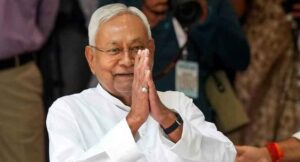
    War of words between the ruling and opposition MLAs over Bihar Chief Nitish Kumar allegedly “insulting” the national anthem rocked the assembly on Friday.

    As the proceedings began, opposition members trooped into the Well with placards and raised slogans, demanding an “unconditional apology” from Kumar.

    Some members also demanded the resignation of the CM, alleging that he insulted the national anthem at an event on Thursday.

    Despite repeated requests from Speaker Nand Kishore Yadav that they could raise the issue during the Zero Hour, the protests went on.

    Parliamentary Affairs Minister Vijay Kumar Choudhary also intervened, stating that the government can give its reply on the issue but it should be raised as per the existing provisions.

    As the opposition MLAs refused to budge, the speaker adjourned the House till 2 pm.

    At the inaugural ceremony of Sepak Takraw World Cup 2025 at the Pataliputra Sports Complex on Thursday, the CM left cabinet colleagues and officials flummoxed when he abruptly got up from his seat and walked down the dais, as soon as the moderator announced it was time for the national anthem.

    After the adjournment of the House, Leader of the Opposition Tejashwi Yadav said, “It’s a serious matter as it is an insult to the national anthem by the CM. This is also an insult to the countrymen by the CM. This shows that CM is not fit to run the state.”

    “The CM should resign from the post. We demand an unconditional apology from him. It is surprising that the CM is not saying even a single word on the issue. Why are NDA leaders, including Prime Minister Narendra Modi, maintaining a stoic silence over it?” he asked.

    Some opposition MLAs also told reporters they may meet Governor Arif Mohammed Khan over the issue. PTI

  • BJP revives Disha Salian case after failing on Aurangzeb: Raut

    BJP revives Disha Salian case after failing on Aurangzeb: Raut

    Shiv Sena (UBT) leader Sanjay Raut on Friday claimed that efforts made by the Bharatiya Janata Party over Aurangzeb’s tomb at Khultabad in Maharashtra’s Chhatrapati Sambhajinagar district had backfired due to which the party has moved on to rake up the death case of celebrity manager Disha Salian.

    “BJP tried to raise the Aurangzeb issue, but they were not successful. They tried a lot to remove Aurangzeb from his grave, and in fact Aurangzeb (issue) got back at them, now to hide their defeat, they have raised this issue of Disha Salian,” Raut said during a press conference in Delhi.

    He further mentioned that Disha Salian’s father, Satish Salian, had claimed five years ago that he was under pressure from BJP leaders.

    “You should see statements made by Disha Salian’s parents five years ago, in which they said that they were under pressure from BJP leaders. The State government is scared of Aaditya Thackeray. Hence, they raised this issue. We have exposed Devendra Fadnavis’ government on all issues,” Raut said

    On the night of March 17, violence broke out in parts of Nagpur after a group protested in the area, demanding the removal of Aurangzeb’s grave, who is buried in Chhatrapati Shambhajinagar (formely Aurangabad). As many as 34 police personnel were injured in the violence in which 50 people were arrested. Since then, officials have said that normalcy has been restored and curfew had been lifted in parts of the city.

    Disha Salian was found dead on June 2, 2020, days before actor Sushant Rajput was found hanging in his flat in suburban Bandra, Mumbai.

    Disha Salian’s father, Satish Salian had filed a petition in the Bombay High Court demanding a probe into his daughter’s death and also for the interrogation of UBT leader Aaditya Thackeray.

    Thackeray on Thursday accused critics of trying to defame him for the past five years. Thackeray emphasized that since the matter is already in court, he’ll reserve his comments for the legal proceedings.

    “A lot of people have tried to defame me for the last five years. If the matter is in court, then we will speak in court,” Thackeray told mediapersons. ANI

  • Karnataka Assembly approves Muslim Quota; BJP sobs & hurl it at the speaker

    Karnataka Assembly approves Muslim Quota; BJP sobs & hurl it at the speaker

    The Karnataka Assembly on Friday (March 21) approved the Bill that introduces a 4 per cent reservation for the Muslim community in public contracts awarded by the state government. The Siddaramaiah-led Congress government argued that the Bill aimed to ensure social justice and expand economic opportunities for minorities. However, the opposition Bharatiya Janata Party (BJP) has strongly opposed the legislation, labelling it “unconstitutional” and pledging to challenge it in court.

    Bill torn, thrown at Karnataka Speaker
    The Bill was passed amid turmoil in the Assembly. The BJP leaders stormed the well of the House, chanting slogans against the ruling Congress and escalating their protest by climbing onto the Speaker’s seat. The agitation culminated in BJP members tearing down copies of the Bill and hurling the torn papers at the Speaker.

    What is Karnataka’s Muslim quota Bill?
    The State Cabinet had earlier cleared the amendment, which reserves 4 per cent of civil works contracts valued up to ₹2 crore and goods and services contracts worth up to ₹1 crore for Muslims. Currently, Karnataka provides reservations in public contracts as follows: 24 per cent for Scheduled Castes (SC), 6.95 per cent for Scheduled Tribes (ST), 4 per cent for Other Backward Classes (OBC) Category 1, 15 per cent for OBC Category 2A, and 4 per cent for Muslims under Category 2B.

    Persistent demands had been made to extend similar provisions to Muslims under the OBC Category 2B classification to address unemployment and improve participation of backward communities in government contracts. The Muslim community was included in the Backward Classes list in 1994, with the 4 per cent quota for Muslims under Category 2B initially introduced during Veerappa Moily’s tenure as chief minister, based on the recommendations of the Justice Chinnappa Reddy Commission.

    The Bill also reaffirms that implementing these reservations will not require any additional expenditure by the government.

    Why is the BJP opposing the Muslim reservation Bill?
    The BJP has fiercely opposed the Bill, accusing the Congress government of using appeasement politics and attempting to divide society along caste and religious lines. Dakshina Kannada MP Captain Brijesh Chowta criticised the government, asserting that the BJP would oppose the move both inside and outside Parliament. He expressed concerns that the Bill would create societal divisions.

    In the Lok Sabha yesterday (March 20), BJP MPs, including Nishikant Dubey and Tejasvi Surya, criticised the Karnataka Transparency in Public Procurements (Amendment) Bill during zero hour, warning that the legislation could deepen communal fault lines. Their remarks led to heated exchanges between the treasury and opposition benches. BJP leaders also accused the Congress of ignoring opportunities to improve the educational prospects of minorities during its decades-long rule at the Centre and in Karnataka.

    Accusations of ‘Tughlaq darbar’ and secrecy on Siddaramaiah
    In Bengaluru, the opposition leaders intensified their offensive against Chief Minister Siddaramaiah, accusing his government of pushing the Bill through without adequate debate. BJP state president BY Vijayendra alleged that the Bill was presented “secretly” on Tuesday, bypassing the opposition. He criticised the government’s approach, calling it a “Tuglaq durbar”, and vowed that the BJP would fight the legislation in and outside the assembly and, if necessary, challenge it in the high court.

    Vijayendra further accused the Congress of attempting to portray the BJP as anti-minority, asserting that the Narendra Modi-led BJP government had demonstrated its commitment to protecting minority rights by abolishing triple talaq and ensuring justice for Muslim women. He argued that if the Congress government truly cared about minority welfare, it would have prioritised improving access to quality education for Muslims during its years in power.

    As tensions continue to escalate, the BJP remains adamant that it will pursue all legal and political avenues to oppose the Bill, while the Congress maintains that the legislation is a necessary step to promote inclusivity. Business Standard