Month: May 2025

  • Vodafone plans to release the Q4 figures today

    Vodafone plans to release the Q4 figures today

    Cash-strapped telecom service provider Vodafone Idea Ltd. will be reporting its March quarter results on Friday, May 30.

    Along with the quarterly results, Vodafone Idea’s board will also be evaluating proposals to raise funds through various methods.

    “To consider and evaluate any and all proposals for raising of funds in one or more tranches, either by way of a rights issue or a Further Public Offer (FPO) or a private placement, including a preferential issue or a QIP, through any other permissible mode and / or combination thereof as may be considered appropriate,” Vodafone Idea said in its exchange filing.

    As of date, Vodafone Idea has AGR dues to the tune of ₹83,400 crore, along with ₹1.19 lakh crore in Spectrum dues.

    The company had recently warned that without further government support, it will not be able to operate beyond financial year 2026 and head into the National Company Law Tribunal (NCLT).

    The government is currently the largest shareholder in Vodafone Idea, having converted a part of Vodafone Idea’s dues to equity, thereby taking its stake in the struggling telecom company to 48.99%.

    Vodafone Idea has close to 60 lakh retail shareholders, or those with authorised share capital of up to ₹2 lakh.

    Shares of Vodafone Idea have opened little changed on Wednesday at ₹6.96. The stock is at least 40% below its FPO price of ₹11, while it has declined over 65% from its 2024-peak of ₹19.18. CNBCTV18

  • In five years, India can be the world’s data capital

    In five years, India can be the world’s data capital

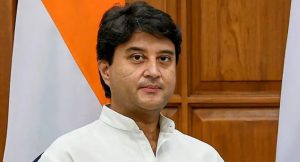
    With a 97 per cent fall in the price of data over the past 11 years, India is set to become the data capital of the world in the next five years, Telecom Minister Jyotiraditya Scindia said. India is already the second-largest mobile market globally, with 1.2 billion users and 974 million internet users, of whom 940 million are broadband users, he said.

    With 1 GB of data now costing ₹9 on average—down from ₹287 in 2014—the cost of communication has fallen by 97 per cent, Scindia said. India’s per GB data cost is only one-fifth of the global average, he added.

    India is also among the only five countries in the world to develop an indigenous 4G telecom stack. BSNL has installed close to 94,000 4G telecom towers.

    Scindia said he is committed to transforming India Post from a cost centre to a profit centre within the next five years, noting that it has the largest distribution network in the world with 1.64 lakh points of presence.

    “There is no reason why the post office can’t become a small mall. We are empowering every Grameen Dak Sevak with a handheld electronic payment device,” he said.

    North East rising
    Scindia, who also serves as Minister for the Ministry of Development of North Eastern Region, said the eight North Eastern states have seen a decadal compounded annual growth rate of 12–13 per cent, and are on course to becoming the economic powerhouse of the country.

    He said the recent North East Summit attracted ₹4.3 trillion worth of investment for the region.

    Highlighting infrastructure development, the Minister said the number of airports in the region has increased to 17, from 9 earlier. Weekly air traffic movements have more than doubled—from 980 a decade ago to about 2,200 now.

    The region is home to 38 per cent of India’s bamboo and 22 per cent of its rubber, and holds the greatest potential for the cultivation of Agarwood, used extensively in the perfume industry. “Around ₹1,000 crore of investment has been received for Agarwood cultivation in the North East,” Scindia said.

    He added that nine infrastructure projects worth ₹81,000 crore are currently under execution. The Centre is committed to developing Agartala and Guwahati as connectivity hubs for South East Asia, he said.

    “Up to $122 billion of trade currently conducted with ASEAN nations must be routed through the North East,” the minister said.

    He also noted that 6,000 km of highways and 2,000 km of railways have been built in the region over the past decade. Business Standard

  • To simplify policy, the regulator suggests merging the DoT, I&B, & IT ministries

    To simplify policy, the regulator suggests merging the DoT, I&B, & IT ministries

    The telecom regulator is in favour of bringing the telecommunication, technology and broadcasting ministries under one umbrella body for ease of work.

    Other countries have also made similar moves of convergence. It can help to resolve some of the overlaps in these sectors. This includes overlaps between telecom service providers and app-based providers, as well as the regulatory responsibility for OTT channels, among other issues.

    Earlier in March, the Parliamentary Standing Committee on Communications and Information Technology in its eleventh report had asked the government to consider bringing the Ministry of Electronics and Information Technology (MeitY), Department of Telecommunications (DoT) and Ministry of Information and Broadcasting (MIB) under one umbrella for better coordination for issues emerging due to convergence of technologies.

    Single policies
    Already industry players like the Cellular Operators Association of India (COAI) have voiced support for the idea stating that such a move will lead to a focused handling of issues, and formulation of single policies that are equally applicable to all concerned ministries.

    Aside from the Ministry convergence, the Standing Committee report also suggested a Media Council that would bring all forms of media like print, broadcast, digital, etc. under one umbrella for better coordination and implementation of laws.

    However, broadcasting industry seem to have reservation against a converged policy framework. “With a converged regulator for ICT and broadcasting, there is always the risk of “false equivalence” being drawn between the two sectors… Telecommunication principles should never be applied when issues related to content are being determined,” said an executive of a broadcast company.

    In a 2023 paper, TRAI had said that disparate policy structures for telecom and broadcasting cause governance challenges like multiple licence/permission authorities for the same converged service, lack of regulatory clarity on the outcomes of converged technologies (e.g., OTT), and demarcated administration of the converged digital services. The Hindu BusinessLine

  • Radiance, a broadband provider, cuts its debt load & receives more money

    Radiance, a broadband provider, cuts its debt load & receives more money

    Stonepeak Partners-backed Radiate launched a deal to raise $400 million in fresh capital from its owner and also restructure existing debt.

    The liquidity injection will be split across a second-out term loan and a third-out loan, said the people, who asked not to be identified discussing a private matter. The financing will pay-in-kind, which allows the cable provider to defer paying interest in cash and instead pay with additional debt, they said.

    A representative for Stonepeak declined to comment. A representative for Radiate didn’t immediately respond to requests for comment.

    The debt restructuring was several months in the making and reconfigures which creditors get paid out first, the people said.

    Radiate’s existing first-lien term loan lenders will be able to exchange into a new first-out term loan due in 2029 at 100 cents on the dollar. The new loan will pay 1.5% interest in kind and 3.5 percentage points over the Secured Overnight Financing Rate in cash, according to the people.

    Meanwhile, first-lien noteholders can swap into new first-out notes at a discount of 98 cents. The new paper will pay 1.5% interest in kind and 4.75% in cash, the people said.

    Lastly, the unsecured noteholders can roll into new second-out notes maturing 2030 at a discount of 83 cents. That debt will pay 3.25% interest in kind and 6% in cash, the people said.

    Any firms that don’t agree to the deal will see their collateral stripped and will be pushed down the repayment line, the people added.

    The debt restructuring, which is open to all participants, has garnered support from at least 98% of existing term loan lenders, around 99% of first-lien noteholders and 86% of unsecured noteholders, said the people.

    Radiate is working with PJT Partners Inc. and Kirkland & Ellis, while creditors have engaged Evercore Inc. and Gibson Dunn & Crutcher, Bloomberg previously reported.

    First-lien lenders have been operating under a cooperation agreement in effect until the company’s roughly $3.3 billion term loan’s 2026 maturity, Bloomberg reported. Bloomberg

  • DoT consults TRAI on pricing, procedures for upcoming multi-band spectrum auction

    DoT consults TRAI on pricing, procedures for upcoming multi-band spectrum auction

    DoT has approached TRAI seeking recommendations on reserve price, block size, quantum and other modalities for auction of mobile spectrum in eight existing bands, including 800 MHz, 900 MHz, 1,800 MHz, 2,100 MHz and 2,300 MHz, according to sources.

    Other bands where TRAI’s views have been sought by the Department of Telecom (DoT) include 2,500 MHz, 3,300 MHz and 2,6GHz bands.

    DoT has also urged the telecom regulator to offer fresh recommendations for auction of spectrum in 600 MHz bands.

    TRAI has also been asked to look at the possibility of auction for newly identified 6,425-6,725 MHz and 7,025-7,125 MHz bands for recommendations on auction timing, band plan, reserve price, and terms and conditions.

    In the last auction held in 2024, Sunil Bharti Mittal’s Airtel had emerged as the biggest bidder for radio waves used to transmit mobile phone voice and data signals, cornering about 60 per cent of the Rs 11,341 crore worth of spectrum sold after two days of bidding in June.

    While Bharti Airtel bid and won airwaves worth Rs 6,856.76 crore, rival Mukesh Ambani’s Reliance Jio – the market leader – had got Rs 973.62 crore worth of spectrum – the least in the three-corner contest.

    Troubled Vodafone Idea had bagged spectrum valued Rs 3,510.4 crore.

    In all, 141.4 MHz of radio waves were sold for Rs 11,340.78 crore In 2024 auction.

    The government had offered a total of 10 GHz of spectrum ranging between 800 MHz and 26 GHz, which was worth Rs 96,238 crore at the base or auction start price.

    However, only a small amount of the spectrum on offer got sold in seven rounds of auction held last year. PTI

  • Trump wants to revoke ABC’s broadcasting license. It’s ironic

    Trump wants to revoke ABC’s broadcasting license. It’s ironic

    Donald Trump wants to punish ABC News for his bad debate night.“I think ABC took a big hit last night,” Trump told Fox & Friends during a phone debrief early Wednesday morning. “To be honest, they are a news organization — they have to be licensed to do it — they ought to take away their license for the way they did that.”His call for federal censorship of a broadcaster for merely correcting his blatant falsehoods may offer insights into how the budding authoritarian plans to govern if he is allowed to return to the Oval Office. But as a historian of conservative news, I am also struck by what this episode reveals about the distorted memories of Trump and his supporters — regarding their movement’s relationship to both the Federal Communications Commission and to ABC.

    First, technically, broadcast networks aren’t subjected to FCC licensure — though their affiliate stations are. Furthermore, there is no current regulation that authorizes the FCC to punish broadcasters for biased news or commentary. Perhaps Trump is misremembering the “Fairness Doctrine,” a mid-20th century policy that required broadcasters to provide balanced coverage of issues of public controversy. But that regulation was only rarely and often begrudgingly enforced against the networks , and it was abolished by the Reagan administration in 1987.

    Second, conservative belief in “liberal media” bias has long driven media activists to think of initiatives to amplify a right-wing worldview. High on the list is boosting Republican commentators and building conservative media outlets. And ABC has played a surprisingly outsize role in their efforts.

    In the early 1950s, amid the Second Red Scare, ABC’s radio and television networks distributed Answers for Americans, a current affairs program funded by the right-wing Texas oilman HL Hunt. While technically in compliance with Fairness Doctrine requirements, including panelists from differing perspectives, the program was geared toward framing current affairs to conform with the burgeoning modern conservative viewpoint.

    By the late 1950s, ABC president Leonard Goldenson had struck up a friendship with a young Rupert Murdoch when the budding Australian media mogul visited the US to learn more about the television industry. Murdoch sold ABC a 6% stake in News Ltd., the Australia-based precursor to News Corporation, in exchange for exclusive rights to air ABC television shows in Australia.

    Murdoch’s deal with the network allowed him to establish a foothold in Australian television, a crucial step in News Corporation’s transformation into a global media conglomerate. By 1996, he would leverage the company’s economies of scale to launch the conservative Fox News Channel — enabling it to run at a loss for four years until finally breaking even in 2000.

    He wouldn’t be the only one. In 1988, not long after the Reagan administration ended the Fairness Doctrine, ABC Radio offered an obscure yet controversial Sacramento talk radio host the early afternoon slot on its national radio network: Rush Limbaugh. He would go on to resurrect the AM radio industry, establishing himself as perhaps the country’s most influential right-wing radio commentator until his death from cancer in 2021.

    None of these boosts have stopped conservatives from accusing ABC of bias in the past. Edith Efron’s conservative-funded 1971 study of broadcasting news coverage of the 1968 presidential campaign used lax methods to find “evidence” of liberal and anti-conservative bias on all three major networks .

    A smaller-scale study conducted by the movement-aligned magazine Conservative Digest in 1984 found ABC to be the “least biased” of the three major broadcast networks. But the magazine nevertheless complained that, while covering that year’s major party conventions, ABC had “described the Republicans as ‘very conservative,’ ‘right-wing’ and ‘far right.’” Based on the party’s policies and rhetoric then , those terms are fairly accurate.

    But the modern conservative movement has long appealed to people who see a disconnect between the world as it is and the world as they think it “ought to be” — accuracy be damned.

    Tuesday night was the latest example. Trump turned what should have been a softball question about Biden administration immigration policy into a convoluted diatribe about crowd sizes at his rallies, followed by a bizarre digression into spreading racist rumors about people eating house pets.

    His supporters can’t admit he performed poorly or that he was lying without disrupting the worldview they’ve built around him. So, the problem, in their eyes, is with moderators David Muir and Linsey Davis for refusing to pander to them.

    “I’ve been telling you guys for years how much ABC hates Republicans,” the self-identified conservative nepo baby Meghan McCain characteristically complained on X.

    If that’s true, the network has had a funny way of showing it. LiveMint

  • Trump govt terminates Moderna contract of USD 766M

    Trump govt terminates Moderna contract of USD 766M

    The Donald Trump administration has cancelled USD 766 million awarded to drugmaker Moderna Inc to develop a vaccine against potential pandemic influenza viruses, including the H5N1 bird flu.

    The company said it was notified Wednesday that the Health and Human Services Department had withdrawn funds awarded in July 2024 and in January to pay for development and purchase of its investigational vaccine.

    The funds were awarded through the Biomedical Advanced Research and Development Authority, or BARDA, a programme that focuses on medical treatments for potential pandemics.

    The new vaccine, called mRNA-1018, used the same technology that allowed development and rollout of vaccines to fight Covid-19 in record time.

    Health Secretary Robert F Kennedy Jr has expressed deep skepticism regarding the safety of mRNA vaccines.

    The cancellation came as Moderna announced positive interim results from an early-stage trial of the vaccine that targeted H5 bird flu virus, tested in 300 healthy adults.

    “While the termination of funding from HHS adds uncertainty, we are pleased by the robust immune response and safety profile observed in this interim analysis,” the company said in a statement.

    H5N1 bird flu viruses spilled from wild bird into cattle in the US last year, infecting hundreds in several states.

    At least 70 people in the US have been sickened by bird flu infections, mostly mild. One person died.

    Scientists fear that continued mutation of the virus could allow it to become more virulent or spread more easily in people, with the possibility that it could trigger a pandemic.

    Moderna received USD 176 million in July 2024 and USD 590 million in January.

    The January award would have supported a late-stage clinical trial that could have determined the vaccine’s efficacy against pandemic viruses, including bird flu, a company spokesman said. CNBCTV18

  • NHS in the UK will introduce a new stroke treatment tool

    NHS in the UK will introduce a new stroke treatment tool

    Nick Lewis is used to pushing forward. As the former publisher of the Richmond Register and an accomplished author of several murder mystery novels, perseverance and creativity are second nature. But when a stroke in April 2024 left him unable to move his right arm, Lewis faced one of the toughest chapters of his life.

    “I couldn’t move my arm at all. I could barely move my hand,” Lewis said. “I didn’t want to accept that it was permanent.”

    Now, thanks to a groundbreaking therapy, he’s not only regaining strength and function — he’s also making history. Lewis is the first patient in Kentucky to receive the Vivistim® Paired Vagus Nerve Stimulation (VNS) System, a cutting-edge technology that is helping stroke survivors reclaim lost movement and independence.

    Making history with a breakthrough therapy
    The Vivistim System is a first-of-its-kind, Food and Drug Administration-approved device that pairs targeted vagus nerve stimulation with rehabilitation exercises to help rewire the brain — a process called neuroplasticity — and restore the brain-muscle connection. It’s a promising option for stroke survivors who have plateaued in their recovery using conventional therapy.

    For Lewis, who had spent months in traditional outpatient therapy at the UK HealthCare Outpatient Therapy Clinic at Cardinal Hill, the idea of further progress seemed uncertain — until his therapy team introduced the possibility of Vivistim.

    “I figured I didn’t have anything to lose and everything to gain,” he said. “If it could help me get even a little more movement back, it would be worth it.”

    Lewis received the implant in February 2025 from UK HealthCare neurosurgeon David Dornbos, M.D., who says the arrival of this technology marks a significant milestone in stroke recovery in Kentucky and a major breakthrough for chronic stroke survivors.

    “Vivistim is a major transformative advancement in neurorehabilitation for stroke survivors,” said Dornbos. “To have Mr. Lewis be the first in the state to receive this therapy is a testament to both his determination and UK’s leadership in providing patients access to the most advanced treatments available. As a Comprehensive Stroke Center, UK has been a leader in acute stroke care for years, but this new technology allows care across the full continuum of stroke recovery, even decades after the initial injury. We’re excited about the hope this brings to so many others in an area where historically it did not exist.”

    The system involves implanting a small device in the chest, similar to a pacemaker, which sends mild electrical pulses to the vagus nerve during rehab exercises. These pulses help strengthen the brain’s ability to create new motor pathways.

    The author’s next chapter
    Each week, Lewis returns to therapy at Cardinal Hill, where every movement — from reaching to gripping — is paired with electrical stimulation. At home, he uses a magnet to activate the device during his daily exercises.

    “I’ve definitely noticed improvement,” he said. “My grip is stronger. I can move my arm more. I’m getting closer to doing things I couldn’t do before, like feeding myself with my right hand and even tying my own shoes.”

    Recently, he grilled burgers again, using tongs in his right hand — a small but emotional victory. He also surprised himself by writing his name in cursive for the first time since the stroke, a hopeful sign in his quest to return to writing his next novel.

    Before the stroke, Lewis led an active life with his wife — walking regularly, gardening and golfing. A career journalist, he spent four decades in the newspaper business before retiring in 2013. Since then, he’s published a series of murder mysteries and other novels, blending journalistic insight with storytelling flair.

    “I’m eager to finish my next one,” Lewis said. “That’s why it’s really important for me to get my right hand working again. Writing is such a big part of who I am.”

    Recovery takes grit — and vision
    Lewis emphasizes that Vivistim isn’t a miracle cure — it’s a powerful tool that must be paired with consistent therapy and dedication. He puts in hours of rehab both at Cardinal Hill and at home, driven by clear, personal goals.

    “You have to use it,” he said. “If a patient doesn’t commit to the therapy at home, they’re not going to see the kind of improvement they want. It takes dedication.”

    His occupational therapist Cameron Mullins customizes sessions to real-life goals — like placing a tee and a golf ball to prepare Lewis for one day teeing it up again. Mullins also incorporates high-repetition exercises for tasks such as cooking and computer use.

    “A key to neuro rehab is repetition, so the brain can relearn skills,” Mullins said. “Nick is highly motivated, and that makes a huge difference in his progress.”

    Hope for stroke survivors
    While Lewis continues his recovery journey, he’s proud to be a trailblazer for others — the first in Kentucky to receive this therapy, and certainly not the last.

    “I’m proud to be part of something new,” he said. “If it can help me, maybe it can help a lot of other people too. It gives you hope that you can get back what you lost — and maybe even more.”

    As he works toward finishing his sixth book, Lewis’s story is already writing itself — one of resilience, innovation, and the power of never giving up. UKNow

  • Haryana authorizes bids for ₹50cr worth of meds & medical equipment

    Haryana authorizes bids for ₹50cr worth of meds & medical equipment

    Haryana Health and Family Welfare Minister Arti Singh Rao chaired a meeting of the High-Powered Purchase Committee today at Panchkula where several crucial tenders for medicines and medical equipment worth Rs 50 crore were approved to strengthen the state’s healthcare infrastructure.

    During the meeting, the tender for procurement of 19 apheresis machines, amounting to Rs 10.78 crore, was approved. These machines are essential for platelet separation in the treatment of dengue patients and are expected to significantly enhance the management of dengue cases in the state.

    To improve healthcare for thalassaemia patients, the committee approved the tender amounting to Rs 1.9 crore for leuco reduction filters. This will help ensure the availability of critical filters needed for the ongoing treatment and management of thalassaemia patients in Haryana.

    To address the urgent needs of haemophilia patients, the tender for the procurement of Anti-Haemophilia Factor VIII worth Rs 19 crore, along with EHL Recombinant Factor VIII valued at Rs 3.6 crore, was also approved.

    Additionally, the committee approved a tender amounting to approximately Rs 16 crore for the procurement of anti-cancer medicines and injections, along with other critical injections and medicines. This move is aimed at enhancing the treatment options for cancer patients and ensuring the continuous availability of essential medicines across the state’s healthcare facilities.

    The minister emphasised the government’s commitment to providing essential healthcare facilities and timely treatments for critical diseases like dengue, thalassaemia, haemophilia and cancer. She highlighted that these decisions would play a crucial role in improving patient care and treatment outcomes throughout Haryana. The Tribune

  • WHO warns of a rise of COVID-19 in India and other countries

    WHO warns of a rise of COVID-19 in India and other countries

    India and several Asian nations are witnessing a renewed spike in Covid-19 cases, prompting governments to review health infrastructure and issue precautionary advisories. While the World Health Organisation (WHO) has reported a global rise in infections, authorities in India and countries like China, Singapore, and Thailand are stepping up monitoring efforts, especially with newer sub-variants of the Omicron strain now in circulation.

    1,009 active Covid-19 cases in India
    As of May 28, India recorded a total of 1,009 active Covid-19 cases, with Kerala (430), Maharashtra (209), and Delhi (104) leading in numbers, according to the Union Ministry of Health. Karnataka reported 40 new infections on Wednesday, raising the state’s active caseload to 126. The positivity rate over the past 24 hours stood at 10.12 per cent, based on 395 tests conducted.

    Karnataka Health Minister Dinesh Gundu Rao visited KC General Hospital in Malleswaram to inspect preparedness. “I personally verified the availability of oxygen cylinders, ICU beds, ventilators, and masks. A dedicated Covid-19 helpline will be launched soon,” he said.

    Punjab, meanwhile, confirmed two active cases, and Chandigarh reported its first Covid-related death in recent months, a 40-year-old man from Uttar Pradesh with comorbidities, including Hepatitis B.

    The Indian Council of Medical Research (ICMR) has confirmed that current variants remain sub-lineages of Omicron and are largely causing mild symptoms. However, experts like Dr Arjun Dang of Dr Dangs Lab have pointed to the presence of more transmissible sub-variants like LF7 and NV181 in states such as Tamil Nadu and Gujarat.

    Strong Covid-19 variant observed in China
    China’s Centre for Disease Control and Prevention (CDC) reported a positivity rate of 15.8 per cent from selected hospital tests in early May, up significantly from 6.3 per cent at the end of March. In April alone, China logged over 168,000 confirmed cases, including 340 severe ones, and nine deaths, according to a report by Nikkei Asia.

    Chinese health experts have identified XDV and XDV.1 as the dominant strains. Zhong Nanshan, a prominent respiratory disease specialist, has warned these variants show stronger immune evasion and advised older adults and people with health conditions to take heightened precautions. A decline in cases is expected by late June.

    Over 180,000 cases this year in Thailand
    Thailand has recorded 187,031 Covid-19 cases and at least 44 deaths from January to mid-May, the National Thailand reported. A total of 67,484 new cases and eight fatalities were recorded over a week (May 18–24), with Bangkok leading in numbers. The annual Songkran water festival in April has been partially blamed for the spread.

    Authorities have ramped up access to digital healthcare services and are distributing masks, test kits, and sanitisers. Free telemedicine consultations and doorstep delivery of medicines are being provided through government apps like SaluberMD and Mordee.

    Singapore recommends masks, booster shots
    Singapore has also seen a rise in cases, with an estimated 14,200 infections in early May, up from 11,100 the previous week. Hospital admissions rose slightly but remain under control. The predominant strain is a descendant of the JN.1 variant, which now accounts for more than two-thirds of local cases.

    The Health Ministry has advised senior citizens, high-risk groups, and nursing home residents to take booster shots. While no Covid-related fatalities have been reported this year, residents have been urged to wear masks in crowded spaces and avoid social activities when unwell.

    WHO urged Covid vigilance
    According to the WHO, there were 91,583 reported Covid-19 cases globally in the 28 days leading up to May 11. Thailand led the tally, followed by Brazil, the UK, Greece, and France. However, the data excludes China and the US, both of which have not submitted recent updates.

    The WHO reiterated that while Covid-19 has entered an endemic phase in many parts of the world, periodic surges are expected. Business Standard