Month: May 2025

  • Bangladesh’s health sector is still gasping as the US shut off USD 48M in aid

    Bangladesh’s health sector is still gasping as the US shut off USD 48M in aid

    Bangladesh hoped to celebrate progress towards eradicating tuberculosis this year, having already slashed the numbers dying from the preventable and curable disease by tens of thousands each year.

    Instead, it is reeling from a $48 million snap aid cut by US President Donald Trump’s government, which health workers say could rapidly unravel years of hard work and cause huge numbers of preventable deaths.

    “Doctors told me I was infected with a serious kind of tuberculosis,” labourer Mohammed Parvej, 35, told AFP from his hospital bed after he received life-saving treatment from medics funded by the US aid who identified his persistent hacking cough.

    But full treatment for his multidrug-resistant tuberculosis requires more than a year of hospital care and a laborious treatment protocol — and that faces a deeply uncertain future.

    “Bangladesh is among the seven most TB-prevalent countries globally, and we aim to eradicate it by 2035,” said Ayesha Akhter, deputy director of the formerly US-funded specialised TB Hospital treating Parvej in the capital Dhaka.

    Bangladesh had made significant progress against the infectious bacteria, spread by spitting and sneezing, leaving people exhausted and sometimes coughing blood.

    TB deaths dropped from more than 81,000 a year in 2010, down to 44,000 in 2023, according to the World Health Organization, in the country of some 170 million people.

    Akhter said the South Asian nation had “been implementing a robust programme”, supported by the US Agency for International Development (USAID).

    “Then, one fine morning, USAID pulled out their assistance,” she said.

    Starving children
    More than 80 percent of humanitarian programmes funded by USAID worldwide have been scrapped.

    Tariful Islam Khan said the International Centre for Diarrhoeal Disease Research Bangladesh (ICDDR,B) had, with US funding, carried out mass screening “improving TB case detection, particularly among children” from 2020 to 2024.

    “Thanks to the support of the American people… the project has screened 52 million individuals and diagnosed over 148,000 TB cases, including 18,000 children,” he said.

    Funding cuts threatened to stall the work.

    “This work is critical not only for the health of millions of Bangladeshis, but also for global TB control efforts,” he said.

    Growing rates of infectious diseases in one nation have a knock-on impact in the region.

    Cuts hit further than TB alone.

    “USAID was everywhere in the health sector,” said Nurjahan Begum, health adviser to the interim government — which is facing a host of challenges after a mass uprising toppled the former regime last year.

    US aid was key to funding vaccines combatting a host of other diseases, protecting 2.3 million children against diphtheria, measles, polio and tetanus.

    “I am particularly worried about the immunisation programme,” Begum said.

    “If there is a disruption, the success we have achieved in immunisation will be jeapordised.”

    Bangladeshi scientists have also developed a special feeding formula for starving children. That too has been stalled.

    “We had just launched the programme,” Begum said. “Many such initiatives have now halted”.

    Pivot to China
    US State Department official Audrey M. Happ said that Washington was “committed” to ensuring aid was “aligned with the interests of the United States, and that resources are used as effectively and efficiently as possible”.

    Bangladesh, whose economy and key garment industry are eyeing fearfully the end of the 90-day suspension of Trump’s punishing 37 percent tariffs, is looking for other supporters.

    Some Arab nations had expressed interest in helping fill the gap in Muslim-majority Bangladesh.

    China, as well as Turkey, may also step into Washington’s shoes, Begum said.

    Jobs are gone too, with Dhaka’s Daily Star newspaper estimating that between 30,000 and 40,000 people were laid off after the United States halted funding.

    Zinat Ara Afroze, fired along with 54 colleagues from Save the Children, said she worried for those she had dedicated her career to helping.

    “I have seen how these projects have worked improving the life and livelihoods of underprivileged communities,” she said, citing programmes ranging from food to health, environmental protection to democracy.

    “A huge number of this population will be in immediate crisis.”

    Babies dying
    Those with the least have been hit the hardest.

    Less dollars for aid means more sick and dead among the Rohingya refugees who fled civil war in their home in neighbouring Myanmar into Bangladesh since 2017.

    Much of the US aid was delivered through the UN’s WHO and UNICEF children’s agency.

    WHO official Salma Sultana said aid cuts ramped up risks of “uncontrolled outbreaks” of diseases including cholera in the squalid refugee camps.

    Faria Selim, from UNICEF, said reduced health services would impact the youngest Rohingya the hardest, especially some 160,000 children under five.

    Hepatitis C, with a prevalence rate of nearly a fifth , “is likely to increase in 2025”, Selim said.

    Masaki Watabe, who runs the UN Population Fund (UNFPA) in Bangladesh working to improve reproductive and maternal health, said it was “trying its best to continue”.

    Closed clinics and no pay for midwives meant the risk of babies and mothers dying had shot up.

    “Reduced donor funding has led to… increasing the risk of preventable maternal and newborn deaths,” he said. AFP

  • Disposable latex glove revenue in India will exceed USD 282.8M

    Disposable latex glove revenue in India will exceed USD 282.8M

    The India disposable latex gloves market has demonstrated significant growth, with a valuation of USD 181.2 million in 2019. Projected to expand to USD 282.8 million by 2027, this market is expected to grow at a Compound Annual Growth Rate (CAGR) of 5.8% from 2020 to 2027. This report offers a detailed examination of the key factors driving this growth, market trends, challenges, and the competitive landscape within the disposable latex gloves industry in India.

    Market overview:
    Disposable latex gloves are essential in various industries, including healthcare, food service, and cleaning, for providing protection against infections and contaminants. The market’s growth is propelled by the increasing awareness of hygiene practices, especially in the wake of health crises like the COVID-19 pandemic, and stringent regulations mandating the use of personal protective equipment (PPE) in several sectors.

    Latex gloves are made of natural rubber. Gloves are disposable items used during medical examinations and procedures aimed at preventing cross-contamination between healthcare providers and patients. These cloves are available in different sizes such as XS, S, M, and L. Some brands sell XL size, as well. Gloves are generally used by healthcare professionals for examination and surgery. More specifically, gloves are usually sized because they are worn for the much longer period and require good finesse. There are various advantages of latex gloves such as skin fit, good touch sensitivity, cost-effective, elastic & strong, and, most importantly, biodegradable.

    Growth drivers and opportunities:
    The primary driver for the market’s growth is the heightened demand in the healthcare sector, where disposable latex gloves are crucial for surgical procedures and examination purposes. The outbreak of COVID-19 has further accelerated this demand, emphasizing the importance of disposable gloves in preventing the spread of infections. Additionally, the growing food industry, which requires high standards of hygiene, is contributing to the increased demand for disposable latex gloves.

    Technological advancements in manufacturing processes have led to the production of high-quality latex gloves, offering better protection and comfort. This has opened new opportunities for manufacturers to innovate and expand their product portfolios. Moreover, the rise in healthcare infrastructure and services in India presents a significant opportunity for the expansion of the disposable latex gloves market.

    The market for latex gloves is driven primarily by increase in awareness among healthcare professionals and patients regarding hygiene and safety. Latex gloves have been used in various industries including pharmaceutical, healthcare, food, biotechnology, automotive, and others. These gloves provide safety during many activities such as reactive materials, toxic chemicals, or unsanitary practices. In addition, the manufacturing process of particular products such as medical devices, medicinal products, and food involving a high standard of quality and managing of these products is the inhumane treatment that may cause contamination of a product if proper precautions are not taken.

    Challenges:
    Despite the promising growth prospects, the market faces challenges such as the potential for allergic reactions to latex gloves, leading to a shift towards non-latex alternatives. Additionally, environmental concerns regarding the disposal of latex gloves and the volatility in raw material prices are significant challenges that market players need to address.

    Healthcare demand and pandemic preparedness:
    The growth of the disposable latex gloves industry in India is heavily influenced by the demand from the healthcare sector, particularly during pandemics and public health emergencies. Disposable latex gloves are essential personal protective equipment (PPE) used by healthcare professionals to prevent the spread of infections, cross-contamination, and contact with hazardous materials. The increasing prevalence of infectious diseases, rising healthcare expenditure, and expanding healthcare infrastructure in India drive the demand for disposable latex gloves in hospitals, clinics, diagnostic laboratories, and other healthcare settings. Moreover, the COVID-19 pandemic has heightened awareness of infection control measures and accelerated the adoption of disposable latex gloves in healthcare facilities, contributing to industry growth.

    Regulatory considerations and quality standards:
    Regulatory considerations and compliance with quality standards are crucial factors influencing the growth of the disposable latex gloves industry in India. Regulatory agencies such as the Central Drugs Standard Control Organization (CDSCO) and Bureau of Indian Standards (BIS) impose regulations and standards for the manufacturing, labeling, and distribution of medical-grade gloves. Compliance with standards such as IS 13422:1992 (Indian Standard for Medical Rubber Gloves) and ISO 13485 (Quality Management Systems for Medical Devices) ensures the safety, efficacy, and quality of disposable latex gloves in healthcare applications. Additionally, adherence to international standards such as ASTM (American Society for Testing and Materials) and EN (European Norms) facilitates market access and export opportunities for Indian manufacturers. Manufacturers invest in quality control measures, product testing, and regulatory affairs to meet compliance requirements and maintain customer confidence in the quality and reliability of disposable latex gloves.

    Technological advancements and product innovation:
    Technological advancements and product innovation drive growth and differentiation within the disposable latex gloves industry in India. Continuous research and development efforts focus on improving glove designs, materials, and manufacturing processes to enhance comfort, fit, durability, and barrier properties. Advancements in latex formulation, glove dipping technology, and surface treatments enable the development of disposable latex gloves with enhanced puncture resistance, elasticity, and tactile sensitivity. Moreover, innovations in powder-free glove designs, polymer coatings, and antimicrobial finishes address customer preferences for allergen-free and hygienic glove options. Manufacturers leverage technological advancements to develop latex glove products that meet the specific needs of healthcare professionals, comply with regulatory requirements, and deliver superior performance, driving market adoption and industry growth in India. Ocean

  • Launch of five Portable Medical Units across Uttarakhand

    Launch of five Portable Medical Units across Uttarakhand

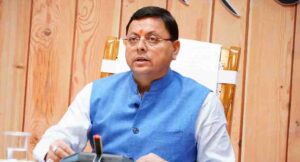
    Taking a significant initiative towards improving health services in the remote areas of the state, Uttarakhand Chief Minister Pushkar Singh Dhami on Tuesday launched five fully equipped Mobile Medical Units (MMUs).

    According to an official release, the objective of the MMUs is to ensure the availability of essential health services in the remote areas of the state.

    CM Dhami described this initiative as an effective effort to overcome the lack of health facilities in rural areas.

    “These MMUs, which operate six days a week, are equipped with necessary diagnostic and treatment facilities in line with the government’s ‘Healthy Uttarakhand, Prosperous Uttarakhand’ mission. These 5 MMUs will help provide primary health services in remote areas of the state,” said CM Dhami.

    These MMUs will be operated by CSC (Common Service Centre) and funded by REC (Rural Electrification Corporation) as part of its Corporate Social Responsibility (CSR) initiative.

    Initially, these units will be operational for a period of three years, i.e. 2 in Haridwar, 2 in Udham Singh Nagar and 1 in Tehri Garhwal.

    One of these five MMUs is a dedicated women’s mobile medical unit manned entirely by women’s health care personnel. It has been specially designed to meet the specific health needs of women in deprived areas.

    Earlier in the day, CM Dhami on Tuesday flagged off the free health service ‘Doctor Aapke Dwar’ from the CM residence in Dehradun.

    The service is aimed at delivering medical assistance to residents at their doorstep.

    Earlier on Monday, CM Pushkar Singh Dhami inaugurated the renovated ice rink at Maharana Pratap Sports College in Dehradun. CM Dhami said the renovated ice rink at Maharana Pratap Sports College is a significant achievement for Uttarakhand and the whole of India.

    The CM said the state government decided to restart this rink to establish Uttarakhand as a sports land.

    “South-East Asian Winter Games were held in this ice skating rink built in 2011, in which players from many countries like India, Bhutan, Nepal, Maldives and Sri Lanka participated. Later, no attention was paid to this rink, which was why it was closed, but our government decided to restart it to establish Uttarakhand as a sports land,” the CM said.

    “We had resolved that even if we have to call engineers from abroad, we will restart this ice skating rink, and we worked firmly in this direction and were successful,” CM Dhami said.

    The Uttarakhand Chief Minister said a 1 MW solar plant has also been installed to run this ice skating rink. He also mentioned that this rink is likely the largest in the country and possibly in South Asia. ANI

  • World Athletics Championships full broadcast rights are secured by beIN Media Group till 2027

    World Athletics Championships full broadcast rights are secured by beIN Media Group till 2027

    World Athletics has signed a three-year agreement with beIN MEDIA GROUP for the global sports, entertainment and media group to have exclusive rights to broadcast the World Athletics Championships in 24 countries across the Middle East and North Africa (MENA). The agreement will run until 2027 and see beIN SPORTS, the group’s flagship sports channels, broadcast 12 events.

    Under the agreement, beIN will broadcast an exciting line-up of competitions, which started with the World Athletics Indoor Championships Nanjing 25 in March. It is followed by the World Athletics Relays Guangzhou 25 from 10 to 11 May 2025. Fans can also look forward to the World Athletics Championships in Tokyo, Japan, from 13 to 21 September 2025.

    In 2026, beIN will continue to deliver a packed calendar of world-class competitions, including premier athletics events such as the World Athletics Cross Country Championships in Tallahassee, USA, the World Athletics Indoor Championships in Torun, Poland, the World Athletics U20 Championships in Eugene, USA, and the World Athletics Road Running Championships in Copenhagen, Denmark. beIN will also broadcast the World Athletics Race Walking Team Championships and the World Athletics Relays in 2026, before returning to China in 2027 with the World Athletics Road Running Championships in Yangzhou and the World Athletics Championships in Beijing.

    World Athletics President Sebastian Coe said: “We are delighted to have beIN SPORTS as our exclusive broadcaster for World Athletics Series events in the Middle East and North Africa. BeIN is renowned worldwide for the quality of its sports coverage and can help athletics reach new and existing fans in key markets for us in Africa and the Middle East. We look forward to working with them to bring our World Athletics Series events to the MENA region for the next few years.”

    Mohammad Al-Subaie, CEO of beIN MENA, said: “Securing the rights for the World Athletics Championships across 24 countries in MENA is another significant strategic achievement for beIN and one that reinforces our commitment to providing world-class coverage of diverse sports to our extensive regional audience. We now look forward to working with World Athletics to bringing the excitement of athletics directly to new and current athletics fans throughout the region.” World Athletics

  • In 2025, Fox News expects $500M in non-cable TV revenue

    In 2025, Fox News expects $500M in non-cable TV revenue

    Fox News Media is projecting half a billion dollars in revenue this fiscal year for its non-cable TV businesses, Trey Gargano, executive vice president of ad sales said in a rare interview about the company’s financials.

    Why it matters: Fox has been insulated from some of the viewership challenges plaguing its competitors in the streaming era, but its efforts to diversify away from cable will make its brand even less vulnerable to cord-cutting long term.

    • “We see on digital that our audience is an average of 30%-50% younger than those watching linear television in general,” Gargano said.
    • The projection includes revenue from all of its products outside of linear television, including podcasts, books, streaming and digital channels.
    • Gargano noted these businesses have collectively seen double-digit growth every year since 2020.

    Zoom in: Fox News Media’s push to diversify started in 2018 when its newly named CEO Suzanne Scott began to introduce new digital lifestyle products across platforms. Many of those products focused on digital video and streaming, specifically.

    • In 2018, the company launched Fox Nation, a subscription streaming service focused mostly on lifestyle and entertainment content. CEO Lachlan Murdoch recently said the service has 2 million to 2.5 million subscribers.
    • On Tuesday, Fox Nation announced its first-ever streaming bundle with SiriusXM, a testament to the appeal of its audience to other subscription media companies.
    • It introduced Fox News International, a live streaming service for its Fox News and Fox Business linear networks for overseas users in 2020, and Fox Weather, an ad-supported streaming service, in 2021.

    Between the lines: The company has also added dozens of audio products, including new podcasts from its biggest on-air personalities, that are available free with ads, a spokesperson confirmed.

    • In 2020, it debuted its imprint, Fox News Books, which has sold over 3 million copies across 14 titles, mostly authored by Fox talent.

    Follow the money: The growth of its cross-platform products has allowed Fox News Media to develop a more integrated ad sales strategy, which has helped lure over 200 new advertisers to its platform since the election, Gargano said.

    • Conversations with advertisers have shifted to be about the Fox News Media platform as a whole, “and in most instances, ways advertisers can do more than just run spots,” he said.
    • One area where he sees growing advertising opportunity is social media, which has traditionally been tougher for publishers to monetize. “We’re looking at ways to sort of authentically bring in advertisers to this huge and growing relationship that we have with consumers on social media.”

    Reality check: A huge driver of Fox News Media’s cross-platform strategy has been building new digital lifestyle products for its linear talent to reach younger consumers.

    • The vast majority of Fox News’ cable stars host a podcast or Fox Nation show, and/or have authored a book via Fox News’ imprint.
    • For example, “Fox & Friends First” co-host Carley Shimkus published “Cooking with Friends” in 2023 through Fox News Books. Steve Doocy and Ainsley Earhardt host bible study and cooking programs, respectively, on Fox Nation.

    Zoom out: While Fox News’ subscription streaming and book businesses present significant growth opportunities, Gargano said the majority of its digital business revenues are coming from advertising.

    • The growth of premium video on its website, combined with Fox Weather’s ad-supported platform, have created opportunities for Fox News to begin selling connected TV ads to marketers looking to extend their campaigns beyond linear television, Gargano said.
    • Other digital properties also provide unique marketing opportunities, he noted. While Fox Nation doesn’t include ads, some of its editorial franchises have helped create new opportunities for sponsors. The Fox Nation Patriot Awards, for example, includes sponsorship integrations on-site at the event.

    The big picture: Every cable news company is scrambling to diversify its business away from linear television, but few are as far along as Fox News Media.

    • CNN, under its new CEO Mark Thompson, plans to introduce a new cross-platform streaming service this year as part of a broader effort to introduce more subscription and lifestyle products.
    • MSNBC has launched ticketed events for hyper-fans around the country, but it hasn’t yet launched its own standalone streaming service.
    • CNBC debuted a standalone streaming service, CNBC+, earlier this year.

    What to watch: To date, Fox News Media hasn’t focused as much on commerce as a significant revenue driver, but the company is looking to do more there, Gargano said.

    • For now, most of its commerce opportunities are based around product integration within its flagship cable news morning program, “Fox & Friends.

    Axios 

  • For $350M, Harman buys Masimo’s audio firm

    For $350M, Harman buys Masimo’s audio firm

    Samsung Electronics said on Wednesday its unit Harman International signed a deal to acquire U.S. firm Masimo’s audio business for $350 million.

    It plans to combine Masimo’s audio business with Harman to strengthen its global leading position in the consumer audio market, which is expected to grow from $60.8 billion in 2025 to $70 billion in 2029, Samsung said in a statement.

    Samsung said it expects the acquisition to create synergy with the company’s existing mobile, television, and home appliance businesses, and strengthen competitiveness in differentiated sound and audio technologies.

    In March, Samsung said during its annual shareholder meeting that it would pursue “meaningful” mergers and acquisition to address investor concerns about growth and was determined to produce tangible results this year. US News

  • Expecting the final space law, Indian space firms are eager to expand

    Expecting the final space law, Indian space firms are eager to expand

    As India waits for the final draft of its first space law and guidelines for foreign direct investment (FDI) in the space sector, homegrown space startups remain in line to grab larger pieces of the incoming businesses and investments.

    Stakeholders of the industry that Mint spoke with, requesting anonymity, said a formalization of India’s operating procedures for space project procurement, coupled with on-paper confirmation of how foreign investors can approach the government for large investments in India in space, can open up a multi-billion-dollar opportunity for the sector, which seeks to quadruple its net annual revenue within eight years.

    “There is a lot of scope for India to create demand in the domestic space industry internally itself. To do that, a formalized procedure is crucial, which the first space law will help establish. This is a potential setback to the industry, which right now is in a waiting phase of over two years for a formalized set of laws and rules to truly take off,” a senior executive of one of India’s top space startups said, requesting anonymity since they work closely with the Union government.

    Work, to be sure, is underway. In November, Pawan Goenka, chairman of the Department of Space’s regulatory and promotion body, the Indian National Space Promotion and Authorization Centre (In-Space), told Mint that the first draft of India’s first space law was “almost ready”—with the timeline then being pitched for March this year.

    On Monday, Goenka said the law is in its final stages, and it will give In-Space formal regulatory powers to represent the domestic space sector. In the long run, the law will enable In-Space to take up tenders for private space startups and play a larger formal role in helping the firms take up global orders.

    Law coming soon
    “The FDI rules are soon to be approved in the coming months. Right now, beyond the automatic FDI route, government approvals for space funding rounds will become much easier when the foreign funding guidelines come in. This will help the domestic space sector attract up to $2.5 billion in foreign investments within the next eight years,” Goenka said.

    The move is key for India and the growth of its private space industry. In October 2023, Goenka said the domestic space sector can grow to $44 billion in annual revenue within 10 years. On Monday, he estimated that the industry is roughly worth $10 billion—indicating a growth of 7% annually since the Department of Space assessed it to be worth $8 billion in 2022.

    For India to scale the space industry up to $44 billion by 2033, it would need an annualized growth of 21%—a growth that’s currently absent in the industry.

    On Monday, Mint reported that India’s largest space sector funding rounds have been driven by foreign investors—including Pixxel and Skyroot Aerospace, which have each raised $95 million in venture capital funding to date. While none have published their valuations so far, two senior space officials said the top firms are worth $250-500 million today.

    As a result, the space law and the FDI rules would be crucial for more startups to raise funding at scale.

    “Space is a capital-intensive sector, which makes the need for a concerted push even more important. What India needs is to either not follow the American way of doing business and create its own internal ecosystem, or enable rules that will let businesses chase large funding rounds and procure foreign business demand at will,” said Chaitanya Giri, space fellow at global think tank Observer Research Foundation.

    Looking outwards
    Narayan Prasad Nagendra, chief operating officer of Dutch space services vendor Satsearch, added that a lack of commercial space demand is creating a conflicted business environment for space startups. “With a lack of formalized space laws and rules, Indian space startups are going abroad chasing business opportunities. But, looking for space contracts in mature markets is like attempting to innovate in a saturated market where there are already a hundred competitors. This gives India’s businesses a downright limbo, and bringing in formal paperwork in space laws and rules would give less impetus than India’s space promoter actually creating business opportunities from internal markets,” he said.

    Nagendra added that with most space economies being closed markets, a key part of the space laws and rules would be to create a clear regulatory environment that would offer a clear diktat for ministry bodies to become clients and generate internal space demand.

    “There is some concerted push for the space sector to play a larger role in defence surveillance and reconnaissance, which may create a spurt of demand for satellite and infrastructure manufacturers in the space sector. But this needs to happen more regularly,” he added.

    Goenka, on this note, added that In-Space is creating a framework through which specific sectors will be mandated to approach space startups and procure their services in fields such as agriculture, urban planning, disaster management and more.

    For now, though, demand remains low. Firms such as Pixxel and Digantara are serving contracts generated by the US’ central space agency, the National Aeronautics and Space Administration (Nasa), while the likes of Skyroot Aerospace and Agnikul Cosmos are yet to hit a regularized rhythm of space launches with their small rockets. LiveMint

  • US legislators contest Musk’s dual govt and SpaceX jobs

    US legislators contest Musk’s dual govt and SpaceX jobs

    Democratic lawmakers on key House committees raised concerns about potential conflicts of interest from Elon Musk’s dual roles as SpaceX CEO and a Special Government Employee overseeing changes at NASA and the Department of Defense, a letter sent to the agencies on Tuesday said.

    The letter addressed to Secretary of Defense Pete Hegseth and NASA Acting Administrator Janet Petro expressed alarm by House Democrats over Musk’s potential conflicts, given his role spearheading the Trump administration’s massive federal overhaul through the Department of Government Efficiency, or DOGE.

    “Musk’s dual role creates an inherent conflict of interest between SpaceX’s status as a large government contractor and DOGE’s influence at agencies overseeing SpaceX contracts, contract bids, and regulations governing the company and its activities,” the letter signed by the top Democrats on the House Armed Services Committee and the committee on Science, Space and Technology and others said.

    DOGE is currently overseeing significant organizational changes at both the Department of Defense and NASA. These changes include the dismissal of probationary Defense employees, the cancellation of hundreds of millions of dollars in grants and contracts at NASA, and the elimination of entire programs at both agencies.

    Simultaneously, SpaceX continues to serve as a large contractor for both DoD and NASA, bidding on and winning additional contracts even after Musk began his work for the Trump administration.

    “Because SpaceX performs significant work for the federal government across the national security and civil space architectures, even the perception of a conflict of interest is very troubling, and Musk’s influence over the agencies awarding large contracts to his company goes far beyond mere perception,” the letter said.

    Musk has been at the helm of SpaceX since its founding in 2002. The company has become a major player in the space industry, securing numerous contracts with NASA and the Department of Defense. Reuters

  • A panel in India looks at copyright laws in view of OpenAI’s lawsuits

    A panel in India looks at copyright laws in view of OpenAI’s lawsuits

    India has set up a panel to review if existing copyright law is sufficient to tackle AI-related disputes, an official memo showed, at a time when OpenAI faces legal challenges stemming from accusations of exploiting copyrighted material.

    A case in the high court in New Delhi by a group of top Indian news outlets and book publishers who say the firm uses their content without permission to help train its ChatGPT chatbot could reshape how the sector operates in India.

    OpenAI has denied wrongdoing.

    The memo, which is not public, said the commerce ministry set up a panel of eight experts last month to examine issues related to AI and their implications for India’s copyright law.

    The experts have been tasked to “identify and analyze the legal and policy issues arising from the use of artificial intelligence in the context of copyright,” the memo added.

    The panel of intellectual property lawyers, government officials and industry executives will also examine the adequacy of the Copyright Act of 1957 in resolving such concerns and make recommendations to the government, it said.

    India’s commerce and infotech ministries did not respond to Reuters’ queries.

    The copyright law has been at the centre of the OpenAI lawsuits in India.

    Billionaire Gautam Adani’s NDTV, along with the Indian Express and Hindustan Times newspapers and the Digital News Publishers Association, which groups top news outlets, say they share concerns over copyright law violations by AI platforms using their data to train such apps.

    OpenAI says it uses public data to train its chatbot, which is not a violation of India’s copyright law, and also provides an opt-out for websites that do not want their data used.

    Courts around the world are hearing claims by authors, news organisations and musicians which accuse technology companies of using their copyrighted work to train AI services without permission or payment. Reuters

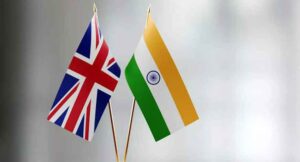
  • Ink FTA among India & the UK will cut costs of British trade, notably drugs

    Ink FTA among India & the UK will cut costs of British trade, notably drugs

    The UK has secured the best deal India has ever agreed, providing businesses with security and confidence to trade with the fastest-growing economy in the G20.

    The core mission of this Government is to deliver economic growth that raises living standards and puts money in people’s pockets, and that is exactly what this deal will do. We estimate that it will increase bilateral trade by £25.5 billion, add £4.8billion a year to our economy and boost wages by £2.2 billion every year in the long run. This is the best deal India has ever agreed to. It delivers on our manifesto commitment to create trade relationships that unlock new opportunities for businesses across all our nations and regions.

    Case study – Standard Chartered
    Standard Chartered is a leading UK-based international banking group with a presence in 53 of the world’s most dynamic markets. It is the largest and oldest foreign bank in India, acting as a ‘super connector’ of cross-border trade and investment by driving commerce and prosperity through its unique diversity for more than 165 years.

    Saif Malik, CEO, UK and Head of Coverage, UK, Standard Chartered, said:
    The UK-India Free Trade Agreement is a significant achievement. It will create new opportunities for UK and Indian businesses, enable greater access to one of the world’s largest and most dynamic markets, and drive growth and innovation across the UK-India corridor.

    We welcome this strong commitment to partnership and prosperity.

    Case study – UPS
    UPS is one of the world’s largest companies, with 2024 revenue of $91.1 billion, and provides a broad range of integrated logistics solutions for customers in more than 200 countries and territories, including connecting the United Kingdom and India.

    Markus Kessler, Managing Director, UPS UK, Ireland and Nordics, said:
    We welcome the announcement of this important agreement between two countries that are both vital markets in our global network.

    We look forward to continuing to help businesses of all sizes across the UK reach new customers in one of the world’s most populous and dynamic countries.

    Future-proofing our economy
    This deal gives UK businesses first-mover advantage with a new economic superpower. Currently the biggest country in the world by population, India is projected to move from its fifth-largest global economy to third in the next three years, thanks to the highest growth rate in the G20. By the end of the decade, it will be home to an estimated 60 million middle-class consumers, whose numbers are projected to grow to a quarter of a billion by 2050. And by 2035, their demand for imports is on course to top £1.4 trillion. The enormous scope of this market, where British goods and services are already sought after, represents an equally huge opportunity for UK businesses in the decades to come.

    Case study – John Smedley Ltd
    Established in 1784 in Lea Mills, Derbyshire, John Smedley Ltd is a UK-based manufacturer and retailer of luxury knitwear.

    Bill Leach, Global Sales Director, John Smedley Ltd, said:
    India is one of the fastest growing luxury markets in the world, and we are very excited about the UK- India Free Trade Agreement coming to fruition.

    John Smedley knitwear is already sold in over 50 countries around the world, and now that the FTA has been finalised, we shall very much look forward to ensuring that an ever-increasing number of discerning luxury consumers in India will enjoy greater access to The World’s Finest Knitwear.

    We are thankful to DBT for their significant efforts in bringing this FTA to successful conclusion.

    Cutting costs for UK-India trade
    From day one, this deal will support businesses across the United Kingdom by making it cheaper, easier, and quicker to trade with Indi