Month: May 2025

  • The women’s championship will be broadcast by Sky Sports for the first time

    The women’s championship will be broadcast by Sky Sports for the first time

    The game between London City Lionesses and Birmingham City Ladies will take place on Sunday, May 4 where the winning team will be promoted to the Women’s Super League.

    It will be the first time Sky Sports has ever broadcast a second-tier women’s game live on its channels. Coverage of this game will follow the WSL Manchester derby, as part of a women’s football double-header on Sky Sports. Those without a subscription can still watch on the Women’s Championship YouTube channel.

    London City Lionesses currently lead the Championship on 42 points, with Birmingham City just two points off in second place. With a place in English women’s top flight at stake, London City Lionesses will hope to become the first ever independent women’s club to compete in the WSL. While the Blues are seeking a return to the first-tier for the first time since 2022.

    This is a huge moment for English women’s football. The game has experienced quite the boom in recent seasons, and boosting the coverage of games with the country’s biggest sports broadcaster will only keep the appetite for women’s football growing. Versus

  • No effect of the Airtel-Jio Starlink deals is felt by Indus Towers

    No effect of the Airtel-Jio Starlink deals is felt by Indus Towers

    Over a month after Bharti Airtel and Jio signed agreements with SpaceX to distribute Starlink satellite internet services in India, Indus Towers said it does not anticipate any impact on its operations from such developments.

    “Based on our discussions with telecom operators, there are limitations and commercial constraints as far as satellite technology is concerned,” Prachur Sah, managing director and CEO of Indus Towers, said during a call with analysts on Thursday to discuss the January-March quarter earnings.

    “So, we don’t see any risk for the terrestrial networks in the foreseeable future and I don’t expect that to impact us any time soon,” he added.

    Comments from Sah assume significance as there were concerns that its tower infrastructure business could get affected once satellite internet services tap the Indian markets. This is because satellite internet beams connectivity directly from satellites to user terminals, thereby reducing the dependence on tower infrastructure for connectivity especially in rural markets in the long run, according to analysts. Further, the company’s stock also witnessed selling pressure and fell 8% on 12 March after telecom operators announced partnerships with SpaceX.

    Analysts, however, do not expect Starlink to be disruptive to Indian telecom companies at least in the near-to-medium term. “Starlink is unlikely to be disruptive for three reasons. Its capacity constraints will necessitate premium pricing, it needs telco tie-ups for distribution/installation and backhaul, and the government also seems to be inclined to balance the interests of telcos and satellite operators,” said brokerage Jefferies in a note dated 27 March.

    Vodafone clears dues
    Indus Towers is a subsidiary of Bharti Airtel, which owns 50% in the company. Besides Airtel, the tower company also counts Vodafone Idea as one of its major customers. In March, Vodafone Idea had cleared all undisputed overdue amounts to Indus Towers, thereby helping the towers company increase its operating free cash flow by 73% year-on-year (Y-o-Y) to ₹1,257 crore in the January-March quarter.

    “Our continued engagement with a major customer (Vodafone Idea) ensured recovery of its overdues this year,” Sah said. In FY25, Vodafone Idea cleared about ₹5,100 crore dues it owed to Indus Towers.

    “Given that now we have the backlog issue behind us…the strategy includes aggressively pursuing market share through both organic and inorganic routes as demonstrated by our acquisition of Bharti Airtel’s towers. With the scale of Indus, we are working on transforming our site infrastructure and leveraging digital solutions and AI to create new benchmarks of performance,” Sah said, adding that this would encourage customers to move tenancies to Indus.

    During the quarter, analysts had expected Indus Towers to announce dividends for its shareholders. However, the company said it has formed a committee to assess the modalities of cash distribution to the shareholders, and it will soon make disclosures to the exchanges on the same. Last year, the company conducted a ₹2,640 crore share buyback—its first since 2016.

    On its announcement to foray into the electric vehicle (EV) charging infrastructure space in the preceding quarter, Sah said the company is conducting the commercial pilot and based on that it will take a call whether to expand or hold back the same.

    Acquires more towers
    In the January-March quarter, Indus Towers revenue from operations grew 7.4% y-o-y to ₹7,727 crore on the back of growth in network rollout by telecom operators amid higher data consumption trends. The company’s net profit fell 4% to ₹1,779 crore owing to the impact of operating expenses and depreciation. During the quarter, the company acquired 12,774 towers worth ₹2,174 crore from Bharti Airtel.

    As on 31 March 2025, Indus Towers had 249,305 towers, adding 14,662 from a quarter ago and 29,569 from the year ago period. Its co-locations were at 405,435, up 18,616 from the previous quarter and 36,847 from the year ago.

    Co-locations mean the number of telecom operators (or tenants) that have installed their equipment on a single tower. An increase in co-locations leads to higher recurring revenue for tower companies like Indus Towers.

    On Thursday, shares of Indus Towers ended up 1.3% at ₹408.05 on the BSE.

    Key takeaways
    The company, a major telecom infrastructure provider, stated it does not foresee any risk from satellite internet services affecting terrestrial networks in the near future.

    Vodafone Idea repaid ₹5,100 crore in dues to Indus Towers, improving the company’s financial standing and boosting operating free cash flow.

    Indus Towers is testing an electric vehicle charging infrastructure venture and will decide whether to expand or halt the project based on results.

    The company reported a 7.4% year-on-year increase in revenue due to telecom network expansion, but net profit fell by 4% due to operating expenses and depreciation.

    Indus Towers acquired 12,774 towers from Bharti Airtel and now owns 249,305 towers, increasing its co-location count, which enhances revenue potential. LiveMint

  • Amazon’s cloud sales, income, and share price decline

    Amazon’s cloud sales, income, and share price decline

    Online retail giant Amazon disappointed investors with its profit forecast for the current quarter on Thursday, with shares falling by more than 5% at times in after-hours trading.

    In the previous quarter the e-commerce giant had exceeded analysts’ expectations with its key figures.

    Amazon forecast an operating profit of between $13 billion and $17.5 billion for the second quarter. Analysts had expected an average forecast of $17.6 billion.

    In the first quarter, the company reported that sales were up 9% to $155.7 billion from $143.3 billion last year. The bottom line was a profit of $17.13 billion, or $1.59 per share, compared to $10.43 billion a year earlier.

    Analysts on average had expected the company to earn $1.37 per share. Analysts’ estimates typically exclude special items.

    Revenue from the cloud division AWS, which is benefiting from the boom in artificial intelligence, rose by 17% to $29.3 billion. Analysts had expected an increase of 17.6%. Reuters

  • YouTube seems to dominate India despite OTT rivals gain pace

    YouTube seems to dominate India despite OTT rivals gain pace

    YouTube continues to dominate India’s online video market. Despite a proliferation of premium streaming services, the Google-owned platform commanded a staggering 92% of all video consumption in 2024, leaving subscription and ad-supported (AVoD, or advertising video-on-demand) rivals to jostle for the remainder, according to the latest Ficci-EY report.

    Industry experts say user-generated content is now easier to create than ever before, thanks, of course, to the availability of cheap data and smartphones. As a result, creators have mushroomed across the tiniest of Indian towns, producing quality content and sharing on YouTube for the world to see.

    By contrast, streaming platforms spend a lot of money and time to create content, only to be pegged back by their limited reach and viewership, hurting their monetization potential.

    “YouTube continues to dominate online video viewership because it’s not just a platform—it’s a cultural engine. It earned its position by being early, but more importantly, by being everywhere. For other premium platforms trying to carve out meaningful share in the video content space, the answer won’t be copying YouTube—it’ll be about leaning into what makes them different,” said Preranaa Khatri, chief business officer at Only Much Louder (OML), a media and entertainment company.

    Driving content
    What really sets YouTube apart is how it balances scale with personalization, Khatri added. Its recommendation algorithm, constantly learning from user behaviour—searches, watch time, engagement—ensures people find what they didn’t even know they were looking for. Further, it constantly introduces new monetization streams to incentivize creators, letting them earn not just from ads, but also from YouTube Shopping, Memberships, Super Chats, Super Stickers and YouTube Premium revenue.

    YouTube Shopping allows creators to promote products from their own stores or other brands within their content, enabling viewers to browse and purchase items directly from YouTube. Memberships allow for benefits like exclusive or premium content, live streams and other perks. YouTube Super Chat is a feature that allows viewers to purchase highlighted chat messages during live streams, which can sometimes appear at the top of the chat feed. Super Stickers are also a way for creators to connect with fans. Premium is a paid feature that does away with ads.

    At the same time, tools like YouTube Create have made video production much easier than ever—be it filters, effects, transitions, all from one’s phone. Meanwhile, features like the Copyright Match Tool and YouTube Studio’s AI enhancements (including auto-dubbing and the new Inspiration Tab) have helped creators manage content and scale creatively across languages and geographies.

    The disproportionately high share of YouTube in India’s streaming industry is not surprising at all, according to Girish Dwibhashyam, a streaming industry expert. Creators in tier-2 and tier-3 towns are today able to edit and curate better content at far lower prices than professionals. “For OTT platforms, on the other hand, there is hardly any incentive to keep pumping in money since the economics are challenging because of low CPMs (cost per mille—a paid advertising option where companies pay a price for every 1,000 impressions an ad receives),” Dwibhashyam said.

    To be sure, user-generated content is of inferior quality compared to that on streaming platforms, but the latter’s limited reach means their monetization potential is restricted, as brands keep away.

    “The dominance of YouTube over OTT platforms in India presents significant challenges for the media industry. While YouTube benefits from its ad-supported model and user-generated content, OTT platforms rely on high-budget, professionally shot content, which demands more time, money and effort. This creates monetization struggles and higher user acquisition costs for OTTs, as they also face content discovery challenges and competition for brand partnerships,” said Yogesh Saini, marketing head at Civic Studios, a media production company.

    Additionally, YouTube’s AI-driven recommendations and regional content capture wider audiences, while OTTs must invest heavily in marketing and localized content. To compete, OTT platforms need to reduce friction in app downloads, innovate quickly, and improve content accessibility for users, Saini added. LiveMint

  • Trump might modify export laws for AI chips

    Trump might modify export laws for AI chips

    Nvidia Corp. Chief Executive Officer Jensen Huang said he’d like the Trump administration to change regulations for exporting artificial intelligence technology from the US to the rest of the world so American businesses can better capitalize on the opportunities in the future.

    “We need to accelerate the diffusion of American AI technology around the world,” Huang said in a brief meeting Wednesday with reporters in Washington. “The policies and encouragement from the administration really need to support that.”

    Nvidia sells the leading AI chips for training artificial-intelligence models, including for OpenAI, but it’s been banned from selling its most-advanced products to customers in China. The Biden administration had sketched out an additional policy for AI diffusion, or limiting the sale of AI technology to countries around the world based on three bands of qualification.

    “I’m not sure what the new diffusion rule is going to be, but whatever it turns out to be, it really has to recognize that the world has changed fundamentally since the previous diffusion rule was released,” Huang said.

    He also cautioned that China is growing into a formidable rival in technology, and he singled out Huawei Technologies Co., the Chinese telecom giant that has expanded into designing its own AI chips.

    “China is not behind,” he said. “Are they ahead of us? China is right behind us. We’re very, very close.”

    Huang made the remarks during a trip to Washington that included an appearance at the Hill and Valley Forum, a gathering of tech leaders and US legislators.

    Read More: Tech CEOs, VCs Meet With Lawmakers for National Security Summit

    When asked about President Donald Trump’s tariffs, Huang said, “There should always be policy that enables, supports and accelerates our ability to on-shore manufacturing.”

    Nvidia relies on production partner Taiwan Semiconductor Manufacturing Co., which has begun making some chips in Arizona. That company has long manufactured Nvidia’s most advanced products in Taiwan.

    “With willpower and with the resources of our country, I’m certain we can manufacture on shore,” Huang said.

    Later, he attended a White House event where Trump touted US investment pledges from a range of companies since his inauguration in January. Nvidia has promised to produce as much as $500 billion in AI infrastructure domestically, and Huang pressed Trump on Wednesday to help meet growing electricity demand from AI.

    “We also need a progressive growth- and industry-oriented energy policy, which this president has really put his weight behind,” Huang said at the White House. “Without energy, we can’t possibly have new growth industries.” Bloomberg

  • The US’s resistance to EU Big Tech fines may impact India’s digital bill

    The US’s resistance to EU Big Tech fines may impact India’s digital bill

    The Trump White House’s statement that European Union fines on Apple and Meta last week were “a novel form of economic extortion” could have a bearing on India’s draft Digital Competition Bill (DCB), which is modelled on EU legislation.

    The Computer & Communications Industry Association (CCIA), which counts Google, Amazon and Meta among its members, last week petitioned the United States (US) government against DCB.

    The EU on April 23 handed out its first-ever penalties — $500 million on Apple and $200 million on Meta — under the Digital Markets Act (DMA), evoking a sharp reaction from the White House. Brian Hughes, a spokesperson for the White House National Security Council, told reporters a day later that the US will not tolerate “this novel form of economic extortion”.

    “The EU’s malicious targeting of American companies and consumers must stop,” he said, reiterating the Trump administration’s position that such regulations “enable censorship” and pose a “direct threat to free civil society”. He observed that the DMA will qualify as a non-trade barrier.

    Last week, CCIA labelled India’s DCB a similar barrier. In a four-page memo to the US government, the association outlined “India’s barriers to US digital service suppliers”.

    The memo called for “avoiding ex-ante digital regulatory approaches similar to the EU’s DMA, such as the proposed Digital Competition Act [DCB]”. It said that DCB could potentially impact investment and innovation in India’s burgeoning digital markets.

    CCIA’s work over the past 50 years has centered on promoting open markets and systems. According to the association’s website, its members employ more than 1.6 million workers, have invested over $100 billion in research and development, and contribute trillions of dollars in productivity to the global economy.

    CCIA asked the US government to assess the draft DCB, along with stakeholder input, to identify market distortions that would justify intervention. It also called for examining whether foreign investment in India might be affected by such a regulatory regime.

    Its memo comes at a time when India is seen as a global frontrunner to strike a bilateral trade deal with the US, as pointed out by Treasury Secretary Scott Bessent on Monday.

    Other demands
    CCIA calls for removing barriers to US digital service suppliers in several key areas. These include the expiration of the 2023 import authorisation requirement for laptops, tablets, personal computers, and small servers

    It wants to allay India to address concerns regarding the Telecommunications Act, clarifying that services defined as telecommunications apply only to the narrow subset of traditional telephony services (i.e., circuit-switched voice).

    The industry body is also lobbying for the exclusion of Cloud-based software from the scope of information technology and telecom products subject to mandatory testing and certification.

    It also asked the Indian government to address concerns about the guidelines for acquiring and producing geospatial data and related services. Business Standard

  • The head of TRAI urges that traditional & digital media be regulated fairly

    The head of TRAI urges that traditional & digital media be regulated fairly

    Telecom Regulatory Authority of India (TRAI) Chairman Anil Kumar Lahoti on Thursday (May 1, 2025) said it was not in favour of creating an environment where regulatory disparities put one medium of broadcasting at a disadvantage over another.
    Lahoti’s remark came days after the Supreme Court sought responses from the Centre and others concerned on a plea seeking a ban on the streaming of sexually explicit content on OTT and social media platforms.

    He said: “…the issues which are coming forward now are the regulatory disparities between one medium of dissemination and another. While we do welcome and want technology to come up and provide better and better audio-video experience so that the consumer can enjoy the fruits of the development of the technology, yet we do not want to create an environment where regulation discriminates between two mediums and puts one medium of broadcasting at a disadvantage compared to another; or one medium at a relatively undue advantage compared to another medium.”

    ‘Regulating Broadcast in the Digital Age: Key Frameworks & Challenges’ as part of the WAVES 2025, organised by the Information & Broadcasting Ministry, Mr. Lahoti said India has a very progressive regulatory framework so far as the traditional broadcasting was concerned. It was being regularly revised and updated to give the industry the requisite freedom, and also to protect the interest of consumers and small players in the entire value chain, he said.

    “TRAI as a regulator has been regularly engaging with the stakeholders to see the need for review and has been updating it regularly,” he said, adding that it issued a revised regulation last year, one that was welcomed by the entire broadcasting distribution industry.

    Another significant work done by TRAI in this regard was a complete revamp of the licensing framework for both the television and the radio broadcasting industries, where — in the context of the new Telecommunications Act — it reviewed the framework of the past 30 years and prepared a simplified authorisation structure, enabling ease of doing business. The different terms and conditions of various mediums were harmonised. The entire regulation was made “more or less technology agnostic”, and yet it gave a lot of freedom to the industry for infrastructure sharing etc., he said.

    “However, now the challenge is that we have the digital video distribution services, which may be OTT streaming services or FAST (free ad-supported streaming television) etc., which are currently being regulated under the social media intermediary guidelines of MeitY, whereas the traditional broadcasting or the linear TV is regulated under the Telecommunications Act and the Cable TV Networks Act,” he said.

    “Also, we have to see whether we are doing enough to protect the interests of consumers and also the interconnection between different stakeholders. In the case of the traditional TV, we have guardrails and the regulations to guide how they can interact and how they cannot exploit their dominant position, whether the same checks are available in the digital streaming services: these are the issues which would going forward need examination and would need certain actions,” he said.

    During the panel discussion, Mr. Lahoti said a recent industry study showed that digital media surpassed linear television in 2024 in terms of the industry segment, and in India, digital media stood at nearly $9.4 billion as against $8 billion of linear television.

    Going forward, there should be minimal regulation covering the industry, but it should be adequate to protect the interests of the consumers and those at the lower end of the pyramid, he added. The Hindu

  • India will look into Starlink’s business in Bangladesh & Pakistan

    India will look into Starlink’s business in Bangladesh & Pakistan

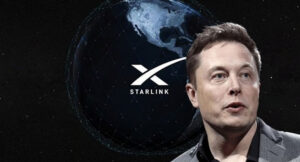
    Starlink is facing fresh regulatory hurdles in India, with the Union government asking the company for details of its upcoming operations in Pakistan and Bangladesh, according to sources close to the development.

    A subsidiary of Elon Musk-owned SpaceX, Starlink has been awaiting the government’s approval for long to enter the India market with its satellite communication services, even as many other applicants have received approvals. In a surprising development recently, Airtel and Reliance Jio — both satellite communications (satcom) licencees — announced distribution tieups with Starlink, signalling that the American major was getting ready for India.

    “There are still certain security concerns. For a company to provide communication services in India, a large number of technical complications need to be met,” a Department of Telecommunications (DoT) official said. “The company has been asked to clarify its plans to operate in neighbouring countries, one of which is openly hostile to Indian interests,” he explained.

    Last month, the satcom operator received provisional registrations from Pakistan’s space regulator, with Islamabad stating on record that it hoped Starlink would receive full clearance and begin operations by the end of 2025. On the other hand, the Bangladeshi telecom authorities earlier this week granted necessary licences for Starlink to operate.

    Responding to security conditions, the American company has so far promised to store data in Indian servers, and use satellites only for authorised services over Indian territory.

    But it is yet to formally accept technical conditions with cross-border implications, such as monitoring zones and creating a data buffer zone along international borders where services are prohibited, with the specific width determined by the government, it is learnt.

    Officials said the government’s latest communication to Starlink wouldn’t necessarily delay the evaluation of its application. It is part of the regular screening process for issues of national security, according to officials.

    Business Standard queries seeking an official response from the DoT did not elicit a response.

    Starlink provides satcom services in over 100 countries through a constellation of more than 7,000 low earth orbit (LEO) satellites operated by SpaceX.

    Starlink’s application for a global mobile personal communication by satellite (GMPCS) services licence, needed to offer satellite-based broadband services in India, has been under processing since November 2022. DoT has already granted the licence to Airtel-backed Eutelsat OneWeb and Reliance Jio’s satellite arm Jio Space Limited.

    Last month, telecom operators Bharti Airtel and Reliance Jio had announced separate deals with Starlink to distribute Starlink equipment and services for Airtel and Jio customers in India.

    Long list of hurdles
    Starlink’s application has also dragged on due to a lengthy list of exemptions that the company has sought citing technical limitations. According to GMPCS rules, a licensee must use satellites only for authorised services over Indian territory, excluding activities that could compromise national sovereignty and security, such as surveillance or electronic warfare, a regulation which has been repeatedly cited by India’s strategic establishment.

    Starlink’s application for offering satcom services in India had been held up due to the company’s inability to comply with mandatory ownership disclosure norms overseen by the Department for Promotion of Industry and Internal Trade (DPIIT). Additionally, Starlink had also clashed with the government over rules that a licensee must provide call data records to security agencies upon request and turn off services at times of crises under government direction.

    Starlink is also awaiting final authorisation from the Indian National Space Promotion and Authorisation Centre (IN-SPACe).

    Overall, the satcom service is yet to take off in India due to lack of clarity on allocation of spectrum and its pricing. The Telecom Regulatory Authority of India (Trai) has to issue recommendations on satellite spectrum, detailing the modalities for allocation of space spectrum, including its price. The Trai recommendations will also set the other licensing conditions. Business Standard

  • As per COAI, spammers shift to OTT platforms as telco vigilance rises

    With telecom operators tightening measures against spam and fraudulent communications, spammers are increasingly shifting to over-the-top (OTT) platforms such as Meta-owned WhatsApp, according to the Cellular Operators Association of India (COAI).

    Spam Shifting to OTT Platforms
    “Telecom service providers (TSP) networks have become very stringent and are not permitting spam due to government and their own measures. OTT players, on the contrary, are doing nothing,” said SP Kochhar, Director General of COAI, which represents Reliance Jio, Bharti Airtel, and Vodafone Idea, to ETTelecom.

    COAI and GSMA Call for Regulatory Parity
    The industry body, along with the global mobile association GSMA, has been pushing for OTT players to be brought under a regulatory framework, citing the growing misuse of such platforms for digital fraud, including banking scams and so-called ‘digital arrests’ facilitated through screen-sharing features.

    Studies suggest that nearly 85 percent of the data over the telecommunications network is being used for multiple OTT applications. Yet, these platforms remain outside the purview of current telecom regulations.

    Airtel AI-Powered Spam Detection Tool
    Airtel recently launched an AI-based spam detection tool that alerts users about potential scam calls. Citing Bharti Airtel’s instance, he reportedly said that the telco, which has come out with an AI-based app, has been received very well, and added that Airtel would probably come out with a better version soon.

    “Jio is also doing a lot of work on this. They cannot be left behind. The moment they are left behind, they lose competition,” Kochhar added, as per the report.

    Following increased network-level monitoring by telcos, instances of spam and fraud via traditional channels have declined, but there has been a noticeable uptick in such activities on OTT platforms.

    TRAI Recommends Unified UCC Framework
    Last month, the Telecom Regulatory Authority of India (TRAI), in consultation with the Joint Committee of Regulators (JCOR), recommended a unified strategy to curb unsolicited commercial communications (UCC) across both telecom and OTT platforms.

    COAI has also urged that mobile apps be brought under the country’s cybersecurity laws to ensure a level playing field and better consumer protection. TelecomTalk

  • In Bangalore’s Hennur, a 300-bed SPARSH Hospital is proposed

    In Bangalore’s Hennur, a 300-bed SPARSH Hospital is proposed

    In a significant step towards the launch of its much-anticipated new facility, SPARSH Hospitals recently held a traditional Pujan ceremony at the upcoming over 300-bedded SPARSH Hospital in Hennur. On this auspicious occasion, Dr. Sharan Shivaraj Patil, Chairman of SPARSH Group, along with his family and key members of the SPARSH leadership team, performed Pujan seeking divine blessings so that they can offer best-in-class services to those in need. The event marked the beginning of the final phase before the hospital becomes fully operational in mid-May.

    “SPARSH Hennur represents our vision for the future of healthcare–premium infrastructure, cutting-edge technology, and a deeply human touch, all under one roof. This hospital stands as a pillar of clinical excellence and plays an important role in shaping and sustaining quality healthcare in the region,” Dr. Sharan Shivaraj Patil, Chairman, SPARSH Group of Hospitals, said after performing the Pujan.

    As one of Bengaluru’s fastest-growing healthcare providers, SPARSH Group of Hospitals continues to invest in building a holistic healthcare ecosystem with world-class facilities and technologies, merging clinical expertise with social responsibility. This hospital is not only a pillar of clinical excellence but also a driver of economic opportunity. It generates around 2500 direct and indirect employment opportunities. SPARSH Hennur is all set to become a contributor to the local economy and deliver world-class quality healthcare in the region.

    SPARSH Hennur is designed and developed to deliver compassionate care with ethical practices. It will offer advanced specialities and high-end diagnostics. The upcoming unit is supported by world-class infrastructure and technologies. The facility’s hyperlocal focus will ensure deeper community engagement and more efficient access to expert medical services.

    As one of Bengaluru’s fastest-growing healthcare providers, SPARSH Hospitals continues to invest in building a holistic healthcare ecosystem with world-class facilities and technologies, merging clinical expertise with social responsibility. The Hennur unit is a part of SPARSH’s ongoing expansion to bring high-quality, ethical, and patient-centric healthcare to people of Bengaluru and nearby areas. The focus of the Group is also on combining medical expertise with innovation to provide personalized, high-quality care across specialities. Technology-driven healthcare advancements, including real-time robotic assistance and AI diagnostics, ensure personalized, effective treatments.

    SPARSH Group of Hospitals is revolutionizing healthcare through next-level precision and innovation across specialities. By integrating robotic-assisted surgeries, 3-D printing, and AI-driven diagnostics, SPARSH ensures safer, patient-centric treatments with superior outcomes. SPARSH Hospitals is advancing Organ Transplants, particularly in liver and kidney procedures. Its multidisciplinary teams utilize cutting-edge imaging, minimally invasive techniques, and precision medicine to improve transplant success rates and post-operative recovery.

    The organization is also committed to equitable healthcare, and it believes that quality healthcare should not be a privilege but a right for all. By bridging the gap between cutting-edge medical advancements and those in need, SPARSH Hospitals ensure a healthier future for our nation.

    SPARSH Hospitals continues to expand its facilities and introduce groundbreaking technologies, setting new standards in precision-driven, compassionate healthcare. The operationalisation of the upcoming Hennur Unit will manifest the Group’s commitment to ensuring a healthier future. Business Standard