Month: May 2025

  • India is projected to boast a $92.7B malaria diagnostics sector

    India is projected to boast a $92.7B malaria diagnostics sector

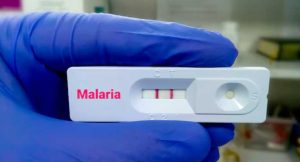
    The India malaria diagnostics market is projected to reach approximately USD 92.7 billion by 2034, rising from USD 59.2 billion in 2024. This reflects a compound annual growth rate (CAGR) of 4.5% during the forecast period. The expansion is driven by ongoing government initiatives, technology innovation in diagnostics, and rising public awareness. The Indian government’s efforts toward malaria elimination continue to boost demand for efficient diagnostic services. This includes early detection programs and wider availability of diagnostic infrastructure across public healthcare settings. These initiatives aim to reduce malaria-related morbidity and improve overall public health outcomes.

    A key driver for this market is the continuous advancement in diagnostic technology. The availability of rapid diagnostic tests (RDTs) has significantly improved the accuracy and speed of malaria detection. These tools are especially useful in remote and underserved areas, where laboratory access is limited. Portable RDTs have made timely diagnosis possible without the need for complex lab facilities. Moreover, the integration of digital diagnostic tools and mobile health solutions is supporting better monitoring and reporting. These innovations not only improve healthcare access but also enable faster treatment decisions, contributing to better disease control.

    Public awareness and education efforts are also playing a significant role in boosting the malaria diagnostics market. Various campaigns by health departments and non-governmental organizations have emphasized the importance of early diagnosis and prevention. As a result, more individuals are seeking testing when symptoms arise. Increased awareness has also led to better utilization of diagnostic resources at both urban and rural levels. This shift in healthcare-seeking behavior is helping to curb malaria transmission through earlier intervention and treatment.

    International support further strengthens the malaria diagnostics infrastructure in India. Collaborations with the World Health Organization (WHO), Global Fund, and other global health agencies have enabled access to technical expertise and funding. These partnerships assist in deploying best practices and ensuring the supply of advanced diagnostic kits. Additionally, capacity-building initiatives and training for health workers have improved diagnostic accuracy and reporting. Such support is essential in sustaining India’s long-term malaria control strategy.

    The growth of the malaria diagnostics market in India is underpinned by strong government action, rapid technological progress, rising health awareness, and international cooperation. These combined efforts support India’s goal to eliminate malaria and improve disease surveillance. The diagnostics sector will continue to play a central role in this nationwide public health mission.

    In conclusion, the India malaria diagnostics sector is growing steadily due to strong support from government programs, global partnerships, and new technologies. The use of rapid and digital diagnostic tools is helping reach more people, especially in rural and hard-to-access areas. Hospitals and mobile health units are playing a vital role in early detection and treatment. Awareness campaigns and education have encouraged more people to seek timely diagnosis, helping reduce the spread of the disease. Research institutions are also working to improve the accuracy and speed of testing methods. These combined efforts are making diagnostics a central part of India’s strategy to eliminate malaria and improve public health outcomes. Market.us


  • In defense of the plan to cut medical funding, the US secretary of health

    In defense of the plan to cut medical funding, the US secretary of health

    The US health secretary, Robert F Kennedy Jr, refused to say whether he would vaccinate his children if he had to choose today, and defended Republicans’ proposal to cut healthcare to fund tax cut extensions.

    Kennedy’s back-to-back testimonies before House and Senate committees were his first appearances before lawmakers since his confirmation in February. The secretary was called to discuss Donald Trump’s proposed budget, which would impose disproportionately large cuts to scientific enterprises at the health department.

    However, the most memorable exchange went to a deeper tension between Kennedy and his own department – his contradictory and at times inflammatory statements on vaccines.

    “If you had a child today, would you vaccinate that child for measles?” began the Democratic congressman Mark Pocan of Wisconsin at the House appropriations committee hearing.

    “For measles? Um, probably for measles,” said Kennedy, in one of the few hesitations of the hearing. “What I would say is my opinions about vaccines are irrelevant … I don’t want to seem like I’m being evasive, but I don’t think people should be taking advice, medical advice, from me.”

    Vaccines are considered one of public health’s greatest victories, and the measles vaccine alone is estimated to have saved 90 million lives in five decades. The US is in the midst of the single worst measles outbreak since 2000. Three people, including two unvaccinated children, have died in Texas. Before heading the health department, Kennedy led arguably the most influential anti-vaccine campaign group in the nation.

    Pocan went on to ask about chickenpox.

    “Um, again, I don’t want to give advice,” Kennedy said, before commenting on shingles.

    Pocan continued: “Polio?”

    “Polio?” Kennedy said. “Again, I don’t want to be giving advice.”

    The issued re-emerged in his afternoon testimony before the Senate committee on health, education, labor and pensions, where the Democrat Chris Murphy asked Kennedy if he would recommend the measles vaccine. The secretary demurred, prompting Murphy to say: “I think that’s really dangerous for the American public and for families.

    “The secretary of health and human services is no longer recommending the measles vaccines,” Murphy said.

    Kennedy’s hearing came at an exceptionally tumultuous period in America’s public health history. With help from the billionaire Elon Musk’s unofficial “department of government efficiency”, Kennedy has eliminated roughly 20,000 jobs, whole departments and expert public health labs. He has also in effect cut the federal biomedical and behavioral research budget by $2.7bn – including cancer research alone by 31% year-over-year – by failing to distribute or “impounding” funds.

    Officially, the hearing was intended to investigate a White House budget proposal to cut tens of billions from the health department – slashing the federal government’s biomedical research arms in particular, the National Institutes of Health (NIH), by 40%.

    However, it also took bizarre turns – as when Kennedy asserted that agencies would soon be “phasing out most animal studies” in favor of using artificial intelligence. The organic chemist and drug discovery researcher Derek Lowe described Kennedy’s claim as “bullshit”. He said such advances, while promising, were “years” away.

    The White House budget has come alongside Republicans formally unveiling a “big, beautiful bill” to extend tax cuts from President Trump’s first term by in effect cutting federal healthcare subsidies. The Congressional Budget Office estimates that an additional 13.7 million Americans could become uninsured if the proposal moves forward.

    The bill proposes adding work requirements to Medicaid and ending a federal subsidy for individual insurance through the Affordable Care Act (ACA), better known as “Obamacare”. Medicaid covers about 71 million low-income, disabled and elderly Americans – making it the largest health insurance program in the nation. This is Trump’s first attempt to restrict healthcare since 2017, when an attempt to repeal the ACA was dramatically tanked from within his own party.

    Some Republicans are already wary of the bill, warning that taking away healthcare was, in the Missouri Republican senator Josh Hawley’s words, “morally wrong and politically suicidal”. Advocacy groups have also rallied to oppose the cuts.

    “These work requirements and reporting requirements are designed to kick people off Medicaid,” said Julie Nickson, director of federal relations at the American Cancer Society Cancer Action Network. “And that’s what they’ll do.”

    Even as Kennedy has eviscerated departments and fired workers, the health department has released few official details of the “reorganization” other than to claim that it would eliminate “fraud, waste and abuse”. Kennedy continued that pattern on Wednesday, as he told lawmakers he could not answer detailed questions about changes he has imposed.

    “I’m going to talk very, very broadly … We are under a court order yesterday afternoon not to do any more planning under the reorganization, and I have been advised by my attorneys not to talk about it,” Kennedy said.

    Lawrence Gostin, a global health law professor at Georgetown Law School called Kennedy’s assertions that the court order barred him from answering questions “pure nonsense”.

    “The Department of Justice may be advising the secretary not to discuss the litigation,” said Gostin. “But the secretary has a public duty to explain the reasoning behind the reorganization of his department and to show why it is in the public interest.”

    In addition to enormous and often untold cuts, Kennedy has also reinstated programs – Democrats argued based on political favor. For the first time, Kennedy commented on reinstatement of two branches of the National Institute for Occupational Health and Safety (Niosh) and the World Trade Center Health Program.

    The programs researched and monitored miners for pneumoconiosis, better known as black lung, ran the firefighters’ national cancer registry and, paid for the healthcare of victims of the September 11 attacks.

    “I reinstated 328 employees at Niosh – about a little over a third of them were in Morgantown and a third in Cincinnati and the WTC group,” Kennedy told Republican Riley Moore about programs in West Virginia and Ohio respectively.

    The Connecticut Democrat Rosa DeLauro said: “I don’t understand why Republicans get to call you to spare offices like Niosh … Is there a special phone number if I want to save tobacco prevention, lead poisoning?” The Guardian

  • Endowment for cancer research drops by 31% in the Trump admin

    Endowment for cancer research drops by 31% in the Trump admin

    US President Donald Trump’s administration cut cancer research funding by 31 percent in the first three months of 2025 compared to the same period last year, according to a Senate report released Tuesday that accuses the White House of waging a “war on science.”

    The analysis, commissioned by the leftwing Senator Bernie Sanders, found that at least $13.5 billion in health funding had been terminated as of April, including 1,660 grants, while thousands of scientific staff were fired.

    Among the hardest hit was the National Cancer Institute, which lost more than $300 million from January to March compared to 2024, driving inflation-adjusted grant funding to its lowest level in over a decade. Its parent agency, the National Institutes of Health, lost $2.7 billion.

    “Since January, Trump has launched an unprecedented, illegal and outrageous attack on science and scientists,” said Sanders, the ranking member of the Senate Health, Education, Labor, and Pensions (HELP) Committee.

    “Trump is not only denying scientific truth but actively seeking to undermine it.”

    The Health and Human Services department, led by vaccine-skeptic Robert F. Kennedy Jr, hit back.

    “Senator Sanders’ claim of a ‘war on science’ is unequivocally false. The report released by his office today is a politically motivated distortion that undermines the thousands of dedicated public health professionals across HHS, who remain steadfast in their commitment to delivering results for the American people,” the department said on X.

    Under Kennedy’s leadership, “HHS is streamlining programs, eliminating redundancies, and — above all else — prioritizing gold standard science,” it added.

    ‘Complete chaos’ 
    The report, based on interviews with dozens of federal scientists and health workers, paints a picture of disarray across HHS.

    At the Centers for Disease Control and Prevention (CDC), at least 175 public health datasets were deleted, leaving doctors “without vetted guidance on how to treat patients,” one physician said.

    A 43-year-old colorectal cancer patient, already treated with surgery, radiation, and 48 rounds of chemotherapy, said her participation in a T-cell therapy trial at the NIH was delayed due to staff shortages.

    “The reality is that by reducing money and staff, the NIH will not be able to produce my treatment — and it might cost me my life,” she told Senate staff.

    At the NIH Clinical Center, researchers described “complete chaos” after entire labs were dismissed. “This administration has a lot of blood on their hands,” said one. “We just want to take care of people.”

    The report also highlighted the dangers of misinformation amid a growing measles outbreak, which has infected more than 1,000 people and killed three. Over 40 grants studying vaccine hesitancy have been canceled.

    Meanwhile, Kennedy has hired vaccine conspiracy theorist David Geier, previously disciplined for practicing medicine without a license and testing unproven drugs on autistic children, to investigate an alleged connection between vaccines and autism, debunked by dozens of prior studies.

    Even as Trump proposes a 26 percent cut to the HHS budget next year, he has earmarked $500 million for Kennedy’s “Make America Healthy Again” initiative, which targets nutrition, physical activity, and “over-reliance on medication.” AFP

  • La Liga assets in Belgium are renewed by DAZN through 2030–31

    La Liga assets in Belgium are renewed by DAZN through 2030–31

    Global sports streaming service DAZN has announced a five-year extension to its broadcast rights partnership with Spanish soccer’s LaLiga in the Belgian market.

    The new four-season deal will now see the pair’s partnership in the country run through the 2030-31 campaign, consolidating DAZN’s stewardship of LaLiga rights in Belgium (and non-exclusively Luxembourg) through the end of the decade.

    Initially, the deal was announced for a four-year extended term, before tacking on a sixth year to the agreement following the May 11 El Clasico derby game between Barcelona and Real Madrid, a thriller that ended in a 4-3 Barcelona victory.

    LaLiga, and the fortunes of giants Real Madrid in particular, are of interest to viewers in Belgium not just because of the team’s global stature, but also thanks to Belgian icon Thibaut Courtois, who is a stalwart in goal for the side.

    Elsewhere in the league, Atletico Madrid defender Axel Witsel, and Seville trio Dodi Lukebakio, Albert Sambi Lokonga, and Stanis Idumbo, have all also represented Belgium’s senior or youth category national teams, as has Las Palmas forward Adnan Januzaj.

    DAZN first began broadcasting LaLiga in 2023 following its takeover of the Eleven Sports broadcaster, which itself had first in the 2015-16 season, meaning the rights have stayed with the same rightsholder for 16 years by the end of the new deal.

    This week DAZN announced similar five-year extensions in neighboring market Germany, as well as Austria, and added Switzerland to its coverage.

    LaLiga has been available on DAZN in Germany and Austria since the launch of the platform in the two countries in 2016, and it enjoys a significant following given the interest in top clubs such as Real Madrid and Barcelona, and players including Real’s German international Antonio Rudiger and Barca goalkeeper Marc-Andre Ter Stegen.

    The top Spanish league had launched media rights tenders in Germany, Austria, and Switzerland, and several major European markets, in March.

    In Germany, DAZN also holds rights to the domestic Bundesliga and Italy’s Serie A.

    The streaming service also holds a set of domestic LaLiga rights. Sportcal

  • Market size for commercial geosatellites & broadband

    Market size for commercial geosatellites & broadband

    According to Market Research Intellect, the global Commercial Geo Satellite Broadband market under the Aerospace and Defense category is expected to register notable growth from 2025 to 2032. Key drivers such as advancing technologies, changing consumer behavior, and evolving market dynamics are poised to shape the trajectory of this market throughout the forecast period.

    The commercial GEO satellite broadband market is witnessing robust growth due to the rising demand for high-speed internet connectivity in remote and underserved regions. As global digital transformation accelerates, industries such as aviation, maritime, government, and enterprise sectors are increasingly relying on satellite broadband for consistent and wide-area communication. GEO satellites offer broad coverage and high data capacity, making them suitable for large-scale commercial applications. The expansion of smart infrastructure, growing use of cloud-based services, and increased video streaming demands are also fueling market growth. Furthermore, government initiatives to bridge the digital divide and the ongoing development of advanced high-throughput satellites (HTS) are enhancing service capabilities. This market is set to grow steadily as businesses prioritize uninterrupted connectivity and data-driven operations across diverse geographies.

    Several key drivers are fueling the growth of the commercial GEO satellite broadband market. A major factor is the increasing demand for broadband services in rural and remote areas where traditional terrestrial networks are either limited or non-existent. GEO satellites, with their wide coverage and high capacity, are ideal for delivering consistent internet connectivity in these regions. Another driver is the rising need for reliable communication networks across various commercial sectors such as oil and gas, aviation, maritime, and emergency services, where ground infrastructure is often inadequate. The surge in bandwidth-intensive applications-including video conferencing, streaming, and cloud computing-is further propelling the demand for high-speed satellite internet. Technological advancements in satellite design, such as HTS and software-defined payloads, are enhancing performance and reducing latency. Additionally, supportive government policies and funding for broadband expansion initiatives are playing a crucial role. These factors collectively contribute to the strong momentum in the GEO satellite broadband market.

    Global Commercial Geo satellite broadband market driver – Rising technological advancements and innovation
    The global Commercial Geo Satellite Broadband market is being significantly propelled by rapid technological advancements and continuous innovation across product lines. As industries increasingly demand higher efficiency, better performance, and more environmentally sustainable solutions, manufacturers are investing heavily in R&D. These innovations lead to enhanced functionalities, cost efficiencies, and better integration with smart systems or digital platforms. For instance, the integration of IoT, AI, or automation capabilities in Commercial Geo Satellite Broadband systems enhances their appeal across sectors such as healthcare, automotive, and energy. Furthermore, companies that offer customizable and scalable solutions are gaining a competitive edge, as they cater to niche requirements while ensuring operational efficiency. This technological momentum not only fuels product adoption in established economies but also accelerates penetration into emerging markets where infrastructure and industrial needs are evolving rapidly. Consequently, technological progress remains a critical pillar supporting market expansion globally.

    Global Commercial Geo satellite broadband market restraint – High initial investment and operational costs
    One of the primary constraints impacting the growth of the global Commercial Geo Satellite Broadband market is the high upfront capital required for deployment, installation, and maintenance. For many small and medium enterprises, the cost barrier significantly limits access to advanced Commercial Geo Satellite Broadband solutions. Additionally, operational costs-especially in cases where energy consumption, skilled labor, or regular maintenance is involved-can further burden organizations seeking to upgrade or modernize their systems. This issue is more pronounced in developing regions, where budget allocations for technological upgrades are limited. Even when long-term benefits such as efficiency gains and regulatory compliance are evident, the steep initial expenditure can delay investment decisions. Moreover, fluctuations in raw material prices and logistical costs add another layer of financial pressure, especially in the post-pandemic economic recovery phase. These financial constraints collectively dampen adoption rates and restrict the scalability of the Commercial Geo Satellite Broadband market in cost-sensitive segments.

    Global Commercial Geo satellite broadband market opportunity – Expansion in emerging economies
    Emerging economies present a significant growth opportunity for the global Commercial Geo Satellite Broadband market due to rising industrialization, urbanization, and increasing government support for modernization initiatives. Countries across Asia-Pacific, Latin America, the Middle East, and Africa are witnessing infrastructure development and a growing focus on energy efficiency, healthcare improvements, and technological adoption. These factors create a conducive environment for Commercial Geo Satellite Broadband solution providers to expand their market reach. Moreover, the increasing availability of affordable financing options, growing public-private partnerships, and awareness campaigns are driving adoption across sectors such as healthcare, manufacturing, automotive, and utilities. As these regions continue to build capacity and improve digital connectivity, the demand for reliable, scalable, and sustainable Commercial Geo Satellite Broadband systems is likely to surge. Companies that localize their offerings and create region-specific strategies-such as cost-effective product variants or training and support-can tap into these fast-growing markets and build a strong competitive presence.

    Global Commercial Geo satellite broadband market trend – Integration of sustainability and green technologies
    A prominent trend shaping the global Commercial Geo Satellite Broadband market is the increasing emphasis on sustainability and the integration of green technologies. Governments and industries alike are setting aggressive targets for carbon neutrality and environmental responsibility, prompting manufacturers to align their products and operations with eco-friendly standards. This includes the use of recyclable materials, energy-efficient components, and low-emission manufacturing processes in Commercial Geo Satellite Broadband production. Furthermore, end-users are showing a clear preference for solutions that contribute to environmental goals without compromising on performance. Certifications and compliance with international sustainability standards also enhance marketability and foster customer trust. In sectors such as construction, energy, and transportation, the incorporation of green design principles in Commercial Geo Satellite Broadband products can even offer tax benefits or subsidies. As environmental consciousness continues to grow among stakeholders, this trend is expected to drive innovation and create a competitive edge for companies investing in sustainable development within the Commercial Geo Satellite Broadband market. openPR 

  • The LA Olympics shall be aired via Hollywood Park Studios

    The LA Olympics shall be aired via Hollywood Park Studios

    With the 2028 Olympic Games quickly approaching, Hollywood Park officials on Tuesday announced plans to construct a movie studio and production facility that they expect to house the International Broadcast Center when the event arrives.

    “The vision for Hollywood Park ha always been to build a city within a city combining media, entertainment and technology that will transform the greater Los Angeles area,” said developer and Los Angeles Rams owner Stan Kroenke in a statement. “We are thrilled to expand the role we will play in the 2028 Olympic and Paralympic Games by hosting the International Broadcast Center and the global media outlets who will call it home during that summer. Beyond 2028, Hollywood Park Studio will be open to welcome a new industry to our live, work, play destination and bring a little bit of Hollywood to Hollywood Park.”

    Officials said that the first phase of the Hollywood Park Studios project would cover 12 acres, including five 18,000-square-foot sound stages. Two of those will be able to open into a single 36,000-square-foot space. Additionally, there will be a three-story, 80,000-square-foot office building and a parking structure that can accommodate more than 1,000 cars. The parking structure will also include a 20-foot-high bay on its ground level for up to 60 movie production trailers.

    “LA28 is proud to be the inaugural tenant of this new state-of-the-art studio in the heart of Inglewood, a key venue city for the 2028 Games,” said a statement from LA28 CEo Reynold Hoover. “The International Broadcast Center will serve as one of our first fully operational facilities for the Games, capturing every inspiring moment of the LA28 Games.”

    Ultimately, the project could include up to 20 stages and an additional 200,000 square feet of office space. CBS News

  • ESPN, Disney’s new streaming service, costs users $29.99 a month

    ESPN, Disney’s new streaming service, costs users $29.99 a month

    Walt Disney said on Tuesday its new streaming service would be named ESPN and cost $29.99 per month, as the media company aims to tap sports fans who have never subscribed to traditional television.

    The new service, which is set for launch this fall, will provide access to ESPN networks, including professional and college football and basketball games.

    “We are providing everything ESPN has to offer directly to fans and all in one place,” ESPN Chairman Jimmy Pitaro said.

    Media companies, including Paramount Global, Comcast (NASDAQ:CMCSA) and Disney, are doubling down on sports content to curb subscriber churn, boost engagement and bolster their ad-supported tiers in a competitive market.

    The announcement comes a day after Fox Corp (NASDAQ:FOXA) said its new subscription-based streaming service would be called “Fox One” and was set to launch before the fall American football season.

    Disney said subscribers would be given an option to bundle ESPN with Disney+ and Hulu streaming services at $35.99 per month, with a promotional monthly price of $29.99 for the first year.

    The upcoming ESPN streaming service could be a bargain for people who still subscribe to “$100 cable- or internet-delivered live TV” packages to access ESPN channels, said Paul Verna, vice president of content at Emarketer.

    “ESPN won’t offer anything close to the full suite of sports programming that most live TV packages provide, so true sports fans might feel torn between signing up for the new service or sticking with broader pay TV bundles,” he added.

    In 2024, Disney’s ESPN, Comcast-owned NBCUniversal and Amazon (NASDAQ:AMZN) clinched the rights to carry National Basketball Association games in an 11-year deal valued at $77 billion. Such deals underscore the value of live sports in attracting new subscribers and advertisers.

    Disney, Fox and Warner Bros Discovery earlier this year abandoned plans to launch their live sports joint venture Venu Sports after it ran into substantial legal opposition. It was meant to attract sports fans who either canceled or never subscribed to cable TV. Investing

  • TIM aims to join the energy, payments, & insurance sectors

    TIM aims to join the energy, payments, & insurance sectors

    Italy’s biggest phone group Telecom Italia is considering adding insurance, digital payments and energy to its business as described in its bylaws ahead of expanding the offering of those services.

    Having sold its prized landline grid, TIM, the heir to Italy’s phone monopoly, is looking to reshape its consumer arm to offer clients more services beyond mobile and fixed broadband connectivity, to boost its average monthly revenue per unit.

    TIM is considering the changes to its bylaws after Italian postal services operator Poste Italiane, which offers insurance, digital payments and energy services, earlier this year took a stake in TIM.

    State-backed Poste is set to become TIM’s single biggest investor with a 24.8% holding, replacing France’s Vivendi.

    TIM’s board of directors is expected to discuss the matter on May 23, at a meeting where TIM will decide which topics shareholders will be called to vote upon at its annual general meeting at the end of June, the sources said.

    Under Italian laws, any proposed changes to the corporate purpose of a company in its statutory bylaws need shareholder approval. Dissenting investors have the right to withdraw by selling their shares back to the company.

    TIM and Poste said last week they are evaluating partnerships to cross-sell services to their respective customers. Reuters

  • Users in Tamil Nadu claim a significant outage on the Airtel network

    Users in Tamil Nadu claim a significant outage on the Airtel network

    Airtel users across Tamil Nadu faced another bout of network disruption on Tuesday, May 13, 2025, with mobile services being severely affected in cities like Madurai and Coimbatore. The outage began in the evening and was not fully resolved until 11 PM, leaving users unable to make voice calls for several hours.

    Voice Calls Down, Mobile Data Functional
    While mobile data services remained active, users reported a complete breakdown of voice call functionality during the outage period. Many customers were unable to connect with others or reach Airtel customer service, prompting frustration and complaints online.

    Downdetector Data Confirms Extent of Outage
    Based on user reports on Downdetector:

    • 66% of users complained of complete mobile signal loss
    • 21% faced issues with calling
    • 13% reported mobile internet outages

    The scale of disruption has been significant, with users unable to make calls, access mobile data, or use broadband services across affected regions.

    Airtel Yet to Issue Official Statement
    As of now, Airtel has not issued a formal statement explaining the reason behind the disruption. The recurring nature of such outages in recent days has only added to user dissatisfaction.

    Earlier on Monday, Airtel had faced a nationwide outage affecting mobile signals, calling, and broadband services in multiple cities, including Chennai, Thrissur, and NCR areas. That disruption was also widely reported on Downdetector.

    Users Take to Social Media with #Airtel_down
    The outage has triggered a surge of criticism on social media platforms like X (formerly Twitter), where users voiced frustration over the disruption’s impact—especially on digital transactions.

    “It’s been over two hours and the network is still down. Airtel is quick to remind us about recharge deadlines, but where is the same urgency when there’s a service failure?” wrote one user.

    Another posted, “Can’t contact anyone, Wi-Fi keeps dropping more than 20 times a day. Worst service. Planning to switch providers.”

    In Chennai, users particularly noted how the outage hindered UPI-based payments and routine online transactions, with many calling for more transparency and quicker action from the telecom giant.

    “Airtel Down. With UPI being widely used for payments, this network issue is seriously affecting daily life,” another user complained, adding that such unannounced drops have occurred multiple times in recent weeks.

    With no official updates from Airtel at the time, frustrated consumers turned to X (formerly Twitter) to express their concerns. Hashtag #Airtel_down started trending, with users from Madurai, Coimbatore, and other cities sharing their experiences.

    “Can’t even make a simple phone call. What’s the point of recharging if this keeps happening?” wrote a user from Madurai.

    Another from Coimbatore posted, “Calls not going through for hours and no one at customer service is answering.” NewsX

  • Chinese online stores sell latest iOS devices for up to $351 cheaper

    Chinese online stores sell latest iOS devices for up to $351 cheaper

    Chinese e-commerce platforms are offering discounts of up to 2,530 yuan ($351) on Apple’s latest iPhone 16 models, an effort to spur sales as first-quarter shipments by the US tech giant fell further in its second-largest market.

    The step comes as Chinese online retailers increasingly vie for cost-conscious consumers in a slowing economy, with price cuts taking centrestage ahead of the annual “618” shopping festival on June 18, one of the country’s largest.

    JD.com, is selling the iPhone 16 Pro with storage of 128GB at 5,469 yuan, down 2,530 yuan from Apple’s official price of 7,999 yuan, Reuters checks showed on Wednesday.

    The iPhone 16 with 256GB storage is listed at 5,469 yuan, or a drop of 1,530 yuan from its official price of 6,999 yuan, including government subsidies.

    Alibaba’s Tmall marketplace is offering comparable discounts, selling the iPhone 16 Pro with 128GB at 5,499 yuan, or 2,500 yuan off Apple’s official price, after applying coupons that include government subsidies.

    Reuters was unable to ascertain if the discounts were being offered by Apple itself or the platforms.

    Apple has previously cut prices on its latest models to boost sales during the “618” festival, said Will Wong, a senior smartphone analyst at IDC.

    “Apple is repeating its sales promotion strategy for the shopping event last year,” Wong added. “It’s cutting prices on iPhone 16 Pro so that it can enjoy China’s state subsidies on digital products.”

    Selective discounting has featured in the company’s China pricing strategy, whether through its own promotions or independent cuts by online platforms and authorised resellers.

    In January, Apple offered rare discounts of up to 500 yuan on its own website and in past years Chinese e-commerce platforms have also rolled out similar deals.

    The US tech giant’s smartphone shipments in China dropped 9% in the first quarter, while domestic competitors Xiaomi and Huawei Technologies posted gains of 40% and 10% respectively, market data from IDC shows.

    Smartphones are among the key targets of China’s broader consumption stimulus plan, with local governments in major cities such as Beijing, the capital, offering subsidies of up to 500 yuan for handsets cheaper than 6,000 yuan. US News