Month: March 2025

  • Jio will provide some telecom plan with free IPL cricket viewing

    Jio will provide some telecom plan with free IPL cricket viewing

    Reliance Jio, India’s largest telecom firm by users, said on Monday certain tariff plans will continue to give subscribers free streaming access to Indian Premier League (IPL) cricket matches, among the country’s most-watched sporting events.

    The plan is applicable to users recharging their accounts with 299 rupees ($3.44) or more and will enable them to watch matches on Reliance-Disney’s newly merged JioHotstar streaming platform, the Reliance Group-owned firm said.

    IPL, a money spinner and among the country’s most-streamed content, is scheduled to be held between March 22 and May 25.

    The move comes a month after Reuters reported that the Reliance-Disney JV will no longer offer completely free streaming for IPL cricket matches, as was the case in 2023 and 2024 in the old JioCinema platform, and will adopt a hybrid model where subscription kicks in after content consumption reaches a threshold.

    The new plan also includes a 50-day trial of Reliance Jio’s, opens new tab, broadband internet services, to help boost home internet dominance with high-speed sports streaming.

    Billionaire Mukesh Ambani’s pricing strategy for the IPL and other cricketing events are closely watched – media rights for those have cost the merged group, India’s biggest entertainment giant, nearly $10 billion in recent years.

    The JV runs more than 100 TV channels and streaming apps in India’s $28-billion media and entertainment market. Reuters

  • IISc Bengaluru and Infibeam Avenues unite to create deepfake identifying technology

    IISc Bengaluru and Infibeam Avenues unite to create deepfake identifying technology

    Infibeam Avenues Ltd on Monday announced signing of a strategic MoU for Research and Development (R&D) with the Indian Institute of Sciences (IISc) Bengaluru for researching and developing advanced real-time deepfake detection systems designed to enhance digital security for government entities, corporations and organiations, effectively combating the rising threat of AI-generated deception.

    Under the terms of the Memorandum of Understanding (MoU), Infibeam Avenues Ltd’s AI business unit, Phronetic.AI, and the IISc team will develop anti-deepfake technology specifically tailored for real-time video communication, stated an official release. The partnership will focus on selecting the most effective detection models for various scenarios, ensuring that real-time deepfake detection operates efficiently and cost-effectively at scale.

    “Digital communications and a digital India will thrive only as long as there is trust. This partnership is a pivotal step in restoring trust in digital communications. Together, we will equip users with the necessary tools to differentiate between truth and fabrication in an increasingly complex digital landscape, thereby mitigating fraud risks and enhancing digital trust,” stated Rajesh Kumar SA, CEO of Phronetic.AI.

    Despite the availability of various deepfake detection tools in the market, only a limited number possess the capability for real-time operation. In a pioneering effort, Infibeam’s Phronetic.AI team has developed an advanced video AI agent that can detect deepfakes in real-time through a novel interventional technique. This agent actively engages in live video conversations, alerting users when the other participant is identified as a deepfake. Infibeam has already filed a patent for its innovative real-time deepfake detection algorithm.

    Recognising the increasing sophistication of deepfakes and the necessity for detection algorithms to evolve continuously to address this growing threat, the company has collaborated with Vision and AI Lab (VAL) of the Indian Institute of Science (IISc), where it aims to improve these algorithms further, ensuring robust defences against the challenges posed by increasingly realistic deepfake technology.“

    As Generative AI continues to advance at an unprecedented pace, the rise of deepfakes poses a significant challenge. Without proactive measures, the spread of AI-generated misinformation could become a major concern. Addressing this requires ongoing efforts from AI researchers to monitor emerging generative models and develop robust techniques to detect deepfakes effectively.” stated Professor Venkatesh Babu, Professor and Chair of the Department of Computational and Data Sciences (CDS) IISc.

    Additionally, the research will prioritise the development of a user-friendly interface, enabling easy access for non-experts to verify the authenticity of live visuals and audio. This scalable detection system will be adaptable across various sectors, including banking, healthcare, insurance, finance, fintech, HR recruitment, government organisations, police, armed forces and personal communications, addressing the diverse needs of industries particularly vulnerable to deepfake technology. This research initiative aims to offer Real-Time Deepfake detection AI Agent that enhances public confidence and protects the reputations of its users whether it’s a government institution, organisations or a corporation. The Hindu Business Line

  • Indian carriers face minimal risk from Starlink’s satellite broadband

    Indian carriers face minimal risk from Starlink’s satellite broadband

    Starlink’s satellite broadband services are unlikely to pose a major threat to Indian telecom giants Jio and Bharti Airtel, as their home broadband plans offer better pricing, higher speeds, and unlimited data, according to JM Financial report.

    Instead, Starlink’s service is expected to complement telcos’ existing networks, helping to expand high-speed internet access to remote and rural areas.

    Globally, satellite internet plans from Starlink and other satcom companies range between USD 10-USD 500 per month, with additional one-time hardware costs of USD 250-USD 380.

    In contrast, Indian telecom companies offer home broadband plans starting at just USD 5-USD 7 per month, with premium plans providing 1 Gbps speed and access to streaming services for around USD 47 per month. Additionally, Starlink’s plans come with data caps, whereas Jio and Bharti provide unlimited data.

    Given India’s price-sensitive market, Starlink’s higher costs and speed limitations make it less competitive for urban users. This reinforces its role in serving rural and underserved regions rather than competing directly with Jio and Bharti’s Fiber and AirFiber broadband services.

    While the current agreement primarily focuses on distribution, there is potential for future collaboration between Jio, Bharti, and Starlink in direct-to-cell satellite services. Globally, Starlink has partnered with telecom companies like T-Mobile (US), Rogers (Canada), Optus (Australia), and KDDI (Japan) to provide satellite connectivity.

    Despite this, industry experts believe direct-to-cell satellite broadband is unlikely to disrupt India’s wireless market due to several factors. Firstly, the technology still faces technical challenges, such as difficulties in maintaining reliable smartphone connectivity due to power and antenna limitations.

    Secondly, Starlink depends on telecom providers for access to 4G/LTE spectrum, making it reliant on existing networks. Lastly, satellite internet generally delivers slower and less reliable performance compared to fiber or traditional wireless services.

    While selling Starlink’s equipment may generate some revenue for Jio and Bharti, it is not expected to significantly impact their overall earnings. Both companies already have their own satellite broadband ventures–Bharti with Eutelsat OneWeb and Jio with SES (Orbit Connect India)–which are further along in securing regulatory approvals in India.

    Additionally, Starlink’s large satellite network, with over 6,400 low-Earth orbit (LEO) satellites, gives it a capacity advantage. However, rather than competing with Indian telcos, this scale positions Starlink as a useful partner for expanding connectivity in hard-to-reach areas.

    Jio and Bharti have announced agreements with SpaceX to distribute Starlink’s broadband services in India. As part of these agreements, the telecom firms will sell Starlink’s equipment through their retail outlets, with Jio additionally providing installation and activation support. They will also offer Starlink’s services to businesses, schools, and health centers in rural areas.

    However, these agreements are subject to regulatory approval, as SpaceX is yet to receive authorization to sell Starlink services in India. ThePrint

  • MIB is urged by a parliamentary commission to speed the broadcasting bill schedule

    MIB is urged by a parliamentary commission to speed the broadcasting bill schedule

    A parliamentary panel has urged the Union Ministry of Information and Broadcasting (MIB) to set a clear deadline for introducing the Broadcasting Services (Regulation) Bill in Parliament. The bill, which was shelved last year following concerns over its potential impact on independent content creators, is once again under discussion.

    The recommendation comes from the Standing Committee on Communications and Information Technology, led by BJP MP Nishikant Dubey. It coincides with the government’s upcoming World Audio Visual and Entertainment Summit (WAVES), set to take place in Mumbai from May 1-4, where content creators will be in the spotlight.

    In its sixth report tabled in the Lok Sabha, the committee emphasized the need for urgency, stating that over three months had passed since the last extension for public and stakeholder consultations. It has called on the MIB to finalize the process and present the bill in Parliament without further delay.

    The demand for regulatory clarity has gained momentum, particularly after the Supreme Court recently urged the government to take action on OTT content regulation. The comment came during proceedings involving YouTuber Ranveer Allahbadia’s remarks on the comedy show India’s Got Latent.

    The MIB informed the committee on January 17 that consultations with stakeholders—extended until October 15, 2024—would be followed by a new draft, which would then undergo inter-ministerial review before being sent to the Cabinet for approval.

    The initial draft of the Broadcasting Bill was made public on November 10, 2023, with feedback invited until December 9, later extended to January 15, 2024. A revised version was selectively circulated in July 2024, proposing OTT-like regulatory requirements for all news content creators, even those unaffiliated with traditional media. However, backlash from stakeholders led to its withdrawal in August, with the government committing to a fresh draft after further consultations.

    The committee has now pressed for a structured timeline to ensure the bill’s introduction in Parliament at the earliest. Made-in-Media

  • Probe into video service providers by the Turkish Competition Board

    Probe into video service providers by the Turkish Competition Board

    The Turkish Competition Board said on Sunday it has opened an investigation into subscription-based, on-demand video service providers, including Netflix, Disney and Amazon.

    The decision was taken after a preliminary inquiry into whether the service providers violated competition law, it said in a statement.

    The investigation will look into whether service providers Netflix, Disney+, Amazon, BluTV, Exxen and Gain violated an article of the competition law through exclusive agreements and other restrictive agreements and practices. Reuters

  • Hospitals in J&K halt PMJAY services amid a new government policy

    Hospitals in J&K halt PMJAY services amid a new government policy

    Private hospitals across Jammu and Kashmir have suspended free medical services and initiated mass layoffs after the government removed four key surgical procedures from the Ayushman Bharat health insurance scheme. The decision, which reserves surgeries like cholecystectomy, appendectomy, and haemorrhoidectomy for government hospitals, has triggered a crisis, with private healthcare providers warning of unsustainable operations and financial distress.

    The government has removed four surgeries from the list for private hospitals and restricted them to government-run healthcare facilities.

    The procedures as per Kashmir News Observer include cholecystectomy (removal of the gallbladder), haemorrhoidectomy (haemorrhoid), sphincterotomy (fissure), and appendectomy (appendix). “In pursuance of the decisions taken in the 8th & 9th Governing Council meeting of the State Health Agency, it has been decided to implement significant changes in the Health Benefits Packages (HBP) 2.2 across all empanelled public and private hospitals in the UT of J&K,” reads the official order.

    “The 10% additional package price that was previously applied to private hospitals under HBP 2.2 shall no longer be applicable. All packages for private hospitals will be standardized as per the base rates under HBP 2.2.” It reads.

    “Sub-District Hospitals (SDH) / Community Health Centres (CHCs): Package rates shall be set at 65% of HBP 2.2 rates. District Hospitals, Government Medical Colleges (GMCs), and Private Hospitals: Package rates shall remain at 100% of HBP 2.2 rates.” It reads further.

    “Sub-District Hospitals (SDH) / Community Health Centres (CHCs): Package rates shall be set at 65% of HBP 2.2 rates. District Hospitals, Government Medical Colleges (GMCs), and Private Hospitals: Package rates shall remain at 100% of HBP 2.2 rates.” It reads further.

    Pvt hospitals suspend all free services
    Meanwhile, reacting to the order a Private Hospitals Association spokesperson said that the decision of the Jammu and Kashmir State Health Agency to reduce package rates for procedures by 10% has put private hospitals in a quandary. “This move not only makes it challenging for us to continue providing services but also goes against the vision of universal health insurance, which aims to provide comprehensive healthcare coverage to all residents of Jammu and Kashmir,” he added.

    “To make matters worse, four surgical procedures have now been reserved exclusively for public hospitals, further restricting the services private hospitals can offer,” he added.

    “This decision, coupled with the reservation of four surgical procedures exclusively for public hospitals, undermines our ability to provide quality care to our patients. Despite our commitment to serving the community, the reduced rates make it unsustainable for us to continue operations,” the spokesman said.

    “Moreover, our Rs 350 crore are pending with the government though the Chief Secretary had stated that all the previous payments will be cleared by the end of Dec 2024,” he added.

    “Private hospitals provide employment to about 10000 youth and by this decision these institutions will be forced to relieve the employees thus creating more unemployed youth,” spokesperson added.

    “As a result, private hospitals are being forced to stop providing services under Ayushman Bharat/SEHAT Scheme from March 15, 2025 to the public, which will undoubtedly affect the community till the government doesn’t reconsider its decision,” he added.

    Meanwhile private hospitals suspended all services provided under Ayushman scheme and decided to terminate 50 percent of the staff hired. Employees have started receiving messages from owners of private hospitals and Dialysis Centres for mass exit. “It is with a heavy heart that we must inform you the message traversed by your employers who comprise the association of an extremely difficult decision that affects all 11,230 employees working across various private hospitals and dialysis centers in Jammu and Kashmir,” reads one such message.

    “As you may be aware, the government has decided to remove four critical procedures from the approved list effective March 15, 2025. These procedures account for 70% of indoor patient flow, making it impossible for hospitals to sustain operations. Additionally, payments have not been released, and without financial support, we regret to inform you that we will not be able to pay salaries going forward,” the message reads.

    “Due to these unforeseen circumstances, we are left with no choice but to initiate a mass exit to 50% of the employees working across different departments of the hospitals and dialysis centres across J&K. We kindly request all employees to serve a one-month notice period from today,” it reads.

    “This is not a decision we take lightly, and we deeply appreciate your dedication and hard work in serving countless patients over the years especially the Ayushman Bharat era. We understand the impact this will have on you and your families, and we stand with you in this difficult time. We will do our best to provide any necessary documentation or references to assist you in transitioning to new opportunities,” it reads further.

    “As they claim they have made necessary arrangements in public hospitals for the patients they surely have you all in consideration and will adjust you in their public hospitals as well. We will be happy to serve you the work experiences as required. Thank you for your unwavering commitment and service. We hope that the authorities reconsider their decision in the interest of patient care and healthcare workers across the region,” it reads. Kashmir Observer

  • China’s medical equipment is at the center of technological progress

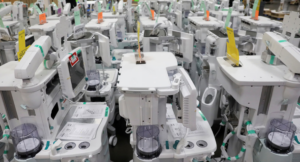
    China’s medical equipment is at the center of technological progress

    From a console in Shanghai, French surgeon Youness Ahallal guided robotic arms in Morocco with real-time precision, delicately removing a patient’s tumor.

    Despite the staggering 12,000-kilometer distance between them, China’s domestically developed Toumai surgical robot bridged the geographical divide to make transcontinental surgery a reality.

    “With telecommunication techniques, Toumai Robot allows real-time, high-definition imaging and precise control of the robotic arms from a long distance,” said Liu Yu, executive vice president of Shanghai Microport Medbot (Group) Co., Ltd, developer of the robot.

    This breakthrough enables patients in underserved regions to access world-class medical expertise without enduring exhausting cross-border journeys. “The system also revolutionizes surgical workflows for doctors,” Liu emphasized. “Previously, conducting cross-regional operations required extensive travel and coordination. Now, specialists can operate remotely with high efficiency.”

    To date, the Toumai platform has completed around 300 remote operations, maintaining a flawless safety record.

    The Toumai Robot exemplifies China’s rapid ascent as a pioneer in intelligent medical innovation. At the 2025 China Medical Equipment Exhibition in Chongqing in southwest China, AI-powered surgical systems, deep learning-enhanced diagnostic platforms, and cloud-connected robotic devices dominated the showcase.

    “Toumai Robot focuses on minimally-invasive surgeries. It breaks through the limits of the hands of surgeons by filtering their physiologic tremor, which makes surgeries easier, safer, and less invasive,” said Liu to flows of visitors at the company’s exhibition booth.

    Some medical equipment can help doctors make decisions. Longwood Valley MedTech, headquartered in Beijing, brought its ROPA orthopedic smart surgical robot with deep learning capabilities to the exhibition.

    “This robot can be used in joint replacement and spinal operations as it utilizes AI to reconstruct three-dimensional images of patients’ joints with CT images, based on which doctors can simulate operations and make pre-operation plans,” said Chen Peng, vice president of Longwood Valley MedTech.

    It usually takes one day for an engineer to make a three-dimensional image, compared to only one to three minutes by AI, Chen added.

    Chen said the robot reduces operating time by about 30 percent on average. Less operating time means less anesthesia duration, exposure and possible complications.

    The robot not only serves as a powerful “brain” but also as clever “hands.” During operations, sub-millimeter precision optical positioning ensures the precise execution of every critical step of the pre-operation plans. Stable robotic arms help doctors overcome traditional limitations such as hand tremors.

    In 2024, China’s medical equipment market size surpassed 1.35 trillion yuan (about 188.2 billion U.S. dollars), according to data released during the exhibition.

    Medical equipment is at the forefront of technological innovation, so efforts should be given to drive the digital and intelligent transformation of the medical equipment industry, said Xin Guobin, vice minister of industry and information technology, when addressing the event on Saturday.

    “It is important to accelerate the deep integration of emerging technologies such as 5G and AI with medical equipment and develop innovative application scenarios, including intelligent diagnostic systems and remote medical consultation platforms,” Xin said. Global Times

  • Medical college allocation by district is a concern raised by a parliamentary committee

    Medical college allocation by district is a concern raised by a parliamentary committee

    In recent years, multiple new medical colleges have been established across the country, primarily in district headquarters. These colleges are being set up as part of a policy to ensure that each district has at least one medical college.

    Many of these institutions are being developed by upgrading existing district or referral hospitals, a cost-effective approach that helps utilise existing infrastructure efficiently.

    However, the Parliamentary Standing Committee on Health and Family Welfare has raised concerns about this approach, stating that the sanctioning of medical colleges should be based on population density rather than a district-wise allocation.

    The Committee warned that the current policy creates an imbalance in the hospital-to-population ratio, leading to inequitable access to medical education and healthcare services.

    The Committee further emphasised the need to make private medical education more affordable, recommending that capitation fees be regulated to ensure that meritorious students from financially weaker backgrounds can access medical education.

    To address the shortage of doctors at Primary Health Centers (PHCs) and Community Health Centers (CHCs), the Committee suggested offering lucrative pay and benefits to specialist doctors to ensure their retention in government hospitals.

    “Department may persuade the States/UTs to overcome the shortage of doctors at PHCs/CHCs through various measures including the creation of separate Medical Services Recruitment Boards, specialist cadres, and providing flexibilities under NHM for recruitment and retention,” said Parliamentary Standing Committee on Health and Family Welfare presented in Rajya Sabha, on 12 March.

    The Committee also stressed the importance of ensuring that Ayushman Arogya Mandirs (AAMs) are adequately equipped, calling for the provision of sufficient staff, essential diagnostic services, and high-quality generic medicines to improve healthcare delivery at these centers.

    Decrease the Ayushman Bharat age
    The Parliamentary Standing Committee on Health and Family Welfare has recommended a significant expansion of the Ayushman Bharat Pradhan Mantri Jan Arogya Yojana (AB-PMJAY), urging the government to lower the eligibility age for senior citizens under the Ayushman Bharat PMJAY Vay Vandana scheme from 70 years to 60 years, regardless of their socio-economic status. The panel believes that this revision would ensure wider coverage and greater access to healthcare for the elderly, benefiting a larger segment of India’s aging population.

    “The Committee is of the view that age criteria of 70 years and above for Ayushman Vay Vandana Cards should be rationalised to 60 years and above irrespective of their socio-economic status for widening the coverage of the scheme in the better interest of common masses,” reads the report.

    In the recent expansion of AB-PMJAY to cover six crore senior citizens aged 70 and above from 4.5 crore families, ₹1,443 crore was allocated for their treatment under the Ayushman Vay Vandana Card scheme.

    The Committee also said that keeping in view the high costs of critical healthcare, the Committee has strongly recommended that the existing health coverage of ₹5 lakh per family per year be doubled to ₹10 lakh per family. With rising medical expenses and the increasing burden of non-communicable diseases, the panel believes that the current financial protection is inadequate, particularly for families requiring specialised treatments and long-term medical care.

    The Committee also noted that many expensive procedures, advanced diagnostics, and high-end interventions are not covered under AB-PMJAY, forcing patients to bear significant out-of-pocket expenses. It recommended a comprehensive review of the scheme to include:

    • Critical illness treatments with high-cost interventions
    • Advanced radiological diagnostics such as CT scans, MRIs, and Nuclear Imaging
    • Other high-end medical procedures that are currently available only as add-on packages

    The Committee emphasised that these essential medical services should be incorporated directly into the scheme, rather than leaving them as optional add-ons, which often limit accessibility for economically weaker patients.

    GDP ratio in health
    The Parliamentary Standing Committee on Health and Family Welfare has criticised the government’s stagnant health expenditure, warning that the goal of increasing health spending to 2.5 percent of GDP under the National Health Policy (NHP) remains a distant dream. The Committee, which had previously recommended raising health expenditure to 5 percent of GDP by 2025, expressed disappointment over the slow pace of budget increases, stating that the lack of financial commitment is preventing the healthcare sector from achieving sustainable growth.

    “India being the most populous country, and given the inflationary pressures and the National Health Policy’s target of increasing government health expenditure to 2.5 percent of GDP by 2025, the Committee believes that the allocation to the health sector, particularly to the Department of Health and Family Welfare, should have been much higher,” reads the report.

    A detailed analysis of the health budget revealed a declining trend in allocation as a percentage of GDP between 2020-21 and 2024-25, which the panel believes is inconsistent with the targets set under the NHP. The Committee emphasised that adequate health financing is crucial for reducing Out-of-Pocket Expenditure (OOPE) and ensuring equitable access to healthcare. The COVID-19 pandemic further reinforced the urgent need for sustained investment in public health, particularly in preparing for future health crises.

    Despite some progress in social security schemes and financial protection, the Committee noted that OOPE on healthcare remains high, dropping only from 48.8 percent in 2017-18 to 39.4 percent in 2021-22. While the panel expressed hope that current figures might be even lower, it stressed that a 39.4 percent OOPE remains a significant barrier to quality healthcare.

    The report also referenced the Global Multidimensional Poverty Index 2024, which identifies India as home to 234 million poor people, the largest number of impoverished individuals in the world. Unlike other nations with high poverty levels, India is the only country in the top five with a medium Human Development Index (HDI). The Committee warned that without increased government health spending, a significant portion of the population will continue to struggle with access to affordable healthcare.

    The Committee pointed out that Government Health Expenditure (GHE) as a percentage of GDP in India is just 1.84 percent, significantly lower than developed countries such as the United States, United Kingdom, Japan, and Germany. In comparison, high-income countries (HICs) allocate nearly 70 percent of their healthcare spending through public funding, ensuring greater financial protection for their citizens.

    The panel urged the government to adopt best practices from these nations and take sustained efforts to increase GHE, which would further lower OOPE and improve access to essential medical services.

    The Committee recommended that the government prioritise healthcare in budget allocations, ensuring sufficient resources for infrastructure, medical research, and service delivery. It also called for an annual budget increase for healthcare, maintaining momentum to strengthen India’s public health system. The South First


  • Apple appeals the UK encryption ruling in a private court visit in London

    Apple appeals the UK encryption ruling in a private court visit in London

    A London court hearing, reported to be Apple’s appeal against a British government order to create a “back door” to its encrypted cloud storage systems, was held in secret on Friday, with media not allowed to attend despite a formal request.

    In February, The Washington Post reported that Britain had issued a “technical capability notice” to the tech firm to enable access to encrypted messages and photos, even for users outside the country.

    The iPhone maker in response removed its most advanced security encryption for cloud data, called Advanced Data Protection, for new users in Britain.

    Details of the case have been shrouded in secrecy, and neither Apple nor the British government has publicly confirmed the technical capability notice.

    The BBC reported a hearing on Friday simply listed as “an application in private” at the Investigatory Powers Tribunal, a court that considers allegations of unlawful intrusion by public bodies, was Apple’s appeal against this order.

    There was no confirmation of what parties were involved, although James Eadie, who represents the government in its most serious legal cases, attended. He declined to comment. Apple did not immediately respond to a request for comment.

    A lawyer representing 10 media organisations, including Reuters and the BBC, submitted an application to the tribunal for the case to be held in public.

    The court confirmed receipt of his email but he was not invited to appear before the judges to make any further submissions on Friday, and no reporters were allowed in the courtroom. The hearing concluded after about six hours.

    ‘Unacceptable And Disproportionate’
    Two civil rights groups, Privacy International and Liberty, have also challenged the secrecy of the case and the issuing of the technical capability notice itself. Caroline Wilson Palow, Legal Director at Privacy International, said it was “unacceptable and disproportionate”.

    “People the world over rely on end-to-end encryption to protect themselves from harassment and oppression,” she said. “No country should have the power to undermine that protection for everyone.”

    Governments and tech giants have long been locked in a battle over strong encryption to protect consumers’ communications, which the authorities believe can be an obstacle to investigations into crimes from terrorism to child sex offences.

    But Britain’s demands are seen as particularly sweeping.

    “We told them you can’t do this,” U.S. President Donald Trump told the Spectator magazine in an interview last month about the British demand. “That’s something … that you hear about in China.”

    U.S. officials are also investigating whether Britain violated a bilateral pact by pressuring Apple as the move could breach the CLOUD Act, which bars Britain from issuing demands for the data of U.S. citizens and vice versa.

    Britain’s Home Office (interior ministry) has declined to comment on the case, and Security Minister Dan Jarvis told parliament last month the government operated a policy of neither confirming nor denying the existence of TCNs.

    “What I can say is that the suggestion that privacy and security are at odds is not correct; we can and must have both,” he said. Reuters

  • Telecom limits for five iPhone 16 models are granted by Indonesia

    Telecom limits for five iPhone 16 models are granted by Indonesia

    Indonesia has issued telecommunications permits for five different models of Apple’s iPhone 16, the communications ministry said on Friday, a step towards allowing sales after a domestic ban. The permit issue came a week after Indonesia issued local content certificates for 20 Apple products including iPhone 16.

    Apple still needs an import permit from the trade ministry to be able to sell the iPhones locally, the industry ministry has said. The Southeast Asian country of about 280 million people banned iPhone 16 sales last year as the company failed to meet composition requirements regarding locally-made parts. Analysts have said the rules could hurt investor confidence and trigger protectionism concerns.

    The five telecommunication certificates were for iPhone 16e, iPhone 16, iPhone 16 Plus, iPhone 16 Pro, and iPhone 16 Pro Max. The issuance of the permits follows last month’s announcement of more than $300 million investments by Apple in Indonesia, including in plants making components for its products, and a research and development centre. Apple did not immediately respond to requests for comment. Dwi Handoko, a senior communications ministry official, said five permits were issued as requested by Apple. Reuters